Kick off OSAC Week 2018 with a day of high-level education & networking
This year's Security 500 Conference, held November 12 in Arlington, VA, kicking off OSAC Week at the State Department, will feature a keynote address from Michael McGarrity, Assistant Director for the Counterterrorism Division of the FBI.
With the Chiefs, Jeffrey Miller will be responsible for developing and managing all safety and security plans and programs for all facets of club operations, including facility security, event day safety, vendor-operated security and traffic procedures, and team security.
As hackers, security breaches and malware attacks continue to dominate headlines, cyber crime has emerged as a global “pandemic” that last year cost people and organizations an estimated $600 billion, according to CNBC. So it’s not surprising that combating such activities has become a lucrative and rewarding career. So, if you’re considering launching a career or advancing into a leadership role in this booming field, you may be wondering which path is right for you.
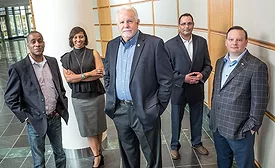
Security magazine is pleased to announce our 2018 Most Influential People in Security – 17 top security executives and industry leaders who are positively impacting the security field, their organization, their colleagues and peers, and the national and global security landscape.
When it comes to addressing global fraud and security in the financial sector, it takes a network to defeat a network.
With so many government agencies and departments involved in security operations abroad (such as eliminating key targets or searching for specific terrorists), the essential flow of information was so slow and clunky that only three operations could be coordinated each month.
While casting blame for your local team’s loss on Sunday may make for great sports talk, asserting blame for your company’s data breach is an uncomfortable exercise of self-effacement. It is a matter that many company leaders are struggling with. According to a recent survey conducted by the Ponemon Institute, 67% of CISOs expect a data breach or cyberattack in 2018.
"Acts of violence such as active shooters aren’t random,” says A. Benjamin Mannes. “From events such as Adam Lanza and Newtown, Nikolas Cruz and Marjory Stoneman Douglas High School, Jin Yu Park at Virginia Tech, and even Jared Loughner, who shot Congresswoman Gabby Giffords, all were planned.”