Why a Unified View Across IT, Continuity, and Security Makes or Breaks Crisis Response
Connect the Dots
Most organizations today aren’t short on alerts. The real problem is what comes next.
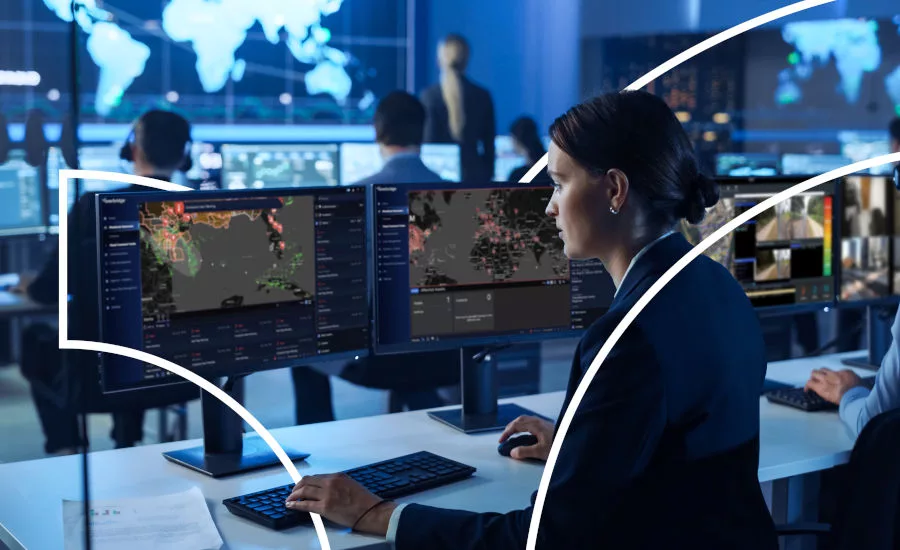
When a system goes down, a cyber threat surfaces, or a critical application becomes unavailable, response often happens in silos. IT, continuity, and security teams each have their own view of the incident – but rarely the full picture. And that slows everything down.
The truth is, these teams are working on the same event. They’re just seeing it from different angles. If they aren’t connected, response becomes fragmented and valuable time gets lost.
Connecting the Dots in Real Time
This is where a unified approach to critical event management makes a real difference. It’s not about layering on more tools. It’s about connecting the ones already in place and giving people a shared view and a clear process when something goes wrong.
Think about a common scenario: a technical issue takes down a business-critical system. Monitoring tools detect it. A trouble ticket is created. But from there, it’s a scramble. Who needs to know? Who’s responsible for next steps? What plans need to be activated? How do we keep stakeholders informed?
Even experienced teams run into delays here – not because they don’t know what to do, but because they don’t have a connected way to do it.
From Scramble to Sync
A strong critical event management layer removes guesswork and gets everyone moving in the same direction. It pulls in signals from different systems, activates the right plan, and notifies the right people automatically and in real time. Everyone from IT operations to continuity to communications knows what’s happening and what they’re responsible for.
One organization facing an infrastructure issue was able to use this type of system to shave hours off its response. As soon as the issue was detected, the platform escalated the event, informed the appropriate teams, launched their recovery checklist, and triggered updates to internal stakeholders. No one had to wait for a handoff or dig through old plans to figure out the next move.
In many cases, teams see response times improve by as much as 95 percent when notifications are targeted and contextual – the difference between chasing information and acting on it.
Automation That Supports, Not Replaces
This isn’t about taking people out of the loop. It’s about taking friction out of the process. Automation helps by handling what’s routine – like alerting, escalating, and assigning tasks – so teams can focus on making decisions.
For teams using automated escalations and on-call workflows, severity-1 incidents can drop by nearly 90 percent, freeing responders to focus on the decisions that truly require human judgment.
It also helps after the event. A connected platform provides a clear audit trail of what happened: who was alerted, how long it took to respond, and what steps were taken. That’s the kind of detail that helps organizations improve over time, not just react.
Why It Matters More Than Ever
At its core, digital resilience means more than just uptime. It means every function – IT, continuity, security – can act with decision-ready intelligence and minimal friction when the stakes are high.
That’s because events are getting much more complex. The ripple effect of any disruption is bigger than it used to be. Technical issues quickly turn into business issues. Cyber threats often trigger continuity concerns. And customers or employees expect answers fast.
When these functions operate from a shared platform, organizations report delivering up to 35 percent more software releases and cutting Mean Time to Resolution (MTTR) by more than 80 percent, while reducing resource demands by up to 90 percent. The data shows that integrated, cross-functional teams don’t just recover faster – they perform better overall.
Organizations that can connect IT, continuity, and security functions, without slowing things down, will be in a better position to manage risk and recover faster. That’s because they’re more coordinated, adaptive, and resilient, and evolve from one event to the next.
Respond with Confidence
You don’t need more alerts. You need a better way to act on the ones you already have – quickly, confidently, and across every part of your organization. That means bringing IT, continuity, and security together with shared context, clear responsibilities, and a connected response. Yes, speed matters. But so does alignment.
The numbers bear it out: when teams share the same data and act from the same playbook, response accelerates, incidents decline, and resources stretch further.
Don’t wait until the next disruption to connect the dots.
Download Everbridge’s Cyber Resilience 2026 and Beyond whitepaper to see how unified teams recover faster.
Looking for a reprint of this article?
From high-res PDFs to custom plaques, order your copy today!