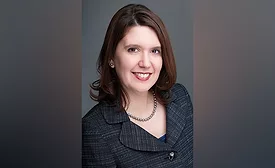
Throughout his career, Brian Tuskan has been driven by a love of technology, a hardworking reputation and a desire to help others. However, his eye has always been on the Microsoft CSO role. Now, he’s taking his place at the head of the pioneering global security organization.
During the past decade, many corporate security divisions have made tremendous strides to evolve as a key component of their company's organizational strategy and growth. Whether a company's security program is in-house, outsourced or a hybrid of both, the leading global security executives and decision-makers are acutely aware of how to effectively leverage the resource capabilities of intelligence professionals within their organization.
When Kathleen Hyde talks about cybersecurity leadership, she talks about breadth. “Training is going to teach you the technical skills you need, but employers also want to see somebody who has problem-solving skills, who has good communication skills,” says Hyde, who chairs Cybersecurity Programs at Champlain College Online.
Found at the top of many a list come January are the words “find a new job.” The resolution is a perennial favorite appearing year after year. It generally occupies a highly-ranked slot if it is on the list, but what are your odds of successfully achieving it?
This question came up during the Security 500 Conference last November, and it is still sticking with me. I don’t think you’ll find an easy or consistent answer.
A survey found that 45 percent of HR professionals view preparing for and responding to an active shooter or workplace violence incident – including threats of violence, such as stalking or domestic abuse – as very or extremely challenging.
Fifty-nine percent of cybersecurity professionals say that the widening workforce gap puts their organizations at risk.
December 1, 2018
The global cybersecurity workforce gap has increased to more than 2.9 million, according to (ISC)2. Fifty-nine percent of cybersecurity professionals say that the widening workforce gap puts their organizations at risk.
Last month I had the honor to speak at the Security 500 conference in front of a large room of senior security leaders. My own personal take-away from the event is that no matter how long you’ve been in this industry there is always something new to learn.
One of the most rewarding parts of my job, as Editor of Security magazine, is the opportunity to speak with our readers. I recently had the pleasure to speak with Whit Chaiyabhat, staff vice president, crisis manager, for FM Global, one of the world’s largest commercial and industrial property insurers.