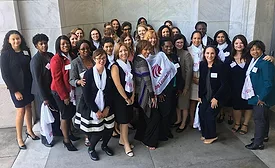
Fifty-nine percent of cybersecurity professionals say that the widening workforce gap puts their organizations at risk.
December 1, 2018
The global cybersecurity workforce gap has increased to more than 2.9 million, according to (ISC)2. Fifty-nine percent of cybersecurity professionals say that the widening workforce gap puts their organizations at risk.
Last month I had the honor to speak at the Security 500 conference in front of a large room of senior security leaders. My own personal take-away from the event is that no matter how long you’ve been in this industry there is always something new to learn.
One of the most rewarding parts of my job, as Editor of Security magazine, is the opportunity to speak with our readers. I recently had the pleasure to speak with Whit Chaiyabhat, staff vice president, crisis manager, for FM Global, one of the world’s largest commercial and industrial property insurers.
The year 2018 is coming to a close, and that means many of you may soon consider a move from one employer to another. The question is whether it will be a voluntary change or a shift due to circumstances beyond your control.
Over 85% of client agreements do not allow for the payment of overtime, and any overtime incurred by guards is considered non-billable overtime (NBOT). Given today’s labor shortage and labor laws, the NBOT rate has increased by over 35%. And with a remote workforce, it is a constant challenge to get real-time data on your staff.
There was a time when the corporate security team was responsible for setting the policies for overall security within an organization including digital. Today, those responsibilities are likely to be separated between a Chief Security Officer (CSO) and a Chief Information Security Officer (CISO). This brings into play the views, opinions, needs and requirements of both the CSO and the CISO and the potential conflict that may ensue.
“The most difficult part of the job is prioritizing given the number of incidents that could occur,” says Gordon MacDonald, Senior Director, Corporate Security for Wells Fargo.
“I take a lot of lessons from the community policing model, which is policing through customer service,” says Ryan King, Manager of Safety, Security and Emergency Management for Central Florida Health (CFH).
When George Finney was studying law at Southern Methodist University, a private university in metropolitan Dallas with 11,649 students (undergrad and graduate), his supervisor made him a “deal of a lifetime,” he says.
The cybersecurity industry has been around for more than 30 years and undergone exponential growth, but in many ways it is still defining itself in the face of evolving threats. Technology and process are predictably playing a role. But diversity of talent has also become increasingly important to the success of security organizations and is redefining the role of a cybersecurity professional.