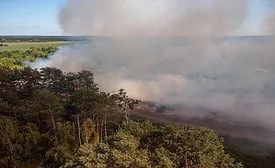
Innovations in thermal detection technology make it much easier for waste management companies to prevent fires before they happen — not only making the job safer but also avoiding environmental pollution and saving precious resources during summer droughts.
Jeff Spoerndle, Vice President of BEST Crowd Management, who has led efforts to ensure training is provided to employees on emergency response in a high-threat situation, discusses the potential threat of domestic violent extremism at large events and critical safety considerations for venues.
Board members are often entrusted with sensitive data and information, which ensures they can be effective in their roles. But if that data gets into the wrong hands, the organization could run into costly legal trouble and reputational damage.
Many agencies don’t have the ability to collect, centralize and analyze all the data from remote endpoints. Even if they do, the data collection is not fast enough. Enter the American Rescue Plan and capitalize on it to boost your security infrastructure.
With hurricane season quickly approaching us, it gives us a chance to stop and think about how well prepared we are for disasters of all kinds. A solid, well-tested disaster recovery (DR) plan is the difference between your company surviving a natural disaster – or ceasing to exist the moment it happens.
How do you find, hire and create the perfect threat hunter team? Troy Gill, Manager of Security Research and Zix’s AppRiver Threat Research Team, speaks to what it takes to be an exceptional threat hunter and what qualities they need to be successful.
Vulnerability remediation can feel like an ever-escalating game of whack-a-mole. Security teams need to work smarter, not harder, to stay ahead of the onslaught of new vulnerabilities. Effective prioritization is a key step to identify the big rocks that need to be fixed first.
To keep up with security vulnerabilities, organizations need to break the trade-off between security and convenience. Come take a deeper dive into how behavioral analytics can secure your organization.
Heath Anderson, Director of Information Security and Technology at LogicGate, discusses how to build business and operational resiliency with a governance, risk management and compliance (GRC) program.
 RSS
RSS