Education & Training
Implementing Meaningful De-Escalation Training in Your Security Program
Key learning objectives all de-escalation programs should emphasize.
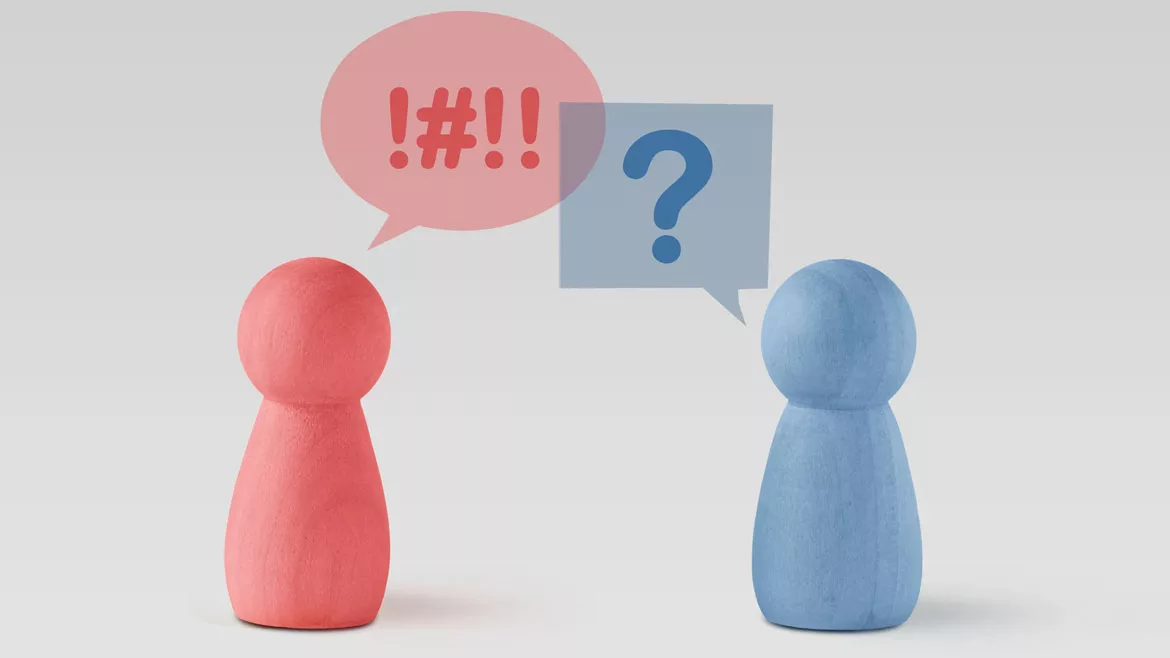
For modern security programs, the traditional “tough on crime” approach is being increasingly replaced with a strategy that encompasses the use of empathy and verbal de-escalation. We live in an era of viral video’s that only show part of the story, of “influencers” with no accountability but lots of followers, and of tired people with short fuses. Interactions with these types or people generally don’t result in positive reviews on your company’s website. In this era a security guard’s most powerful tool on their proverbial tool belt is not their baton or handcuffs — it’s their ability to effectively recognize and professionally manage human emotion in stressful situations.
Implementing effective de-escalation training can no longer be a luxury offered only to personnel in high-risk roles; it is a critical risk-mitigation strategy that protects the employer, the employee and the client in all aspects of our industry.
But Does De-Escalation Actually Work?
Many may still believe that forceful communication is the best way to enforce a rule or solve a problem, though there are increasing numbers of professionals in many industries that attest the benefits of de-escalation training.
It would be easy for me to say that my experience in the industry as a guard, training and manager speaks for itself, but I don’t want you to just take my word for it. A study published in the journal Frontier in Psychiatry in 2022 investigated and reported significantly lower rates of aggressive and violent events between psychiatric patients and personnel. The study measured the rates of such events during a five-month period prior to personnel receiving de-escalation training and directly compared their data to that of the same five-month period the following year, after de-escalation training was provided to personnel.
In the study, titled: “Effectiveness of De-Escalation in Reducing Aggression and Coercion in Acute Psychiatric Unit. A Cluster Randomized Study,” Celofiga, Plesnicar, Koprivsek, Moskon, Benkovic and Kumperscak reported that the data collected following de-escalation training being provided showed that the rate of aggressive incidents was more than 70% lower than the pre-training rates, while the rate of severe events was more than 85% lower.
4 Focus Points of Meaningful De-Escalation Training
There are countless focus points and training methods that can be applied to de-escalation courses. The challenge is determining which to include in your program to ensure that it is a meaningful experience that is worth the investment.
Many may still believe that forceful communication is the best way to enforce a rule or solve a problem, though there are increasing numbers of professionals in many industries that attest the benefits of de-escalation training.
Here are a few key learning objectives that all de-escalation programs should highlight:
1. How to Recognize Verbal and Non-verbal Cues
Not all communication is verbal, and not all verbal communication is direct. The manner in which something is said, and someone’s body language can speak volumes when you know what you are looking for.
The Lesson: Teach guards to recognize changes in body language and speech patterns to aid them in recognizing such changes in others, and themselves.
The Strategy: Use scenario-based demonstrations to show learners how to recognize and anticipate shifts in behaviour based on body language and speech.
2. How to Understand and Support the 5 Universal Truths
We have all likely heard some variation of the Five Universal Truths in one way or another. The premise in most examples is usually the same as they general all follow the same key concepts:
Everyone wants…
- To be treated with dignity & respect,
- To be asked,
- To know “why,”
- To get options, not threats,
- A second chance.
The Lesson: Encourage learners to understand each truth as a way of understanding people in all aspects of life: Whether they are friends or family, subordinates or superiors, servers or vulnerable persons, perceived to be good or bad.
The Strategy: Give learners the opportunity to use their own experiences to prove each truth to be true and provide scenarios in which they can practice recognizing and supporting them.
3. Active Listening
It usually goes without saying, but I am going to say it anyway. Everyone expects that their side of the story will be heard. Partially because everyone believes they are right, and partially because everyone just wants someone to talk to. Genuinely listening to someone may take time and energy but will also go a long way in gaining compliance and understanding.
The Lesson: Teach learners that many problems can be solved through listening.
The Strategy: Introduce scenarios involving distressed persons or mental health concerns to expose learners to situations in which a calmer, listening focused approach would aid in de-escalation.
4. Scenario Based Learning
This pillar is the most important part of any meaningful training program — learners can listen to a facilitator talk for as long as they are willing to talk, but lectures rarely result in skill development.
The Strategy: An effective training program should introduce concepts and skills using both facilitator lead discussions and demonstrations, followed by direct exposure to scenarios that force learners to directly practice these skills.
I encourage the use of volunteers or actors to play roles in a scenario to increase the realistic nature of the training. Additionally, slowly increasing the intensity or difficulty of the actor and scenario will increase the learner’s ability to apply these skills in increasingly difficult situations.
The Security Industry Shift
The security industry must shift from viewing de-escalation training as an unnecessary cost to seeing it as a strategic requirement. Adding it to your security program is essential for proactively mitigating risk to your personnel, clients and brand.
Looking for a reprint of this article?
From high-res PDFs to custom plaques, order your copy today!