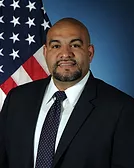
Congratulations to John "JT" Mendoza, one of our 2019 Most Influential People in Security awardees, who is retiring from federal government service after 22 years. He will be joining CGI as Director of Global Security, primarily responsible for establishing a global insider risk management program.
The US Center for Development of Security Excellence, a provider of training and education within DCSA, announced the launch of its first app for iOS and Android mobile devices.
With the second anniversary of GDPR on the horizon, the topic of data security is as pertinent as ever. Despite the proliferation of connected devices and the personal information and sensitive data they harbor, many consumers are unaware of just how susceptible their pocket-sized computers are to cyberattack.
The Transportation Security Administration (TSA) published an outline of key objectives to continuously improve security and safeguard the nation’s transportation systems.
Although it is tempting to think of breaches as being exclusively caused by malicious cybercriminals hacking corporate networks, the truth is that a significant portion are caused—or least facilitated—by insiders.
As COVID-19 has forced organizations to suddenly halt operations or institute work-from-home initiatives, there is greater opportunity for security incidents and greater data security responsibility with less direct oversight. Remote work poses its own challenges for enterprise risk managers, as well, such as addressing evolving vulnerabilities and threats unique to new environments. One area that will need to be monitored now more than ever is that of the insider threat, argue many enterprise security leaders.
Furthering a vision to elevate security and safety services as a critical component of operational reliability, Gannett Fleming recently named William Foos, CPP, PSP, to the position of director of Security & Safety Services.
The insider threat costs organizations billions of dollars every year, and is the biggest threat to the global economy, global security and critical infrastructure.