Implementing a converged security organization is perhaps one of the most resourceful and beneficial business decisions an organization can make when seeking to enhance security risk management. In this era of heightened consequences and sophisticated security threats, the need for integration between siloed security and risk management teams is imperative. The need for collaboration between those two teams and the business is equally imperative. Let’s look at five more specific benefits:
Business resilience programs may not generate revenue for organizations, but will most certainly create awareness, change a responsiveness culture into a preparedness culture, cut expenditure, save time and minimize reputational impact – not if, but when improbable circumstances become reality.
Executive protection is a profession that has an extensive history. This tradecraft began back in late B.C. to 312 A.D., with Roman protection groups that guarded emperors.
The year 2020 presented society and the campus community with very difficult and unique challenges. Let’s take a look at a practical, fiscally responsible approach that security leaders can implement to maintain traditional services and respond to unique challenges, all while preparing for the unexpected.
Campus police and security teams are tasked with not only providing a professional and measured response to volatile and politically charged issues, but must still maintain traditional, expected and valuable services, all within budgets that, for many campus security teams, will probably not be increasing. Let’s take a look at practical security practices campus safety leaders can implement.
Humor is tricky business in the security world, however. Briefing staff on warning signs of workplace violence, precursors of terrorist attacks, contingency plans for natural disasters, and methods of corporate espionage doesn’t exactly lend themselves to one-liners. Dealing with most security incidents isn’t a laughing matter.
Left attempting to optimize security teams while struggling to cope with multiple crises simultaneously, security leaders feel as if almost 75% of the workday is spent battling internal bureaucracy, while 25% is spent dedicated to the issues that require attention. But you’re not alone. To start, have some real conversations with your staff, and don’t forget to focus on yourself and your own well-being.
Emergency operations centers (EOCs) are critical decision-making environments. It is vital that these centers have effective, reliable, intuitive technology to allow organizations to collate and interpret data, as well as plan and execute an appropriate emergency response to situations that can pose a danger to life, often with multi-agency involvement. So, when carrying out systems integration in an EOC space where the stakes are so high, how do you ensure you make the correct technology choices? Jon Litt, Senior Manager, Business Development, Government Solutions (US) at Christie highlights how the mission of the EOC is the number one factor to keep in mind.
Security magazine is pleased to present our inaugural Top Cybersecurity Leaders for 2021. Security partnered with (ISC)², the world’s leading cybersecurity professional organization, to find enterprise information security executives who have made and continue to make significant contributions in the cybersecurity space to their organizations and the security profession. They were nominated by their colleagues and associates, and were chosen based upon their leadership qualities and the overall positive impact that their cybersecurity projects, programs or departments have had on their shareholders, organizations, colleagues and the general public.
While Ira Winkler’s tenure as CISO within Skyline Tech Solutions has been short, he has made a significant impact. In October 2020, he took over a security department that lacked leadership, as it grew organically out of a successful network and IT services operations.
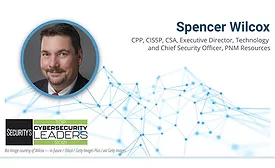
Spencer Wilcox first started his career in cybersecurity while in law enforcement in the Commonwealth of Virginia. With training in computer forensics and cyber investigations from the Federal Bureau of Investigation (FBI), Wilcox transitioned to the energy industry at Constellation Energy as a DFIR (Digital Forensics and Incident Response) investigator and has held positions in cyber and physical security leadership ever since.