As companies think about how to navigate this new landscape of privacy laws and cybersecurity threats, here are a few major trends and predictions to consider:
Five Star Bank, subsidiary of Financial Institutions Inc., announced that Adolph Barclift has joined the organization as Chief Information Security Officer (CISO).
Meet Issak Davidovich, Vice President of Research and Development at C2A Security. According to Davidovich, the implementation of driver assistance technologies and cybersecurity goes hand-in-hand, and the auto industry is taking its first steps on creating in-vehicle security standards. Here, we talk to him about what this means for automotive cybersecurity.
The talent war is real, the strength in numbers favors our opponent, we now have the original digital transformations we were planning pre-COVID, and now we have additional transformations that we have to take on to enable a distributed workforce that was previously never a consideration. There simply are not enough properly equipped resources to meet global demand, and even then, an organization is only as strong as its weakest analyst. The adversary knows that and, leverages the vulnerabilities in human behavior to advance their position in the “infinite game” of cyber warfare.
If you were in an IT-related field 10 years ago, the term “Shadow IT” might strike fear into your heart. In case you missed it – or blocked out the bad memory – that’s when business SaaS emerged, enabling lines-of-business (LOB) teams to buy their own turnkey software solutions for the first time. Why was it called “Shadow” IT? Because IT security teams typically weren’t involved in the analysis or deployment of these Saas applications. IT security often didn’t find out about the apps until something went wrong and they were called in to help – and by that point, data, apps and accounts had sprawled across the cloud.
Despite their preference for remote work, Millennials and Gen Zers experience more technological issues, struggle more with password management, and are far more reckless in their online activity than older demographics. Not only do these younger employees create more work for IT teams and service desk personnel, but they also pose as significant cybersecurity liabilities for corporations.
Nearly two-thirds of workers who have been working remotely during the pandemic would like to continue to do so. While working from home, the boundaries between work and life can decrease or disappear altogether, as employees are using their corporate devices for personal use more than ever before. As we enter the holiday season, IT teams can expect this work/life blend to translate into increased online shopping on corporate devices, which in turn exposes the network to additional cybersecurity threats.
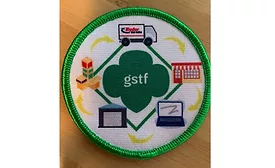
Girl Scouts of Tropical Florida (GSTF), Ryder System Inc. and the University of Tennessee's Global Supply Chain Institute partnered to create supply-chain curriculum for K-12.
According to media reports, the U.S. Energy Department and National Nuclear Security Administration have evidence that hackers accessed their networks as part of a major cyber espionage operation that affected many U.S. federal agencies.
 RSS
RSS