A number of agencies have come out with toolkits and tips to help enterprises and other organizations plan for and ration their personal protective equipment (PPE) supplies. Take a look at a handful of those helpful calculators and tools for your organization.
Though many healthcare organizations still consider it optional, two-factor authentication - also known as Multi-Factor Authentication (MFA) - is an indispensable part of a secure environment, and key to protecting your medical data.
The coronavirus pandemic has sparked a new round of digital transformation. But in many cases, the rapid pace of digital acceleration has enlarged the digital footprint of both businesses and consumers beyond the capacity of our cybersecurity infrastructure to keep up. The scary reality is that the business impact of COVID-19 may be creating the perfect storm for a cybercrime pandemic; digital citizens will have to act aggressively to secure their data before it’s too late.
This article discusses extremism in the United States as we close out 2020 and look to 2021. Security professionals can educate themselves on what extremist groups are out there and where the risks lie.
A recent survey conducted among consumers and IT professionals by SecureAge Technology suggests that a majority of these groups believe COVID-19 contact-tracing technologies put individuals' personally identifiable information (PII) at risk. Generally, however, both these groups believed that these types of tools could help mitigate the spread of the disease, and would support a nationwide rollout of the technology in spite of privacy concerns. So, are contact tracing apps a 'necessary evil'? If so, what can be done to make these apps safer to protect PII and the privacy of the public? Here, we talk to Paul Kohler, Chief Technology Officer (CTO) at S3 Consulting.
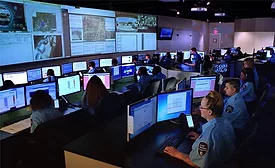
It’s a typical day in the Global Security Operations Center (GSOC). The anticipated chatter on the phones, radio communication, and sounds of the software giving audible alerts are all what you’ve come to expect in this busy hub of the security program.
Employees forced to work remotely during the COVID-19 pandemic altered their online habits, and to minimize hacking risk they needed cybersecurity tools to keep up. As a result, security administrators face a danger they may not have previously anticipated: attacks from insiders.
The prototype serves as an educational resource available at no cost for enterprise security leaders evaluating how to deploy the latest technology and design to affordably upgrade their existing workplaces for enhanced safety and collaboration. The Workplace 2030 initiative also includes a free online resource center with epidemiologically-reviewed academic data sources and original content from expert advisors.
For businesses without access to top data/security experts, working remotely during the pandemic has made them a top target for hackers. To discuss cybersecurity best practices businesses can learn from this situation, we talked to Jorge Rey, Kaufman Rossin’s Chief Information Security Officer.
Over the last few months, the financial sector, as well as many other industries, has had to adjust and make the shift to remote set-ups almost overnight due to COVID-19 restrictions. The transition has accelerated digital transformation; the sector’s previous reliance on face-to-face, or, ‘high-touch’ customer interactions have yielded to a completely digitalized experience.
 RSS
RSS