Hartsfield-Jackson Atlanta International Airport is planning on adding five lanes at TSA. Often, travelers face long security lines, especially after conventions and large events.
U.S. Sens. Ron Wyden and Jeff Merkley and U.S. Rep. Peter DeFazio announced that Eugene Airport has been approved for a fourth explosives detection system (EDS) machine.
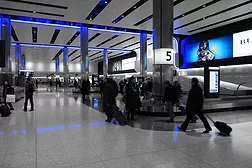
Passengers will be able to carry liquids and laptops through security at London's Heathrow Airport inside their hand luggage after new security scanners are installed.
For corporate travel managers, understanding Duty of Care is essential for ensuring compliance and establishing a sufficient travel policy for employees.
U.S. Sens. John Thune (R-S.D.) and Gary Peters (D-Mich.) introduced the Secure Traveler Act, legislation that would expand enrollment in TSA PreCheck for individuals who have passed extensive background checks.
TPA's new All Access program will allow up to 100 people every Saturday to visit an airside terminal of their choice so they can shop, dine and relax without a plane ticket.
The Transportation Security Administration is reminding travelers that beginning October 1, 2020, every traveler must present a REAL ID-compliant driver’s license, or another acceptable form of identification, to fly within the United States.