You Can’t Secure a Ship Like a Laptop
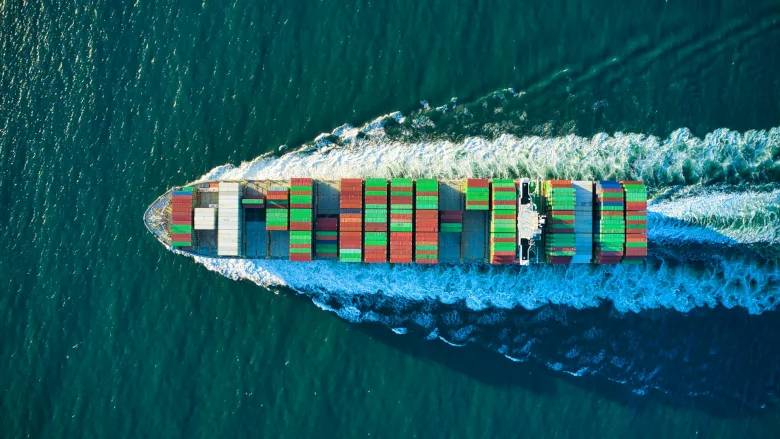
Modern cargo vessels are becoming floating distributed data centers. A single ship spends weeks at sea exchanging data with cloud platforms, fleet management systems, cargo-monitoring applications, and shore-based operations centers. Thousands of connected devices run at once across the vessel and its cargo.
That connectivity improves visibility and control, but it also creates a security problem most organizations underestimate. Many shipping companies still secure a vessel as if it were a remote branch office. It is something else: an unattended edge environment where systems run autonomously across shifting networks and jurisdictions, with no one aboard to troubleshoot, verify device integrity, or step in when something breaks.
Security Without a Human Backstop
Most enterprise security architectures rest on one assumption: when something goes wrong, someone can respond. An administrator investigates an alert. A technician replaces hardware or applies a patch. At sea, that assumption fails, and several common security controls fail with it.
Take secure boot. It verifies that a device starts from a trusted, signed image. It does not verify that the image is still the version the operator would want running months or years later. A device can keep booting a known-vulnerable image indefinitely and still pass every secure-boot check.
Remote patching solves part of this, but only if the process itself is reliable, automated, and doesn’t open new attack surfaces in the act of closing old vulnerabilities. A patch that requires physical intervention or fails silently on one vessel in a hundred-vessel fleet isn’t a security control. It’s a liability.
Physical security also presents challenges. Operators rarely control everyone with physical access to a vessel, especially in chartered or leased environments. If hardware is removed, tampered with, or replaced, a response may be impossible until the next port.
Scale compounds the problem. Large fleets carry thousands of devices across hundreds of vessels. At that scale, manual verification, patching, and inventory management break down. When a device drops off the network, no one can easily tell whether it was compromised, stolen, or simply disconnected.
The pattern is the same: traditional controls assume a human backstop is always available. In unattended environments, security must continuously verify system integrity rather than waiting for someone to restore trust after a failure.
When Compliance and Security Diverge
It's tempting to treat certification as the finish line: pass the audit, earn the designation, and declare the system secure. But compliance and security are not the same, especially in environments that run for months or years between physical inspections.
Log4Shell made this concrete. Overnight, organizations running software certified under recognized security standards had a critical, widely exploited flaw on their hands. They faced an uncomfortable choice: patch immediately and risk falling out of compliance, or stay compliant and keep running vulnerable software. They could be compliant and exposed at the same time.
That tension is sharpening at sea. Regulators and industry bodies now demand stronger cybersecurity governance, software integrity, and centralized management of shipboard systems. Those developments are valuable and long overdue, but a certification is only a snapshot, and a vessel stays in service for years.
The operators best positioned for this reality will treat compliance as a baseline rather than an endpoint. The more important question is whether they can continuously verify system integrity, respond to new vulnerabilities, and securely update systems long after the audit is over.
Building Security for Unattended Systems
If traditional models fail because they assume a human is in the loop, more monitoring won’t fix the problem. You should design systems that establish and maintain trust on their own, starting with continuous verification. Instead of validating software only when a device starts, modern architectures can measure and attest to the integrity of firmware, operating systems, and workloads across the device’s whole lifecycle. Trust becomes an ongoing process, not a one-time event.
Second, trust has to stay tied to the hardware itself. You can bind cryptographic keys and sensitive workloads to a device's trusted hardware and software state, which makes stolen equipment or extracted storage far less useful to an attacker. Where physical access can't be tightly controlled, that matters.
Consistency matters just as much. Security gets harder as systems drift from their intended configuration. Immutable operating environments and centrally managed software deployments reduce that drift, so teams know exactly what is running across a distributed fleet.
AI-powered code analysis tools are surfacing vulnerabilities faster than ever, but patching systems on vessels daily or weekly isn’t realistic. That’s where defense-in-depth earns its value. Layer security controls so that any single unpatched flaw doesn’t hand attackers a path through the system. Most discovered vulnerabilities should have no exploitable foothold by the time they are found.
Finally, unattended environments need centralized orchestration. Security teams can’t send technicians to log into individual systems scattered across hundreds of vessels. Policies, updates, and verification have to be managed remotely and applied consistently at fleet scale.
Together, these approaches shift security from a model that relies on human intervention to one that continuously establishes trust through the platform itself. This is fast becoming the operating model for large-scale edge environments, whether in data centers, industrial facilities, or vessels at sea.
The Architecture Is Already Here
Some major shipping operators are already building this model. Maersk, for example, is deploying a next-generation IoT platform across hundreds of owned and chartered vessels, supporting thousands of connected devices managed remotely from shore. The headline benefits are operational — greater visibility into cargo, equipment, and fleet performance — but the underlying architecture reflects the realities of unattended environments. You can deploy, monitor, update, and secure systems without relying on staff aboard every vessel.
That distinction matters because operational resilience and security increasingly depend on the same foundation. Organizations that design for unattended operation gain both.
Why Ships Are the Real Test of Edge Security
As organizations push more connected infrastructure to the edge, blocking unauthorized access is the easy part, and the harder problem becomes trusting systems that run for long stretches without anyone there to watch them.
Few edge environments are more remote or more operationally critical than a vessel at sea. Maritime environments break a hidden assumption in traditional security models: that someone is always on hand to investigate alerts, approve actions, or restore trust after a failure.
That is why ships matter beyond shipping. They are the clearest test of whether a security architecture was built for the edge. A model that can continuously verify, update, and protect systems in the middle of the ocean will work anywhere.
Looking for a reprint of this article?
From high-res PDFs to custom plaques, order your copy today!