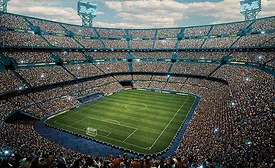
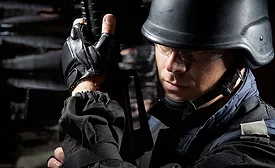
The subject of security at sports venues usually revolves around traditional violence-related concerns like terrorism, active shooter or possibly drunken and rowdy fans getting into brawls.
A report from Princeton Survey Research Associates International shows that two thirds of U.S. adults feel they would be prepared if an emergency or disaster struck their community today, including 20 percent who say they would be very prepared.
As the national conversation regarding violence in the workplace suggests a heightened awareness stemming from increased media coverage, recent studies suggest there may be statistical evidence supporting this perceived frequency.
In 2016 global supply chains continued to face a range of security, social responsibility and business continuity risks, with many of the issues provoked by one another.
The US has made progress in preparing for disasters and other large-scale emergencies that pose risks to health and well-being, although gaps remain in some key areas.
An early forecast from scientists at Colorado State University's (CSU) Tropical Meteorology Project says that a weak or moderate El Niño is likely by the height of the Atlantic hurricane season, which means that the 2017 Atlantic basin hurricane season will have slightly below average activity.
The U.S. Senate approved a bill that aims to bolster the capacity of the National Oceanic and Atmospheric Administration (NOAA) to make seasonal weather predictions between 2 weeks and 2 years out.