Marco Island has installed cameras mounted on poles at each bridge leading to the island, which will scan license plates of all drivers coming and going.
UAB Italiana LT needed to secure its Kaunas region factory, boosts access control, perimeter security and surveillance to protect employees and assets.
The Springfield School Board of Oregon, which covers more than 22 schools and close to 11,000 students, approved safety and security upgrades for two district elementary schools to include video surveillance.
Wearables provide public health and security teams onboard Royal Caribbean with a solid means of contact tracing, but the future may be in facial recognition.
The New Jersey Office of Homeland Security and Preparedness (NJOHSP) and New Jersey Regional Operations and Intelligence Center (NJ ROIC) launched New Jersey Shield on April 14, a program focused on strengthening information sharing and collaboration among the public and private sectors.
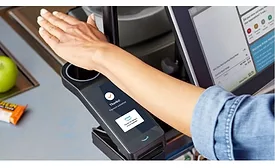
Biometric technology, and specifically its most modern iteration, facial recognition, has found its way into security systems essential to everyone. We rely on it to safeguard some of our most prized belongings, including our smartphones, laptops and now, with Apple Pay, even our bank accounts and credit cards. Security experts applaud facial recognition as one of the most secure and efficient means of authentication available today.
Why then, has the industry most hinged on security and identification – Banking, Financial Services and Insurance (BFSI) – been so slow to adopt this new wave of technology?
 RSS
RSS