The two most common methods of security guard communications in use today are cell phones and two-way radios. Security managers can have difficulty in deciding which system is best used on a particular job site. Should they use two-way radios, cell phones or both?
Massachusetts' Commonwealth Nonprofit Security Grant Program has awarded $950,000 in security grants this year to 53 faith-based organizations and houses of worship to strengthen on-premise safety and security.
Establishing operational resilience in the face of cyberattacks has become a top priority for organizations. As a core component of the IT infrastructure, Active Directory (AD) must be at the center of that process. But who is responsible for ensuring Active Directory is both protected and can be recovered quickly when a cyberattack occurs? In many organizations the answer is not clear, which can lead to missteps in detecting, defending against, and responding to cyberattacks.
As COVID-19 remains a threat, security leaders at sporting events and entertainment venues need to pivot and change course as needed — relying on security technology, procedures and policies to support the health and safety of players, fans, visitors and staff. Here is a sampling of security technologies offered.
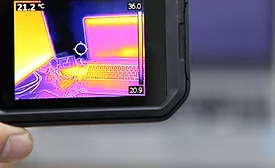
The use of thermal imaging cameras (TICs) in assault cases is a relatively new concept for first responding officers and investigators, and can be a helpful tool at the enterprise level.
U.S. President Joe Biden has signed an executive order (EO) to improve the cybersecurity of the U.S. As the U.S. faces persistent and increasingly sophisticated malicious cyber campaigns that threaten the public sector, the private sector, and ultimately people’s security and privacy, the EO seeks to improve efforts to identify, deter, protect against, detect, and respond to these actions and actors. Specifically, the EO will:
In a move to both improve travel experiences and reduce crowding in security checkpoint lines, Seattle-Tacoma International Airport is trailing a virtual queuing system for TSA screening checkpoints.