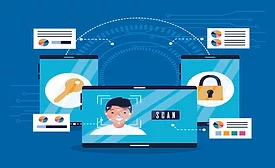
Deepfakes –mostly falsified videos and images combining the terms “deep learning” and “fake” – weren’t limited in 2019 to the Nixon presentation and were not uncommon before that. But today they are more numerous and realistic-looking and, most important, increasingly dangerous. And there is no better example of that than the warning this month (March 2021) by the FBI that nation-states are virtually certain to use deepfakes to help propagate increasingly misleading campaigns in the U.S. in coming weeks.
The recent SolarWinds breach has brought vendor risk management into the spotlight. With 59% of data breaches being traced to third-party vendors and the average enterprise having 67 vendors with privileged access, managing third party risk is no longer optional, says Tony Howlett, Chief Information Security Officer (CISO) of SecureLink. Here, we speak to Howlett about why security and risk professionals need to take control of their third-party exposure and implement safeguards and processes to reduce their vulnerability.
When it comes to most digital initiatives, user experience is a primary focal point. Not only is user experience a critical element in the design process, it also remains pertinent as product evolution keeps pace with business scale. As online interactions have exponentially grown during the pandemic, it has become startlingly clear that seamless and secure user experiences (UX) are necessary for success.
One of many consequences of the COVID-19 pandemic is an increase in cybersecurity risks and in the complexity of implementing effective security to protect organizational information and computing infrastructure. As with pre-COVID security threats, well-proven cybersecurity strategies based on user and device authentication remain effective, and they now are more important than ever.
Amid the ongoing COVID-19 pandemic, prioritizing employee health, safety, and well-being will continue to be key to building resilience, continuity and operational readiness in 2021 and beyond. Accomplishing this requires a robust communications system across the enterprise.
Has the pandemic and remote working created an environment of heightened risk of insider data breaches? Here, Darren Cooper, Chief Technology Officer (CTO) for Egress, speaks to Security magazine about what organizations can do to prevent data loss.
The pandemic has accelerated digital transformation for many organizations. Global remote work and increased digital interactions means an exponential growth in digital footprint for individuals, as well as corporations. Having to store, process and move this much data quickly into the cloud and manage the expanded digital footprint requires agility of decision making and security and privacy by design implementation and operation.
Another challenge is the new home office, where spouses may be working remotely, often alongside their children attending school online. Home networks lack typical protections and bifurcations of the corporate office and may be prone to attacks using lateral movement techniques. In these scenarios, after gaining initial access through an insufficiently protected device, such as a family computer, attackers move deeper into a network, searching for other devices to compromise or obtain increased privileges. This continued probing could eventually lead to the exfiltration of sensitive corporate data or high-value intellectual property.
As economic uncertainty continues alongside the ongoing pandemic, IT and Security budgets are likely to see modest - if any – growth this year. Therefore, it will fall to CIOs to focus on maximizing existing investments, getting back to the basics, and doing more with the same (or less).
There are some core principles I believe are important to keep top of mind when it comes to minimizing risk and maximizing budgets.
In 2020, organizations fast-tracked digital transformation and cloud migrations to provide remote capabilities to employees, customers and overall processes. Many times, these programs were started without a proper threat landscape analysis. In 2021, it’s important to revisit any rushed decisions made in 2020 that could impact a company’s digital footprint and cybersecurity.
 RSS
RSS