 RSS
RSS

Security Top Stories

Enterprise Services
Centralized supply chain security programs yield efficiency
Finding efficiencies in supply chain security is as simple as enveloping more of your supply chain. Kirsten Provence has led Boeing’s supply chain security program for nearly a decade; here she explains what has propelled efficiency gains by scaling the program using subsidiaries.
Read More



Integrated Solutions
Why retailers are economizing and optimizing with cloud video surveillance
For both heightened security and business optimization, here’s what retailers should look for in a video management system and provider.
Read More

COVID-19 Heroes
Maximizing COVID-19 pandemic response at Armour College
Chief of Police and founder of Armour College, Richard McCann has been responsible for leading the college’s response to the widespread COVID-19 pandemic, immediately putting policies and medical screenings into place, acquiring personal protective equipment (PPE), and distributing medical information to staff and students on all campuses to ensure appropriate safety and health protocols at the college.
Read More
COVID-19 Heroes
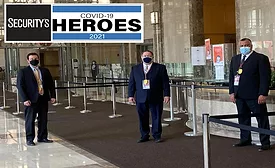
Maintaining critical functions and minimizing risk at State Street Corporation
The State Street Global Security Team quickly implemented protocols to ensure the security of all staff and maintain continuity of operations, including establishing travel protocols, exclusion protocols and visitor protocols, implementing temperature check stations, deploying credentials, and monitoring of government orders and restrictions.
Read More

COVID-19 Heroes
Gary Johnson of the Pojoaque Valley School District makes student and staff well-being priority number one
Director of Security for the Pojoaque Valley School District in New Mexico, Gary Johnson has taken a lead role in implementing COVID-19-related screening procedures, safety and security plans, and reopening protocols, but more importantly, he’s placed a focus on supporting students, staff and community members.
Read More


COVID-19 Heroes
The NFL’s GSOC takes center stage in getting players back on the field
As the centralized place for intelligence and information, the NFL’s GSOC played a pivotal role in the League’s pandemic response, streamlining access and infection control, updating business continuity plans, and providing relevant data to enable all stakeholders to make informed decisions.
Read More


Special Report
Walking the line: Navigating the insider threat
Determining the definition of insider risk to your organization is half the battle in mitigating the threat. The other half is more complicated, involving security culture, defined procedures and responses, and a little bit of technology.
Read More