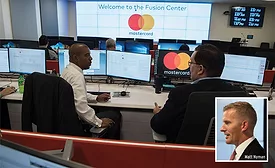
When it comes to addressing global fraud and security in the financial sector, it takes a network to defeat a network.
With so many government agencies and departments involved in security operations abroad (such as eliminating key targets or searching for specific terrorists), the essential flow of information was so slow and clunky that only three operations could be coordinated each month.
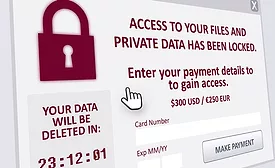
Cybercriminals are leveraging ransomware threats to extort big money from organizations of all sizes in every industry, but financial services organizations are one of today’s primary targets. It is non-negotiable for financial services companies to maintain the privacy of theirs customers and the security of their confidential data. If a bank or credit union is hit with a ransomware attack, significant backlash is undoubtedly going to ensue – especially if customer data is held ransom for a significant amount of time.
Metrasens’ customer, a Fortune 100 U.S. technology company, was hosting a large event in a major U.S. city and wanted to enhance security screening effectiveness while maintaining a positive audience experience.
Positive Technologies released a new report, Bank Attacks 2018, detailing that banks have built up formidable barriers to prevent external attacks, yet fall short in defending against internal attackers.
In today’s complex digital world, cybersecurity threats are high and rising. The Identity Resource Center’s 2017 Annual Data Breach Year-End Review reports publicly-disclosed data breaches were up 45 percent from 2016. And the 2018 Thales Global Data Threat Report notes that 71 percent of U.S. enterprises have suffered at least one data breach “over the past several years,” with 46 percent reporting a breach “in the past year,” up from 24 percent in the prior survey. As cyber threat volume and sophistication increase, financial institutions of all sizes are challenged to maintain and prove cyber safety and soundness.
As smartphones and wearable devices continue their exponential growth in Canada and globally – it’s expected to be worth $34 billion by 2020 – Canadians will need to be wary of the increasingly popular “Tap” payment channel (or alternative NFC wearable device) service.
Linking cyber and physical security together transforms alerts into actionable intelligence. By capturing and analyzing data in real time, financial organizations gain a visual representation of risks across the business while accessing information related to the most critical events happening at any given time.
 RSS
RSS