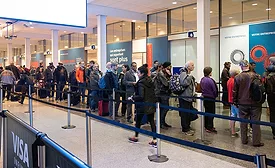
No matter the size, airports are responsible for the security of all workers who are employed within their walls, on the tarmac, and grounds. The challenge is that 90 percent of those people don’t work for the airport. They work for the airlines, TSA or different vendors that reside as tenants within the airport.
Time spent in transit is the most challenging aspect of business travel, according to a report by the GBTA Foundation – the education and research arm of the Global Business Travel Association.
The nation’s seaports, which handle freight traffic as well as cruise and ferry passengers, continue to face physical threats like terrorism or active shooters as well as ever-increasing concerns about cyber warfare.
The outlook for international business travel is generally optimistic, according to the Global Business Travel Forecast 2018 published by American Express Global Business Travel (GBT).
United Airlines and Special Olympics International announced the expansion of their relationship globally, celebrating in their shared vision to end discrimination against people with intellectual disabilities.
Organizations of every type and size are always looking to make more informed decisions. In order to do better and plan for the changing world, they want to have access to as much information as possible. And, rather than implementing a new information gathering system, many are looking to mine the data already being collected by their physical security systems.
A recent study* by Egencia®, the business travel arm of the Expedia group, found that despite the wide use of travel policies worldwide, “rogue booking”, the practice of business travelers booking outside of their travel program, is still an issue for corporate travel programs, especially when it comes to hotel stays.
 RSS