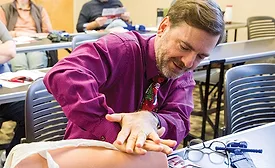
When Kathleen Hyde talks about cybersecurity leadership, she talks about breadth. “Training is going to teach you the technical skills you need, but employers also want to see somebody who has problem-solving skills, who has good communication skills,” says Hyde, who chairs Cybersecurity Programs at Champlain College Online.
Drug use by the U.S. workforce increased each year -- and by double-digits over two years -- between 2015 and 2017, in five of 16 major U.S. industry sectors analyzed.
The Federal Commission on School Safety (Commission) has released a 177-page report detailing 93 best practices and policy recommendations for improving safety at schools across the country.
Middle and high school students feel safer with security officers and a moderate level of security camera use outside of their schools, but a greater deployment of cameras inside school buildings makes them feel less safe, according to a school climate survey of more than 54,000 students from nearly 100 schools in Maryland, published in the Journal of Adolescent Health.
When George Finney was studying law at Southern Methodist University, a private university in metropolitan Dallas with 11,649 students (undergrad and graduate), his supervisor made him a “deal of a lifetime,” he says.
College administrators and managers focus on planning for every possible emergency scenario in advance of each upcoming school year. However, new threats always emerge that will test your people and processes.
Penn State will replace “StaySAFE” with a nationally-recognized program — “Run. Hide, Fight” — as the official university plan to help students, faculty, and staff be prepared for a violent attack.