Organizations of every type and size are always looking to make more informed decisions. In order to do better and plan for the changing world, they want to have access to as much information as possible. And, rather than implementing a new information gathering system, many are looking to mine the data already being collected by their physical security systems.
According to a paper by Marsh, a global leader in insurance broking and innovative risk management solutions, political risk will remain a major concern for multinational businesses in 2018, driven by events including the North Korea missile crisis, ongoing Brexit negotiations, and trade protectionism.
According to a new Chubb Accident & Health and International SOS whitepaper, "Student Travel and Study Abroad: Mental Health Issues and Awareness," research indicates there is a rising tide in mental health issues for students and such symptoms and conditions may worsen when studying abroad.
The U.S. information technology (IT) sector posted modest job gains to start 2018, but hiring for core technology positions was strong in other industries, according to CompTIA.
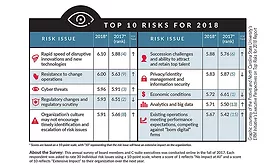
Many executives are expecting 2018 to be slightly less risky than the last two years, but many risks remain, poised to have “Significant Impact” on the enterprise.
Contrary to belief, today’s most damaging security threats are not originating from malicious outsiders or malware but from trusted insiders, both malicious insiders and negligent insiders.
 RSS
RSS