Network administrators have long been stretched thin in their attempts to maintain global endpoint security settings, configurations and patching. Now that most, if not all, of their organization’s employees are connecting remotely, the job has become even more difficult.
The Centers for Disease Control and Prevention released new guidelines when it comes to workplace violence, including how or how not to confront anti-maskers.
The American Academy of Pediatrics warns that realistic active shooter drills can unnecessarily traumatize children and that schools should stop running them or carefully plan for their needs.
We talk to Richard Bird, Ping Identity's Chief Customer Information Officer (CCIO), about how prepared the U.S. Government is for the 2020 Presidential Election.
Remote work is testing organizations, putting their IT departments under great stress. Like employees, many companies were unprepared for the many challenges of this seismic shift, one of which has been the dramatic changes in network and enterprise boundaries. Suddenly, securing endpoints became — and continues to be — a top concern.
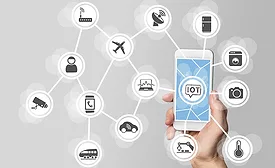
The Internet of Things (IoT) is transforming our homes, businesses and public spaces – mostly for the better – but without proper precautions IoT devices can be an attractive target for malicious actors and cyberattacks. Security threats involving IoT devices often stem from the fact that many IoT devices usually have single-purpose designs and may lack broader capabilities to defend themselves in a hostile environment. For example, a door bell, a toaster or a washing machine frequently do not contain as much storage, memory and processing capability as a typical laptop computer.
The non-profit International Foundation for Cultural Property Protection and consultancy and training firm Trident Manor Limited entered a strategic partnership to deliver specialized cultural property protection learning programs, as well as increase mutual support for the protection of cultural heritage globally.
The unfolding COVID-19 crisis has been the most significant test of the world’s internet infrastructure to date. With employers and schools moving to remote environments, the expectation was that the expanded use of Software-as-a-Service (SaaS) tools like video conferencing would lead to crippling levels of web traffic. On top of that, experts anticipated the increase in internet use would prompt a corresponding rise in network attacks from cybercriminals. Many in the industry were concerned that the internet would not be able to sustain these unseen levels of duress.
While cyber threats continue to be a massive drain on business productivity, there is another, less obvious vulnerability: unintentional employee error. Indeed, a majority of businesses say that simple human error is their leading cause of data loss.
Here, we talk to Mohit Tiwari, CEO and co-founder of Symmetry Systems, about the current threat landscape, the role of CISOs and the unique challenges COVID-19 and work-from-home (WFH) pose to CISOs and security teams.
 RSS
RSS