Security Magazine logo
search
cart
facebook twitter linkedin youtube
  • Sign In
  • Create Account
  • Sign Out
  • My Account
Security Magazine logo
  • NEWS
    • Security Newswire
    • Technologies & Solutions
  • MANAGEMENT
    • Leadership Management
    • Enterprise Services
    • Security Education & Training
    • Logical Security
    • Security & Business Resilience
    • Profiles in Excellence
  • PHYSICAL
    • Access Management
    • Fire & Life Safety
    • Identity Management
    • Physical Security
    • Video Surveillance
    • Case Studies (Physical)
  • CYBER
    • Cybersecurity News
    • More
  • BLOG
  • COLUMNS
    • Career Intelligence
    • Cyber Tactics
    • Cybersecurity Education & Training
    • Leadership & Management
    • Security Talk
  • EXCLUSIVES
    • Annual Guarding Report
    • Most Influential People in Security
    • The Security Benchmark Report
    • Top Guard and Security Officer Companies
    • Top Cybersecurity Leaders
    • Women in Security
  • SECTORS
    • Arenas / Stadiums / Leagues / Entertainment
    • Banking/Finance/Insurance
    • Construction, Real Estate, Property Management
    • Education: K-12
    • Education: University
    • Government: Federal, State and Local
    • Hospitality & Casinos
    • Hospitals & Medical Centers
    • Infrastructure:Electric,Gas & Water
    • Ports: Sea, Land, & Air
    • Retail/Restaurants/Convenience
    • Transportation/Logistics/Supply Chain/Distribution/ Warehousing
  • EVENTS
    • Industry Events
    • Webinars
    • Solutions by Sector
    • Security 500 Conference
  • MEDIA
    • Interactive Spotlight
    • Photo Galleries
    • Podcasts
    • Polls
    • Videos
      • Cybersecurity & Geopolitical Discussion
      • Ask Me Anything (AMA) Series
  • MORE
    • Call for Entries
    • Classifieds & Job Listings
    • Newsletter
    • Sponsor Insights
    • Store
    • White Papers
  • EMAG
    • eMagazine
    • This Month's Content
    • Advertise
  • SIGN UP!
PhysicalPhysical Security

After the Theft: Why Camera Upgrades Should Begin With a Risk Assessment

By Jordan Arnold, Jim Wynne
The Louvre
Diogo Fagundes via Unsplash
November 10, 2025

When thieves stole more than $80 million in jewels from the Louvre in Paris, they didn’t exploit a total absence of security but rather gaps in the museum’s broader security program, encompassing both aging systems and situational awareness, according to early reports. The museum’s director later confirmed that the balcony used in the break-in wasn’t covered by a functioning external camera; the only camera nearby faced the wrong direction. Meanwhile, French senators have questioned how a truck with an extendable lift could park the wrong way on a major road beside the museum, up against the wall, for two hours without anyone challenging it.

Even without cameras aimed at that façade, the scene alone should have prompted a quick response. A basic perimeter patrol, one of the most fundamental layers in any protection plan, might have noticed the lift, verified whether any construction work was scheduled, and reported or challenged the activity. If perimeter security had been fully briefed on maintenance schedules and empowered to question irregularities, the setup might have been recognized as suspicious much sooner.

This was not simply a matter of technology but of coordination and awareness. It is a reminder that the effectiveness of security depends as much on people and processes as on equipment. While details of the Louvre incident are still emerging, it already illustrates that upgrading cameras without strengthening the human and procedural layers around them provides only partial protection. Even the most advanced systems can falter when hardware, communication, and on-the-ground awareness aren’t aligned.

Whether Louvre or Local: The Same Lesson Applies

Whether it’s priceless jewels at the Louvre or a student sculpture outside a school, the principle is the same: meaningful protection starts with understanding risk, not just adding hardware. After the theft of a $7,000 student sculpture, the Toledo School for the Arts (TSA) is expanding its outdoor surveillance. The decision makes sense, but as the Louvre demonstrates, ensuring that cameras are functioning is only part of the process. Just as important is identifying where the initial installation may have missed blind spots, or where later changes to the physical environment have created new ones.

Public art thefts often succeed not because there are no cameras, but because the wrong areas are monitored, the footage is poor, or staff don’t recognize what’s unfolding in real time.

Start with a Risk Assessment

An informed, holistic risk assessment is the most valuable first step in any security upgrade. It helps determine where cameras truly add value, where other controls are more effective, and how human factors can bridge the gaps that technology alone cannot. It also encourages institutions to define what “normal” looks like and to prepare personnel to recognize when something deviates from it.

At the Louvre, based on the information currently available, it remains possible that a risk assessment had been conducted and that some vulnerabilities, such as misdirected cameras, limited external coverage, or coordination challenges with law enforcement, were already known. What is clear, however, is that no measures appear to have been taken to address these issues before the theft occurred. Reporting has also raised the possibility of insider involvement, suggesting that someone with access to such information could have acted before improvements were made. And if no assessment had been performed, this incident makes clear that one was long overdue.

At Toledo, a proactive assessment can help ensure that any planned upgrades are accompanied by immediate, practical measures, such as improved lighting, clear sightlines, and staff awareness, so that technology and human judgment reinforce each other from the start.

Building a Layered Security Program

True security depends on a program that integrates technology, people, and process, reinforced by continuous testing and awareness. Even the most advanced systems and well-designed procedures are only part of the equation; the other part is the readiness of those who use them. Just as phishing simulations and training have increasingly turned employees into active participants in cybersecurity, testing has long been a core element of effective physical security programs, even if we do not read about it as often. Simulations and scenario-based exercises help staff stay alert to potential risks and understand how to respond effectively. When systems are maintained, teams are trained, and procedures are practiced, protection becomes proactive and resilient, and culture becomes one of vigilance and shared responsibility.

The Real Lesson

Whether protecting national treasures or student art, security should be seen as a living ecosystem, part technology, part vigilance, and part culture. The Louvre case underscores that even in world-class institutions, risk management is a continual process, not a static achievement.

KEYWORDS: layered security museum security risk assessment

Share This Story

Looking for a reprint of this article?
From high-res PDFs to custom plaques, order your copy today!


Jordan arnold headshot

Jordan Arnold is Partner at The ArtRisk Group. Image courtesy of Arnold

Jim Wynne is Partner at The ArtRisk Group. 

Recommended Content

JOIN TODAY
To unlock your recommendations.

Already have an account? Sign In

  • Iintegration and use of emerging tools

    Future Proof Your Security Career with AI Skills

    AI’s evolution demands security leaders master...
    Security Education & Training
    By: Jerry J. Brennan and Joanne R. Pollock
  • The 2025 Security Benchmark Report

    The 2025 Security Benchmark Report

    The 2025 Security Benchmark Report surveys enterprise...
    The Security Benchmark Report
    By: Rachelle Blair-Frasier
  • The Most Influential People in Security 2025

    Security’s Most Influential People in Security 2025

    Security Magazine’s 2025 Most Influential People in...
    Most Influential People in Security
    By: Security Staff
Manage My Account
  • Security Newsletter
  • eMagazine Subscriptions
  • Manage My Preferences
  • Online Registration
  • Mobile App
  • Subscription Customer Service

More Videos

Sponsored Content

Sponsored Content is a special paid section where industry companies provide high quality, objective, non-commercial content around topics of interest to the Security audience. All Sponsored Content is supplied by the advertising company and any opinions expressed in this article are those of the author and not necessarily reflect the views of Security or its parent company, BNP Media. Interested in participating in our Sponsored Content section? Contact your local rep!

close
  • critical event management
    Sponsored byEverbridge

    Why a Unified View Across IT, Continuity, and Security Makes or Breaks Crisis Response

  • Charlotte Star Room
    Sponsored byAMAROK

    In an Uncertain Economy, Security Is a Necessity - Not an Afterthought

Popular Stories

Tree shaped as dollar sign

The Salary of a Chief Security Officer

Classroom with rows of desks facing a chalkboard

The AI Powered Classroom Network of the Future: Because Hackers Never Take Recess

Jaguar logo

New Update on Jaguar Land Rover Cyberattack: Q3 Wholesales Down 43%

Cloud icon

Google Cloud Service Exploited in New Phishing Campaign

Person holding phone to smart lock

Why it’s Time to Move on From Legacy Access Control Systems

Top Cybersecurity Leaders

Events

September 18, 2025

Security Under Fire: Insights on Active Shooter Preparedness and Recovery

ON DEMAND: In today’s complex threat environment, active shooter incidents demand swift, coordinated and well-informed responses.

February 26, 2026

Zero Incidents vs. Zero Tolerance – Workplace Violence Prevention Best Practices that Work

Workplace violence remains one of the most complex challenges facing healthcare organizations today. For executive security professionals, the stakes have never been higher: protecting staff, patients, and visitors while preserving a culture of compassion, dignity, and service.

View All Submit An Event

Products

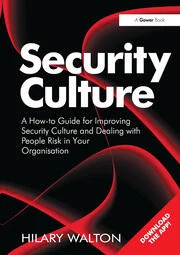
Security Culture: A How-to Guide for Improving Security Culture and Dealing with People Risk in Your Organisation

Security Culture: A How-to Guide for Improving Security Culture and Dealing with People Risk in Your Organisation

See More Products

Related Articles

  • 5 mins with Lines

    5 minutes with Michael Lines - Why the IT/infosec community should be concerned after SolarWinds

    See More
  • business-risk-management.jpg

    Why cyber risk assessments should be a part of your business strategy

    See More
  • global-enews

    Why Your Next Intelligence Analyst Should Be a Workplace Violence Analyst

    See More

Related Products

See More Products
  • security culture.webp

    Security Culture: A How-to Guide for Improving Security Culture and Dealing with People Risk in Your Organisation

  • physical security.webp

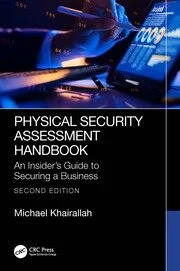
    Physical Security Assessment Handbook An Insider’s Guide to Securing a Business

  • Risk Analysis and the Security Survey, 4th Edition

See More Products
×

Sign-up to receive top management & result-driven techniques in the industry.

Join over 20,000+ industry leaders who receive our premium content.

SIGN UP TODAY!
  • RESOURCES
    • Advertise
    • Contact Us
    • Store
    • Want More
  • SIGN UP TODAY
    • Create Account
    • eMagazine
    • Newsletter
    • Customer Service
    • Manage Preferences
  • SERVICES
    • Marketing Services
    • Reprints
    • Market Research
    • List Rental
    • Survey/Respondent Access
  • STAY CONNECTED
    • LinkedIn
    • Facebook
    • YouTube
    • X (Twitter)
  • PRIVACY
    • PRIVACY POLICY
    • TERMS & CONDITIONS
    • DO NOT SELL MY PERSONAL INFORMATION
    • PRIVACY REQUEST
    • ACCESSIBILITY

Copyright ©2026. All Rights Reserved BNP Media.

Design, CMS, Hosting & Web Development :: ePublishing