For me, the issue of vaccination passports is actually exposing the underbelly of the privacy and identity debate in the United States at the expense of public health and public safety. This is no longer a matter of whether people are collecting benefits to which they are not entitled, or whether an ID is needed to vote. The issue of vaccination passports and the lack of a national identity strategy in the United States is now literally a matter of life and death.
Artificial intelligence (AI) is the most disruptive innovation in a generation. It is quickly becoming an essential component in many industries, including public safety. However, these are still the nascent stages of AI adoption, and with that, come challenges.
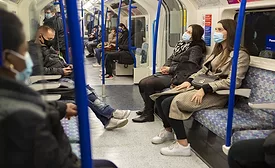
The authors of a new study by the Mineta Transportation Institute hope their findings will assist those responsible for security planning around travel on public transport. In their latest Peak Hour Study, Brian Michael Jenkins and Bruce R Butterworth analyzed more than 500 attacks on passenger rail and bus systems in modern developed countries between 1970 and 2020. They found that more than 60% of the attacks occurred in off-peak hours, as opposed to only 19% occurring during peak hours. However, the peak-hour attacks were 4.5 times more lethal. (The timing of the remaining attacks is unknown so they could not make a determination.)
The demand for touchless solutions is so great right now that the touchless sensing market across all sectors is expected to grow an average of 17% annually through 2025, according to Orion Market Reports, which states that the main drivers are increasing demand for non-contact detection, sanitation issues, and advantageous programs distributed by governments.
Help us recognize the unsung heroes of the security industry by nominating a security leader to be named one of Security magazine's 2021 Most Influential People in Security! We are looking to highlight enterprise security executives, who through their own organizations and externally, have made significant and influential contributions to the enterprise security profession, continue to push security forward both inside their own organizations and in the industry as a whole.
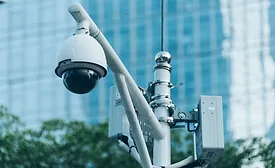
Breakthroughs in artificial intelligence (AI) and other digital technology, including faster, more affordable bandwidth, are revolutionizing the ways cities conduct surveillance and provide security. Major cities throughout the U.S. are utilizing turnkey systems that integrate video footage, access management, traffic monitoring and body-worn cameras into central high-speed networks.
Failure of imagination leads to most crises. As the pandemic persists, vaccinations and vaccine resistance increases, mass shootings rise, and racial and political unrest show few signs of ebbing, seemingly impossible "what if" scenarios are our everyday reality. But can we prevent and protect ourselves from the bad impossibilities? In my experience, if we believe it can happen, then we can look for that trouble, see around corners and potentially head off bad situations. This is why opportunities for protective intelligence analysts are growing and, as digital transformation continues, will be one of the most in-demand roles at corporations alongside cybersecurity experts.
The social and economic impacts of political violence don’t often match. Terror attacks can accomplish their main objective of striking fear into a local population while not significantly interfering with commerce, and broad waves of unrest have the potential for supply chain disruption, local business closures lasting for days, and repair and remediation that can become quite costly. There’s a third category that doesn’t get enough attention in policy and academic circles: insurance industry losses.
A recent survey conducted by Rave showed that only 22% of respondents completely trust the information they receive from local officials. Many factors – such as the spread of disinformation, social unrest and the ongoing pandemic – likely contribute to this low level of trust. However, it still poses a big problem to local leaders who are trying to keep residents safe – especially during the ongoing pandemic. We connected with Todd Miller, SVP of Strategic Programs at Rave Mobile Safety, to talk about how local governments and organizations can go about re-building trust in their communities by communicating effectively with residents.
The 2021 Electronic Security Expo (ESX), presented by Electronic Security Association (ESA), has released the full educational lineup for its upcoming Virtual Experience, which will take place online from June 15-17.