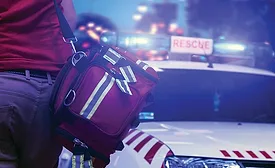
The U.S. Department of Homeland Security Cybersecurity and Infrastructure Security Agency (CISA), Indianapolis Motor Speedway, state and local first responders, law enforcement officials, and local businesses held a tabletop exercise to test response plans around hypothetical public safety incidents on the day of the Indianapolis 500, scheduled for Sunday, May 30. Representatives from multiple government agencies and the community discussed their roles, shared best practices, and improved coordination mechanisms to help keep the public safe. The exercise is part of an ongoing public safety efforts surrounding the Indianapolis 500 and was not in response to any specific threat.
As we embark on the long-haul journey to distribute the COVID-19 vaccine to all Americans, addressing the communication challenges of this distribution has never been more vital for safety and coordination, says David Wiseman, Vice President of Secure Communications at BlackBerry. Here, we talk to Wiseman about the need for unified communications as states implement vaccine rollout strategies.
Many security researchers are now predicting that deepfakes could become a major security threat in the 2021-2022 period. Where is the threat and what can you do about it?
In recent years, there has been a recognition that social engineering plays a huge part in the execution of cybersecurity attacks. The intersection of “non-physical” and “technical” social engineering is where criminals are mostly focused today. Enter deepfake technology, which poses a looming risk over enterprises and their security leaders as they figure out how to prepare for and mitigate such a risk.
The New England College of Optometry (NECO) formed a COVID-19 Task Force and began exploring ideas to enable in-person learning at the school in a safe, effective and well-planned manner. One of the solutions that NECO implemented is a contact-tracing tool that allows the school to respond immediately to report of an infection, accurately and effectively, without relying on a sign-in sheet or a person’s recollection of their previous contacts.
From the initial secured entrance to the overarching access control system, the emphasis is currently on contactless access control and door entry solutions. A myriad of technologies from NFC and smart mobile devices to facial biometrics will help play a vital role in what are now COVID-driven essentials. An integrated strategy for access control, along with tailgating mitigation options including turnstiles, revolving doors and mantrap portals enables building security to implement even more comprehensive control and prioritized security while making use of touchless credentials.
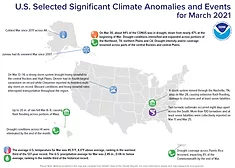
Since January, conditions across the U.S. have been running warmer and wetter than normal. The nation also recorded its first billion-dollar weather and climate disaster of 2021 — the deadly deep freeze that enveloped much of the central U.S. in February — and two tornado outbreaks in late March.
The Vanderbilt University Public Safety team is reminding students and staff that it exists to keep them as safe as possible and provide a welcoming educational environment.
Though extremism is not a new concept, the rise in radical and extremist ideals and incidents in recent years, puts this risk on the radar of security leaders across all market sectors. How can enterprise security professionals follow and stay on top of the threat of extremism and radicalism? With a strong understanding of their organization’s risk profile, security leaders can thwart potential incidents related to extremism that could potentially harm individuals, company assets, brand reputation or more.
The U.S. Department of Homeland Security Cybersecurity and Infrastructure Security Agency (CISA), NASCAR, the Talladega Superspeedway, state and local first responders, law enforcement officials, and local businesses recently held a tabletop exercise to test response plans around hypothetical public safety incidents on the day of the GEICO 500.