How Americans View the EMV Update
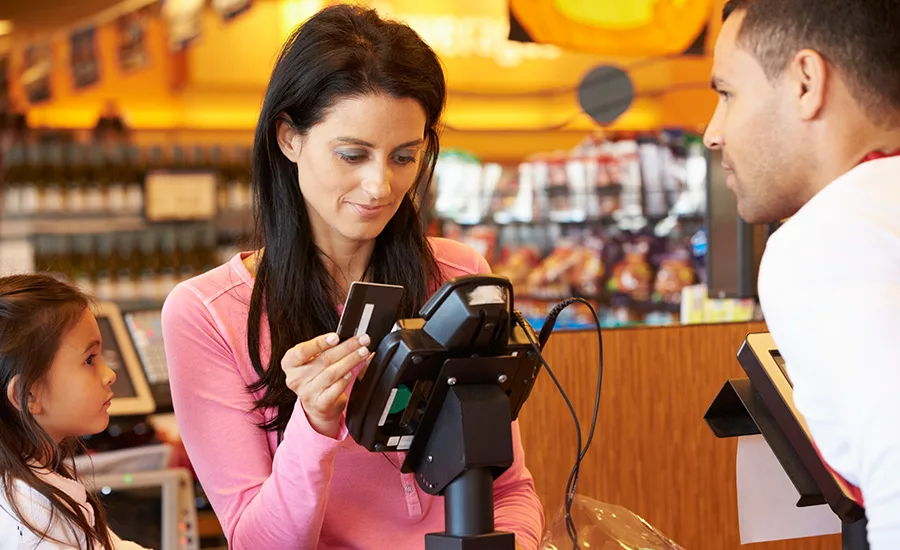
Despite news coverage and social media frustration focusing on perceived shortcomings of credit cards with EMV chip technology, nearly 4 in 5 Americans view chip cards positively, a new NerdWallet survey shows. And more people say they prefer to use chip cards than traditional magnetic-stripe cards when making purchases in stores. Even so, a year after new rules took effect to push issuers and merchants to adopt EMV, the survey confirms that the transition hasn’t been entirely smooth
More than three-quarters of Americans have used the chip feature in an EMV card, NerdWallet survey data show. But according to Visa, only about 32 percent of US merchants were EMV-ready as as of August 2016. However, Visa also said 84% of non-chip-ready merchants are planning to upgrade.
The NerdWallet survey also found:
- Nearly 4 in 5 Americans (78%) say they have positive feelings about EMV chip credit cards, and 43% say it’s the form of payment they prefer to use most when making a purchase in a store.
- Almost 3 in 5 Americans (59%) think EMV transactions take 15 seconds or less, while only 19% think they take more than 30 seconds.
- About half of Americans (47%) say consumers benefit from EMV chip cards.
About 78 percent of Americans said they have very positive or somewhat positive feelings about EMV chip cards. It’s also the most preferred in-person payment method: In the survey, 43% said they prefer to use chip cards when making purchases at a physical retail location. And 29% prefer traditional magstripe cards.
The survey also showed that consumers aren't sure when to use EMV chips:
- 39% of Americans who have an EMV card say they usually dip their card whenever they see a chip reader. But if the chip reader isn’t activated yet, these people will be told to try again — this time by swiping.
- 13% said they usually swipe the magstripe when they get to a terminal, whether they see a chip reader or not. In this case, if the chip reader is active, they’re told to dip the card instead.
Also, millennials — those ages 18 to 34 — are the only generation that had more people preferring magstripe cards (36%) than EMV cards (31%) when making a purchase in a store. Generation X (ages 35-54) and baby boomers (those 55 and over) were more likely to prefer EMV. And although a majority of millennials (69%) have positive feelings about EMV, theirs was the lowest approval percentage of any generation.
And instead of assuming the chip reader is working, millennials with a chip card are more likely than baby boomers to swipe first (19% vs. 8%) and more likely than Xers to ask the cashier how to pay (25% vs. 16%). And when asked to do the opposite — to dip after they’ve swiped, or swipe after they’ve dipped — millennials were more likely to be annoyed (51%, vs. 39% of Xers and 32% of boomers) or embarrassed (29%, vs. 14% of Xers and 9% of boomers).
Overall, though the survey noted that almost half of Americans (47%) said consumers benefit from EMV chip cards.
https://www.nerdwallet.com/blog/credit-cards/emv-survey/?trk=nw-synd_292_0_0
Despite news coverage and social media frustration focusing on perceived shortcomings of credit cards with EMV chip technology, nearly 4 in 5 Americans view chip cards positively, a new NerdWallet survey shows. And more people say they prefer to use chip cards than traditional magnetic-stripe cards when making purchases in stores. Even so, a year after new rules took effect to push issuers and merchants to adopt EMV, the survey confirms that the transition hasn’t been entirely smooth
More than three-quarters of Americans have used the chip feature in an EMV card, NerdWallet survey data show. But according to Visa, only about 32 percent of US merchants were EMV-ready as as of August 2016. However, Visa also said 84% of non-chip-ready merchants are planning to upgrade.
The NerdWallet survey also found:
- Nearly 4 in 5 Americans (78%) say they have positive feelings about EMV chip credit cards, and 43% say it’s the form of payment they prefer to use most when making a purchase in a store.
- Almost 3 in 5 Americans (59%) think EMV transactions take 15 seconds or less, while only 19% think they take more than 30 seconds.
- About half of Americans (47%) say consumers benefit from EMV chip cards.
About 78 percent of Americans said they have very positive or somewhat positive feelings about EMV chip cards. It’s also the most preferred in-person payment method: In the survey, 43% said they prefer to use chip cards when making purchases at a physical retail location. And 29% prefer traditional magstripe cards.
The survey also showed that consumers aren't sure when to use EMV chips:
- 39% of Americans who have an EMV card say they usually dip their card whenever they see a chip reader. But if the chip reader isn’t activated yet, these people will be told to try again — this time by swiping.
- 13% said they usually swipe the magstripe when they get to a terminal, whether they see a chip reader or not. In this case, if the chip reader is active, they’re told to dip the card instead.
Also, millennials — those ages 18 to 34 — are the only generation that had more people preferring magstripe cards (36%) than EMV cards (31%) when making a purchase in a store. Generation X (ages 35-54) and baby boomers (those 55 and over) were more likely to prefer EMV. And although a majority of millennials (69%) have positive feelings about EMV, theirs was the lowest approval percentage of any generation.
And instead of assuming the chip reader is working, millennials with a chip card are more likely than baby boomers to swipe first (19% vs. 8%) and more likely than Xers to ask the cashier how to pay (25% vs. 16%). And when asked to do the opposite — to dip after they’ve swiped, or swipe after they’ve dipped — millennials were more likely to be annoyed (51%, vs. 39% of Xers and 32% of boomers) or embarrassed (29%, vs. 14% of Xers and 9% of boomers).
Overall, though the survey noted that almost half of Americans (47%) said consumers benefit from EMV chip cards.
https://www.nerdwallet.com/blog/credit-cards/emv-survey/?trk=nw-synd_292_0_0
Looking for a reprint of this article?
From high-res PDFs to custom plaques, order your copy today!