Integrated Solutions
Deepfake Desensitization is the New Crisis
Deepfakes are making it harder and harder to maintain public trust.
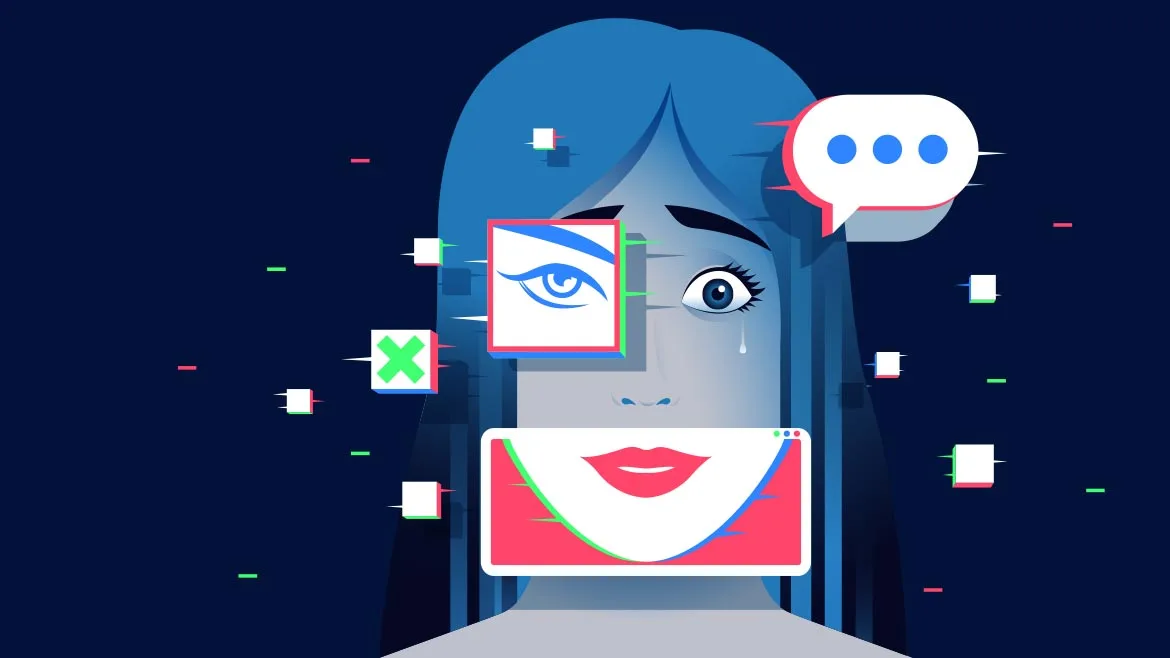
An actress who never existed can now sell a product, star in a film and build an online following. Tilly Norwood is one of many AI-generated performers whose presence is becoming normalized in entertainment and marketing.
The desensitization begins in everyday culture. The effect of the daily integration of AI-generated personas reaches beyond novelty. Audiences now spend hours with virtual entertainers who release music videos, promote products and even deliver scripted romance content. AI actors build communities where followers treat them as human.
Repeated exposure to synthetic personas leads to numbness, and audiences stop questioning what is real. That dulling of skepticism carries into the workplace, where the cost is measured in fraud, impersonation and reputational harm. A 2024 World Economic Forum survey found that 60% of Americans considered deepfakes the most concerning AI risk, yet synthetic personas continue to attract large audiences.
This paradox drives complacency (oftentimes unintentionally). People know deepfakes are dangerous in theory but stop questioning them in practice. They scroll, they watch, they listen and they accept.
Constant exposure reshapes perception. The more people see AI-driven personas, the more they accept them as routine. Over time, the human eye and ear adjust to the artificial world, lowering the baseline for authenticity.
Cultural Habits, Corporate Consequences
The habits built in personal time carry into professional life. The same employee who follows an AI influencer on TikTok may later accept a synthetic colleague in a Teams call without hesitation. Exposure outside of work dulls vigilance inside it.
Societal adaptation to synthetic personas lowers the threshold of trust. Authenticity ceases to be the default assumption. Gartner’s September 2025 survey found that 32% of executives doubted their employees' ability to recognize a deepfake attempt. That risk increases when staff are already accustomed to interacting with digital characters that blur the line between reality and fiction.
A UC San Diego study on phishing revealed that training programs were ineffective in protecting employees, and detection accuracy declined with repeated exposure to phishing attacks. That same fatigue applies to deepfakes. When people believe they can already “spot the fake,” they become overconfident and inattentive, harming their ability to detect deepfakes in the future.
The numbers reinforce the danger. More than 70% of enterprises reported at least one attempted deepfake-enabled attack in the past year. Nearly one in three leaders underestimated their risk of fraud. Over half admit they provide no training on deepfake detection.
The Collapse of Human Authenticity
Digital trust is weakening across society. The Tech for Good Institute argues that organizations must begin measuring trust itself before it erodes completely. Gartner found that 66% of security leaders experienced a deepfake incident in the past year, up 13% from 2023.
Human recognition skills are unreliable. An IEEE study found that people correctly identified high-quality deepfakes less than a quarter of the time. Even image detection averaged only 62%. For employees facing synthetic voices or videos, intuition offers little protection.
Real-World Fallout
The consequences are already severe. Fraud attempts involving deepfakes grew by 3,000% in 2023. In North America, deepfake fraud rose by 1,740% in the same year. Deloitte projects losses from generative AI fraud could reach $40 billion annually in the United States by 2027.
Case studies show the scale. A multinational corporation lost $35 million when employees followed instructions from a fake CEO on a video call. A UK-based energy firm lost $243,000 to a cloned CFO voice directing a transfer. Enterprises now average nearly $500,000 in losses per deepfake incident, with large firms reporting almost $680,000.
Unfortunately, many cases never come to the public's attention. Attacks go unreported due to embarrassment or reputational risk. The statistics we see are only a fraction of the whole.
Why Current Defenses Fail
Security stacks designed to defend against malware and credential theft cannot protect against synthetic human signals.
- ITDR detects abnormal logins but cannot confirm whether a person on a live call is real. Similarly, IDV validates the identity of the individual, but can’t protect from a compromised human.
- Zero Trust enforces access boundaries, but once an account is active, synthetic voices and faces are allowed through unchecked.
- Secure email gateways block malicious attachments, but cannot determine whether a sender's identity is genuine.
- Employee training is insufficient given fatigue and the threat sophistication where they are depended on to avoid trusting their own eyes and ears.
Deepfakes succeed because they target confidence in human cues, not technical telemetry.
Leadership Must Defend Authenticity
Enterprises must treat human authenticity as a measurable security asset. That requires defenses that validate identity in real time and across every medium where people interact: voice, video, email and chat. Protecting against synthetic deception means adopting multi-modal, multi-channel defenses that correlate signals across these environments to close the gaps that single-vector tools miss. Real-time validation must evolve into real-world coverage, because attackers already operate across all of them.
Disinformation has now joined deepfakes as a coordinated threat vector. Gartner defines disinformation security as a strategic priority for both marketing and cybersecurity leaders. Proactively addressing it requires deploying three emerging technologies in parallel: deepfake detection, impersonation prevention and reputation protection. Together, they form the foundation of enterprise digital-trust resilience. Investing in these capabilities does more than contain risk; it differentiates organizations that can prove authenticity in every communication.
By 2028, enterprise spending on battling misinformation and disinformation will exceed $30 billion, according to Gartner. That shift will cannibalize nearly 10% of global marketing and cybersecurity budgets as organizations redirect funds to confront a multi-front trust crisis. This reallocation signals a profound change. Digital trust is no longer a communications issue; it is a security imperative.
The financial logic remains clear. One prevented incident can offset years of investment. With projected losses from generative-AI fraud surpassing $25 billion annually by 2026, prevention is no longer optional.
Leaders who act now can preserve trust by defending authenticity and reputation together. Those who wait will inherit an enterprise where deception is normalized and every interaction carries a shadow of doubt.
Deepfake desensitization begins in society, where AI actors and influencers shape habits, and ends in the enterprise, where those habits weaken defenses. Authenticity is no longer an assumption. It is the most valuable security asset leaders have left, and it must be defended in real time.
Looking for a reprint of this article?
From high-res PDFs to custom plaques, order your copy today!