The Deepfake Problem is Growing, and Authentication Needs a Rethink
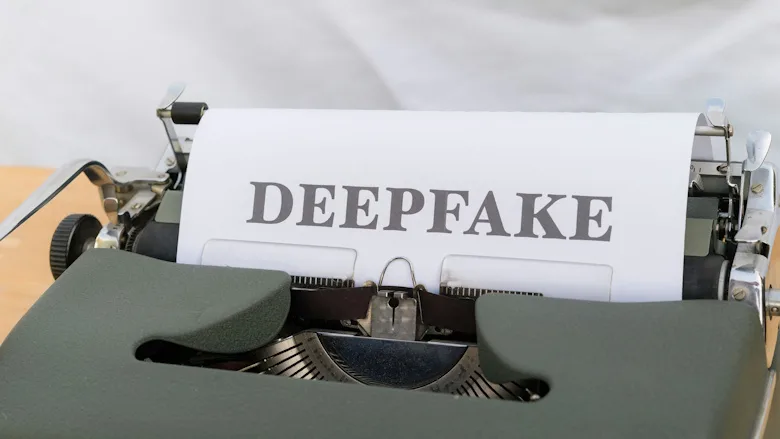
It’s late in the day at the end of the week. A CFO receives a phone call from the CEO requesting that they handle a wire transfer while they’re caught up in a meeting. It needs to be done by the end of the day.
The voice is recognizable, the caller ID appears legitimate, and the context of the situation and the urgency of it seem genuine. Everything seems in order. Except, the CEO never made that call.
Unfortunately, this exact scenario has played out at organizations across every sector. Deepfake capabilities and tactics have rapidly advanced, and they are no longer isolated incidents. They now pose real business risk for organizations and undermine the very processes and signals that have traditionally been relied on to verify identity.
This raises the question of whether the current verification processes can withstand such attacks. While improving deepfake detection methods is important, it doesn’t resolve the core issue: organizations need to recognize that existing authentication methods are being exploited, and security leaders need to consider how to verify identity more securely.
The rate of deepfake attacks is outpacing defenses
According to HYPR’s 2026 State of Passwordless Identity Assurance report, 87% of organizations have already experienced an audio or video deepfake attack. Whether it’s a customer or an employee being targeted, the scale of attacks is cause for concern.
Verification has always come down to a level of trust. When a customer reaches out to a call center, they are asked to identify themselves with a name, address, and possibly a Social Security, bank account or credit card number, or a membership ID. Or when an employee logs into a company portal, they often enter a one-time passcode, usually shared via email or SMS. This is all personally identifiable information, and it’s also the very thing that cybercriminals have been targeting and collecting for years. Today, sophisticated tools allow them to steal even the most complex credentials, and once compromised, the data grants them access to critical systems and financial rewards.
In this threat landscape, the assumption that what we see and hear is always real is disintegrating. Advanced technology allows fraudsters to clone voices, generate images, and fabricate videos, replicating the human layer of what we deem as true. Especially with AI, deepfakes will increasingly become a lot easier to deploy and a lot harder to detect. Just 60 seconds of an audio or video can be enough for a fraudster to succeed.
Building a more resilient authentication strategy
The sophistication of deepfakes means organizations can no longer rely solely on traditional identity verification methods. While user awareness training, detection tools, and employee intuition are valuable, these approaches depend on signals that fraudsters can easily exploit.
Verification should not hinge on whether someone sounds authentic. Instead, security leaders should prioritize authentication based on deterministic signals. The most robust solutions will not be ones that AI can convincingly clone, but ones that exist at the device and network layer, such as hardware-bound verification and trust.
For example, SIM-based authentication and popup interactions allow mobile carriers to verify user identities through SIM cards that are encrypted and can’t easily be hacked. Unlike traditional two-factor and multi-factor authentication, this approach validates both the device and the end user. Once the legitimate device is verified, the user simply approves a secure popup prompt after unlocking the phone with biometrics, replacing cumbersome processes such as providing a government-issued ID or submitting a selfie. The authentication request is trigged natively by the SIM, so no separate application is required. By tying identities to hardware, it makes it nearly impossible for attackers to fabricate credentials and compromise accounts, even if they obtain the users' device.
Rewriting the identity verification playbook
For decades, security teams have operated on the assumption that human perception and personal details could reliably support identity verification. Those approaches were built around the premise that people could reasonably determine whether someone is who they claim to be. Now, AI-generated deepfakes have changed that.
As deepfakes increase in volume and sophistication, they’re challenging the playbooks that security teams have long relied on and forcing the script to be rewritten. Security teams need to question the identity layers that are being impacted and reexamine the controls, processes, and trust signals that have formed their identity verification foundation. That shift requires looking beyond visual or auditory cues and 2FA or MFA towards stronger, deterministic forms of authentication. While personal information can be stolen, voices cloned and images and videos manipulated, hardware-based credentials remain significantly more difficult to fabricate and provide a foundation of security that exists outside the reach of most deepfake attacks.
The next phase of identity security will not be defined by the industry’s ability to spot ever-convincing fakes. It will be defined by its ability to verify what is actually real. And sometimes, the strongest defense against emerging threats isn’t a new layer of complexity, but a layer that has been there all along.
Looking for a reprint of this article?
From high-res PDFs to custom plaques, order your copy today!