Security Magazine logo
search
cart
facebook twitter linkedin youtube
  • Sign In
  • Create Account
  • Sign Out
  • My Account
Security Magazine logo
  • NEWS
    • Security Newswire
    • Technologies & Solutions
  • MANAGEMENT
    • Leadership Management
    • Enterprise Services
    • Security Education & Training
    • Logical Security
    • Security & Business Resilience
    • Profiles in Excellence
  • PHYSICAL
    • Access Management
    • Fire & Life Safety
    • Identity Management
    • Physical Security
    • Video Surveillance
    • Case Studies (Physical)
  • CYBER
    • Cybersecurity News
    • More
  • BLOG
  • COLUMNS
    • Career Intelligence
    • Cyber Tactics
    • Cybersecurity Education & Training
    • Leadership & Management
    • Security Talk
  • EXCLUSIVES
    • Annual Guarding Report
    • Most Influential People in Security
    • The Security Benchmark Report
    • Top Guard and Security Officer Companies
    • Top Cybersecurity Leaders
    • Women in Security
  • SECTORS
    • Arenas / Stadiums / Leagues / Entertainment
    • Banking/Finance/Insurance
    • Construction, Real Estate, Property Management
    • Education: K-12
    • Education: University
    • Government: Federal, State and Local
    • Hospitality & Casinos
    • Hospitals & Medical Centers
    • Infrastructure:Electric,Gas & Water
    • Ports: Sea, Land, & Air
    • Retail/Restaurants/Convenience
    • Transportation/Logistics/Supply Chain/Distribution/ Warehousing
  • EVENTS
    • Industry Events
    • Webinars
    • Solutions by Sector
    • Security 500 Conference
  • MEDIA
    • Interactive Spotlight
    • Photo Galleries
    • Podcasts
    • Polls
    • Videos
      • Cybersecurity & Geopolitical Discussion
      • Ask Me Anything (AMA) Series
  • MORE
    • Call for Entries
    • Classifieds & Job Listings
    • Newsletter
    • Sponsor Insights
    • Store
    • White Papers
  • EMAG
    • eMagazine
    • This Month's Content
    • Advertise
  • SIGN UP!
ColumnsLeadership & ManagementSecurity Leadership and ManagementSecurity Education & Training

Leadership & Management

Succeeding A Legendary Leader

What happens when stepping into the shadow of a seemingly irreplaceable predecessor.

By Michael Gips
One red block in a group of white blocks
tomertu / iStock / Getty Images Plus via Getty Images
March 25, 2026

At almost every conference I attend, someone delivers a fantastic, compelling presentation. The person who follows inevitably says something like, “Just my luck, I have to follow that.” The audience laughs because the situation is familiar. What is less familiar, and far more consequential, is what happens when that same dynamic plays out not on a stage, but in an organization. What happens when you step into a senior leadership role vacated by someone who was beloved, iconic, or widely seen as irreplaceable? This month’s column explores that challenge. Next month looks at the opposite situation: succeeding a security executive who left much to be desired.

The timing of this question is not accidental. As Tyler Schmoker recently observed on LinkedIn, the security profession is entering a generational transition. A large cohort of long-tenured CSOs who built modern enterprise security programs from the ground up are retiring or moving on. Their successors are not just inheriting budgets and org charts. They are inheriting reputations, relationships, and expectations that have accumulated over years, sometimes decades.

Following a great presentation is uncomfortable because comparison is immediate. Following a legendary leader is harder because comparison is persistent.

Kathy Lavinder, a longtime executive recruiter in the security space, sees this dynamic repeatedly. Organizations often say they want someone who can “fill big shoes,” but what they are really wrestling with is how to preserve what worked without freezing the organization in time.

“You can’t replicate a person, and you don’t want to,” she told me. “Every leader exists in a particular period of time. Once that time has passed, it has passed.”

Lavinder cautions organizations against pedestal-building. Over time, a respected leader’s reputation can harden into myth. Missteps fade. Blind spots are forgotten. The successor, meanwhile, is judged not against reality, but against memory.

“That’s fraught with peril,” she said. “There really isn’t an ideal. Reputation often overtakes reality.”

Her advice is practical and unsentimental. Organizations should give successors room to lead, not just permission to preserve. Successors must remember that even legends were human, shaped by the context of their time, and not great at everything.

One executive I interviewed, now leading security for a large media company, described how often his predecessor’s name came up in his early months. He expected comparisons, but not their frequency.

“I was surprised by how often people referenced him as I worked to establish credibility,” he said.

What helped was acknowledging the legacy openly rather than trying to outrun it. He made it clear that security, like risk, evolves. Honoring what came before did not mean freezing it. It meant building on it.

Over time, he also learned something else. Legends are not always what they seem. As he dug deeper, he discovered gaps and questionable behaviors that complicated the mythology surrounding his predecessor. That realization did not diminish the past, but it did humanize it.

“True legendary leadership,” he reflected, “comes down to character and integrity over time.”

His advice to successors is straightforward. Look, listen, and learn. Understand the business, the culture, and why things are structured the way they are. Act quickly only when life safety is at stake. Everything else benefits from patience.

Nathan Mills experienced a different, and increasingly common, version of succession. When he followed a highly respected CSO at a fast-growing technology company, the handoff itself went smoothly. He had been groomed for the role and understood the business.

Within a year, however, roughly three-quarters of his physical security leadership team left, not because of him, but to follow his predecessor to her new company.

“You have to be thick-skinned in these roles,” Mills said. “They weren’t leaving me. They were going to her.”

The impact was immediate. Institutional knowledge walked out the door. Mills had to rebuild his team while repeatedly justifying the value of each role to senior leadership. The economic climate had changed. What had been easy to defend under one leader was harder under another.

The lesson was sobering. Sometimes you inherit the title, but not the gravitational pull. Following a legend can mean rebuilding from scratch, even when the succession itself is handled well.

James Weston, who succeeded the widely admired Jackee Schools in a leadership role at the Overseas Security Advisory Council (OSAC), described stepping into leadership on two fronts at once. One was internal, with staff who had been hired and mentored by his predecessor. The other was external, with stakeholders who associated OSAC’s identity with her leadership.

“They didn’t know me yet,” he said. “And I felt that.”

Weston responded by listening. He met individually with staff, focused on understanding how they worked and what mattered to them. He quickly realized that OSAC feels different depending on where you sit. That insight became his guide.

The shift did not happen overnight. It came during his first annual briefing, when expectations were highest. When his predecessor publicly supported him, it mattered.

“That’s when it started to feel like James is in this role now,” he said.

Across these conversations, one theme was consistent. The danger is not following a legend. The danger is misunderstanding what that requires.

Do not assume you are stepping in behind an infallible hero, Lavinder emphasizes. Do not rush to prove yourself. And do not confuse confidence with certainty.

“Every leader has scars,” she said. “They’ve all had battles. The legends would tell you that themselves.”

Following a legendary leader is not about imitation. It is about legitimacy. And legitimacy, unlike legend, can only be earned in real time.

Next month, we’ll examine how credibility can just as quickly be squandered in real time.

KEYWORDS: corporate culture security career security leaders security leadership skills

Share This Story

Looking for a reprint of this article?
From high-res PDFs to custom plaques, order your copy today!


Michael gips headshot
Michael Gips is a Principal at Global Insights in Professional Security, LLC. He was previously an executive at ASIS International. Columnist image courtesy of Gips

Recommended Content

JOIN TODAY
To unlock your recommendations.

Already have an account? Sign In

  • Cyber tech background

    Security’s Top Cybersecurity Leaders 2026

    Security magazine’s Top Cybersecurity Leaders 2026 award...
    Cybersecurity
  • Iintegration and use of emerging tools

    Future Proof Your Security Career with AI Skills

    AI’s evolution demands security leaders master...
    Career Intelligence
    By: Jerry J. Brennan and Joanne R. Pollock
  • The 2025 Security Benchmark Report

    The 2025 Security Benchmark Report

    The 2025 Security Benchmark Report surveys enterprise...
    The Security Benchmark Report
    By: Rachelle Blair-Frasier
Manage My Account
  • Security Newsletter
  • eMagazine Subscriptions
  • Manage My Preferences
  • Online Registration
  • Mobile App
  • Subscription Customer Service

More Videos

Sponsored Content

Sponsored Content is a special paid section where industry companies provide high quality, objective, non-commercial content around topics of interest to the Security audience. All Sponsored Content is supplied by the advertising company and any opinions expressed in this article are those of the author and not necessarily reflect the views of Security or its parent company, BNP Media. Interested in participating in our Sponsored Content section? Contact your local rep!

close
  • critical event management
    Sponsored byEverbridge

    Why a Unified View Across IT, Continuity, and Security Makes or Breaks Crisis Response

Popular Stories

Fingerprint on computer board

Enhancing Incident Response with Integrated Access Control and Video Verification

Iran on map

Iran Conflict and Cybersecurity: What to Expect in the Next 30 Days

World Cup trophy beside goal

World Cup Safety and Security Is About More than Just Crime

Woman in suit

Can the Industry Do More for Women in Security?

An Opened Lock Standing Out From Locked Locks

From the Outside In: A Smarter Approach to Vendor Access

SEC 2026 Benchmark Banner

Events

April 8, 2026

The Future of Executive Protection: Layering Technology, Intelligence, and Response

Digital threats to executives and other high-profile employees are evolving faster than most corporate protection programs. Learn why modern executive protection programs require data-driven, intelligence-led strategies to keep pace with the magnitude of today’s threats.

April 15, 2026

How AI is Closing the Decision Gap in Leading GSOCs

Learn how modern security teams are evolving from alert-driven workflows to outcome-driven operations and how AI is enabling faster, more confident decisions at every stage of the incident response lifecycle.

View All Submit An Event

Products

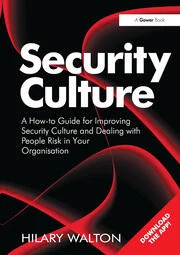
Security Culture: A How-to Guide for Improving Security Culture and Dealing with People Risk in Your Organisation

Security Culture: A How-to Guide for Improving Security Culture and Dealing with People Risk in Your Organisation

See More Products
SEC 2026 Top Cybersecurity Leaders

Related Articles

  • Leadership Style

    Adjusting your leadership style at a new employer

    See More
  • Doctor held at gunpoint

    Weapons detection in healthcare: A snapshot and guide

    See More
  • Flat bike tire

    Mind the GAP

    See More

Related Products

See More Products
  • A Leaders Guide Book Cover_Nicholson_29Sept2023.jpg

    A Leader’s Guide to Evaluating an Executive Protection Program

  • security culture.webp

    Security Culture: A How-to Guide for Improving Security Culture and Dealing with People Risk in Your Organisation

  • physical security.webp

    Physical Security Assessment Handbook An Insider’s Guide to Securing a Business

See More Products
×

Sign-up to receive top management & result-driven techniques in the industry.

Join over 20,000+ industry leaders who receive our premium content.

SIGN UP TODAY!
  • RESOURCES
    • Advertise
    • Contact Us
    • Store
    • Want More
  • SIGN UP TODAY
    • Create Account
    • eMagazine
    • Newsletter
    • Customer Service
    • Manage Preferences
  • SERVICES
    • Marketing Services
    • Reprints
    • Market Research
    • List Rental
    • Survey/Respondent Access
  • STAY CONNECTED
    • LinkedIn
    • Facebook
    • YouTube
    • X (Twitter)
  • PRIVACY
    • PRIVACY POLICY
    • TERMS & CONDITIONS
    • DO NOT SELL MY PERSONAL INFORMATION
    • PRIVACY REQUEST
    • ACCESSIBILITY

Copyright ©2026. All Rights Reserved BNP Media, Inc. and BNP Media II, LLC.

Design, CMS, Hosting & Web Development :: ePublishing