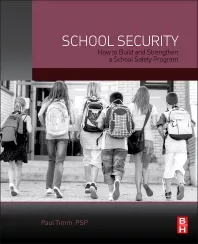
Safe Learning 101 Program Supports Schools in Strengthening Campus Security

Security 101 has launched a program to empower K-12 schools and universities in identifying vulnerabilities and improving safety before security incidents take place. This program, Safe Learning 101, combines expert consulting, physical security and intelligent design to bolster student safety and security.
The expert partner behind this program, Wayne Black, explains it is a collaborative initiative between Security 101 and his firm, Wayne Black & Associates. The goal, Black says, is to “reach schools nationwide” with school safety support.
“I’ve evaluated hundreds of schools, and one of the biggest gaps I’ve seen is that schools are often given recommendations without a clear path to implement them,” Black asserts. “In many cases, there’s no ownership, no follow-through and no accountability.”
For school administrators who may be considering safety initiatives, Black advises that they find programs involving “subject matter experts and those in the field who have been providing life safety services to other schools.”
With the news of this program’s launch, Black spoke with Security magazine about his concerns, the trends he is seeing, and more.
Security magazine: Do you think the industry is moving in the right direction when it comes to K-12 security?
Black: In my world, the industry is reactive 99% of the time and this can be driven by the customer. At times, the focus is to sell a product, at the request of the school without actually verifying that the product is the best fit or will keep the school safe. There’s been progress, particularly in awareness, but awareness doesn’t always translate into action.
In many cases, school administrators still carry the mindset that a serious incident won’t happen at their school. That kind of thinking, what we call normalcy bias, which is a form of denial. It prevents people from fully planning for something they don’t want to believe is possible.
Security: What trends in school security concern you the most right now?
Black: One of the biggest concerns is what I just referenced, normalcy bias, denial or the belief that a serious incident won’t happen here. That mindset prevents some administrators from fully planning for a catastrophic event, which is where preparation needs to begin. Some schools operate on ‘false positives in security.’ That is to say that just because nothing has happened yet, they must be doing something right.
The other concern is execution. Too often, security failures often happen in small moments. Those small breakdowns are where real vulnerabilities are created. This is why schools need to have hard lock down drills one a month, for example.
I also see gaps in planning and practice. Having a plan is not enough. It has to be exercised regularly so people know what to do under stress. That includes conducting realistic drills and mock scenarios, and working closely with local law enforcement so response is coordinated and immediate when it matters most.
Security magazine: Do initiatives like this help smaller schools, or do they tend to benefit larger districts more?
Black: Yes, they should benefit both, because the underlying challenges are the same regardless of size.
A large district can have a comprehensive security program in place, but it only takes one breakdown in execution, like a door left open, or someone let in without verification, for that entire system to fail. The same applies to smaller schools. Security is only as strong as the consistency and staff training.
Security: What gives you optimism about where the industry is heading?
Black: What gives me some hope with Safe Learning 101 is that more schools are starting to recognize their vulnerabilities and are willing to take a closer look at their preparedness and technology upgrades.
There’s also a growing understanding that prevention matters and that security has to start before a threat enters the building, not after. When schools begin to focus on fundamentals like access control, planning and consistent practice, you start to see real progress.
Most emergency response planning and practice don’t cost money. When schools commit to those basics and follow through, meaningful improvements can be made.
Unfortunately, there is 100% chance that there will be more incidents on school campuses. We must do what we can to mitigate injury by the thoughtful use of access control to keep the threat outside the school.
Looking for a reprint of this article?
From high-res PDFs to custom plaques, order your copy today!