As part of an initiative to enhance safety and security as well as support for staff and more than 17,000 students, Trinity College Dublin implemented a technology which helps first responders better pinpoint the location of calls for help, emergencies and other incidents.
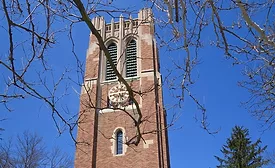
Michigan State University has chosen Marlon Lynch to serve as the university’s next chief of police. Lynch, an MSU alum who has worked in law enforcement for nearly 25 years, will also hold the title of vice president for public safety.
Denison University announces David Rose will join the university as Director of Campus Safety. Rose is a retired captain of The Ohio State University police division and brings more than 30 years of campus safety experience to his position.
Montana State University-Northern is upgrading its security on its 100+ acre campus which houses more than 1,000 students. Part of the security project will include access control and upgraded locks.
Chief of the New Haven Police Department Otoniel Reyes has been appointed Chief of the Department of Public Safety at Quinnipiac University. He announced his retirement from the New Haven Police Department this spring after a 21-year career.
Commander Shawn Ellies was appointed Director of Security and Emergency Management at the University of Pittsburgh. He has served at the University for the past 23 years in public safety roles.
With mobile usage a dominant channel going forward, authentication techniques need to move beyond two steps forward for authentication and one step backward for user experience. Just as passwords are being discarded because of the high friction they create for users, new multi-factor authentication techniques are moving in.
Saint John's University campus in Collegeville, Minnesota went into a lockdown on Thursday for close to 10 hours while law enforcement searched for the suspect.
Veterans have a lot of offer potential security roles and bring many intangibles to the table. Here are some tips that may help guide the hiring conversation and help envision where a veteran can help your company.
Working in healthcare was never on my radar,” says Luke Manuel, Security Director for Rockcastle Regional Hospital and Respiratory Care Center in Mount Vernon, Ky. He spent 8 ½ years in the U.S. Marine Corps, before earning his bachelor’s degree in Assets Protection and Security with a focus on critical infrastructure.
 RSS
RSS