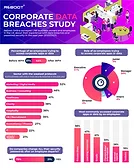
This past year has been a challenging one for many business owners and employees who’ve been forced to leave the office environment and switch to working from home (WFH) full time. Whilst this undoubtedly has its benefits, the risk of data breaches has exponentially grown. With that in mind, the Digital Marketing experts at Reboot Online surveyed 1,198 business owners and employees across the UK on their experiences with data breaches and password security in the past year (2020/2021). Key findings include:
Video conferencing platforms have become an essential communication tool over the past year. In addition to increasing team collaboration, video conferencing can help prevent miscommunication among teams, increase engagement, and allow for face-to-face communication to help build relationships among teams, particularly for remote teams. Though the benefits are many, there are growing concerns about the security shortcomings of video conferencing, according to George Waller, EVP and Co-Founder of StrikeForce Technologies. To get more insight on this topic, we spoke to Waller about key challenges with securing video conferencing platforms, as well as why these services are so susceptible to hacking.
There are numerous solutions organizations can implement to mitigate risks associated with employee use of corporate connected devices in the execution of personal business. In this article, we will delve a bit deeper to explain the pros and cons of implementing a few of the more common solutions. It is important to note, that regardless of the solution, an effective awareness and training program for employees is the number one most effective safeguard for your organization.
With work from home becoming the norm, employees are likely letting their guards down, allowing people in the same household, whether family or visitors, to have access to work-related content. That is why a good cybersecurity strategy starts with people—and a zero trust approach.
Security budgets are tighter than ever, and security professionals need to leverage existing investments smartly, and use innovative security solutions that maximize ROI. Here are seven safety and security solutions that security and loss prevention leaders should consider:
Tried-and-true protocols don't work or can't be enforced during a global health crisis. Emergency disaster planning must now expand to consider insufficient hospital capacity, workforce shortages, delays in supplies and materials, and funding shortfalls. Ensure your organization is prepared for the next disaster with these six tips.
The Cybersecurity and Infrastructure Security Agency (CISA) released a draft of the Trusted Internet Connections (TIC) 3.0 Remote User Use Case and the draft National Cybersecurity Protection System (NCPS) Cloud Interface Reference Architecture (NCIRA): Volume 2.
It is certainly important to bring awareness to the industry-wide stress that hinders our security workforce, but in order to tackle this issue head on, leaders must make employee wellbeing the priority. Changes made during these times will have lasting beneficial effects on employees and the industry no matter where their career takes them.
Typically, guarding companies are focused on threats like active shooter, potential terrorism and natural disasters. Though those concerns remained in 2020, security officers and guarding companies have weathered the COVID-19 pandemic, an economic shutdown, social and civil unrest, and an election. How did these concerns impact the guarding world?
No matter how much you spend on your security infrastructure, it won’t do a bit of good if the people you employ aren’t using it correctly. For example, you could install the best antivirus in the world, but if an employee falls for a spear-phishing scam and inadvertently gives their password to a hacker, it’s all for nothing. That’s why it’s more critical than ever to have a culture of security.