Across the globe, radicalization, or Islamist extremism to be more specific, surfaced during the pandemic even when it wasn’t expected. Earlier in June, for example, Bangladesh’s 10 Minute School founder, Ayman Sadiq, received online death threats by an unknown Islamist group. Even in the developed world, it has become evident that cyber radicalization in young people is growing during the pandemic.
Technology is a vital aspect of public safety worldwide, and this trend is only likely to grow substantially in the foreseeable future. For new devices to work effectively, full-scale coverage must be in place, and when it comes to people’s safety, there is no room for downtime. Therefore, reliable connectivity is crucial for a rapid, real-time response anytime, anywhere. With experience in uncompromising environments where every second counts, below are Rajant’s words of advice for the public safety sector when dealing with connectivity and bandwidth needs.
The Federal Aviation Administration (FAA) announced Unmanned Aircraft Systems(UAS) airspace restrictions over additional national security sensitive locations, effective December 30.
Following months of virtual meetings, testimony and study, U.S. Attorney General William P. Barr submitted the final report of the President’s Commission on Law Enforcement and the Administration of Justice to the White House. This report represents the first comprehensive study of law enforcement in more than 55 years.
Commander Shawn Ellies was appointed Director of Security and Emergency Management at the University of Pittsburgh. He has served at the University for the past 23 years in public safety roles.
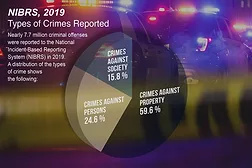
The FBI released detailed data on nearly 7.7 million criminal offenses reported via the National Incident-Based Reporting System (NIBRS) in 2019. The Uniform Crime Reporting (UCR) Program’s latest report, NIBRS, 2019, presents data about victims, known offenders, and relationships for offenses reported in 23 categories with 52 offenses. It also presents arrest data for those crimes, as well as 10 additional categories for which only arrest data is collected.
A recent survey conducted among consumers and IT professionals by SecureAge Technology suggests that a majority of these groups believe COVID-19 contact-tracing technologies put individuals' personally identifiable information (PII) at risk. Generally, however, both these groups believed that these types of tools could help mitigate the spread of the disease, and would support a nationwide rollout of the technology in spite of privacy concerns. So, are contact tracing apps a 'necessary evil'? If so, what can be done to make these apps safer to protect PII and the privacy of the public? Here, we talk to Paul Kohler, Chief Technology Officer (CTO) at S3 Consulting.
Since June, protests have been happening across the United States. As civil disobedience increases, law enforcement agencies will prepare for the possibility of protests across the country. The potential continuation of political unrest means private security professionals must also be prepared with a plan that is tactically sound and protective of people and property. Here are a few ways you can prepare to protect clients’ businesses.
Seeking to support first responders by providing the information they need to make smart decisions when purchasing night vision technologies, the Department of Homeland Security (DHS) Science and Technology Directorate (S&T) has released a new Request for Information. Commercial technologies accepted through the RFI will be included in a market survey by S&T’s National Urban Security Technology Laboratory (NUSTL). Interested industry partners have until 5:00 p.m. EST on December 10, 2020, to submit their products for inclusion.