Security Magazine logo
search
cart
facebook twitter linkedin youtube
  • Sign In
  • Create Account
  • Sign Out
  • My Account
Security Magazine logo
  • NEWS
    • Security Newswire
    • Technologies & Solutions
  • MANAGEMENT
    • Leadership Management
    • Enterprise Services
    • Security Education & Training
    • Logical Security
    • Security & Business Resilience
    • Profiles in Excellence
  • PHYSICAL
    • Access Management
    • Fire & Life Safety
    • Identity Management
    • Physical Security
    • Video Surveillance
    • Case Studies (Physical)
  • CYBER
    • Cybersecurity News
    • More
  • BLOG
  • COLUMNS
    • Career Intelligence
    • Cyber Tactics
    • Cybersecurity Education & Training
    • Leadership & Management
    • Security Talk
  • EXCLUSIVES
    • Annual Guarding Report
    • Most Influential People in Security
    • The Security Benchmark Report
    • Top Guard and Security Officer Companies
    • Top Cybersecurity Leaders
    • Women in Security
  • SECTORS
    • Arenas / Stadiums / Leagues / Entertainment
    • Banking/Finance/Insurance
    • Construction, Real Estate, Property Management
    • Education: K-12
    • Education: University
    • Government: Federal, State and Local
    • Hospitality & Casinos
    • Hospitals & Medical Centers
    • Infrastructure:Electric,Gas & Water
    • Ports: Sea, Land, & Air
    • Retail/Restaurants/Convenience
    • Transportation/Logistics/Supply Chain/Distribution/ Warehousing
  • EVENTS
    • Industry Events
    • Webinars
    • Solutions by Sector
    • Security 500 Conference
  • MEDIA
    • Interactive Spotlight
    • Photo Galleries
    • Podcasts
    • Polls
    • Videos
      • Cybersecurity & Geopolitical Discussion
      • Ask Me Anything (AMA) Series
  • MORE
    • Call for Entries
    • Classifieds & Job Listings
    • Newsletter
    • Sponsor Insights
    • Store
    • White Papers
  • EMAG
    • eMagazine
    • This Month's Content
    • Advertise
  • SIGN UP!
ManagementPhysicalSecurity Enterprise ServicesSecurity Leadership and ManagementLogical SecuritySecurity & Business ResilienceSecurity Education & TrainingIdentity ManagementPhysical SecurityGovernment: Federal, State and Local

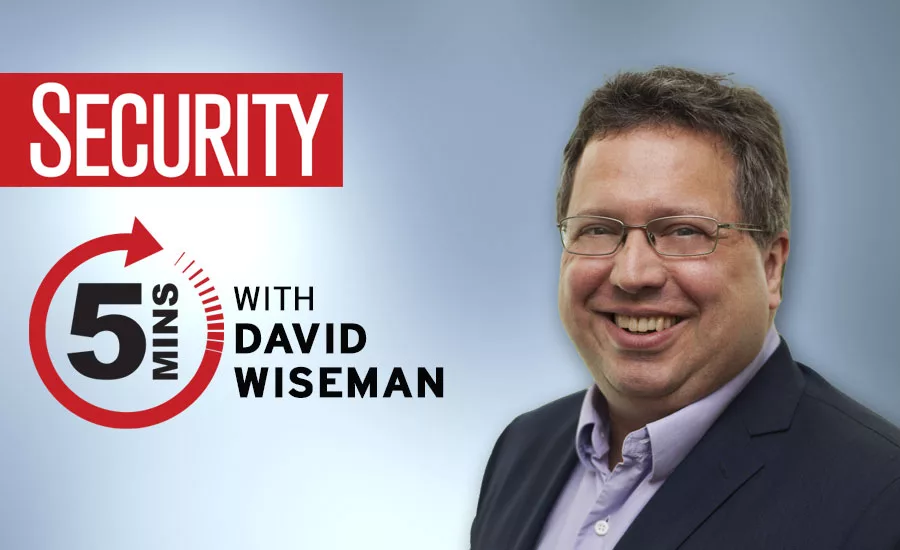
5 minutes with David Wiseman - Turning to technology for the distribution of COVID-19 vaccines
By Maria Henriquez
5 minutes with Wiseman
April 19, 2021

As we embark on the long-haul journey to distribute the COVID-19 vaccine to all Americans, addressing the communication challenges of this distribution has never been more vital for safety and coordination, says David Wiseman, Vice President of Secure Communications at BlackBerry. Here, we talk to Wiseman about the need for unified communications as states implement vaccine rollout strategies. 


Security: As states look to implement vaccine rollout strategies, is there a need for unified communications for safety and coordination? 

Wiseman: BlackBerry’s experience working with governments, businesses and humanitarian relief organizations around the world has taught us how essential it is for organizations in mission critical settings to have a trusted and unified system to communicate and collaborate in times of crises. Whether it be working with local governments to issue public alerts and warnings in the context of a wild fire, as we did with California’s Contra Costa County, or working with the American Red Cross to effectively respond to disasters, a secure, unified and resilient communications system is essential. This is also the case for the roll-out of a complex vaccine distribution program. A unified communications system will help authorities coordinate and increase the effectiveness and efficiency of the vaccine distribution program. Moreover, it is useful for issuing critical alerts and conducting rapid surveys in situations that are fast evolving and fluid.


Security: What technologies are critical to keeping federal, state, and local officials efficient and alert through the vaccine distribution? 

Wiseman: There are indeed a number of communication technologies that can be easily applied to augment existing plans and increase their effectiveness. A basic tenant for technology adoption, however, would have to be the ability to link multiple government systems with those of private enterprise and civil society organizations to enable collaboration and communication without having to make changes to their existing communication infrastructure or to provision any outside members within their networks. This is important because relevant technologies need to be capable of extending these information flows across a wide variety of channels including email, SMS, phone, Apps and private social feeds in a consistent and efficient way. Beyond just one-off communications the ability to setup operations information workflows that are tailored to local plans can assist in reducing omissions, latency and errors in plan execution. Finally, the ability to have the system engage with the public in a way that protects privacy and delivers approved information in a consistent manner is important. Options could include resident opt-in to different channels or by pushing alerts in a way that does not require the public to share personal information. The technology should enable distribution through multiple channels including social media, digital signs, radio, tv and other public announcement channels. 


Security: What are best practices on how to disseminate information quickly, especially during times of uncertainty?  

Wiseman: Even though it is 2021, the reality is that many entities still rely on old-fashioned “solutions” like call-tree lists to disseminate information. The idea of contacting all employees in the middle of the night through daisy-chained phone calls is incredibly inefficient and prone to failure. While this is a more extreme example, it is meant to illustrate the point that a clear and efficient communication solution is crucial to effective decision-making and to protecting people and assets in today’s increasingly complex world. Companies and institutions that implement an Emergency Mass Notification System (EMNS) are far more effective and efficient in communicating warnings and instructions to their employees, stakeholders or constituents during an event or crisis. Instead of relying on one method of communication—an EMNS can deliver information simultaneously over various media and platforms in multiple formats to ensure maximum exposure and impact.

KEYWORDS: business continuity COVID-19 COVID-19 response crisis communications emergency communications emergency response public safety risk management

Share This Story

Looking for a reprint of this article?
From high-res PDFs to custom plaques, order your copy today!

Maria Henriquez is a former Associate Editor of Security. She covered topics including cybersecurity and physical security, risk management and more.

Recommended Content

JOIN TODAY
To unlock your recommendations.

Already have an account? Sign In

  • Cyber tech background

    Security’s Top Cybersecurity Leaders 2026

    Security magazine’s Top Cybersecurity Leaders 2026 award...
    Security Leadership and Management
  • Iintegration and use of emerging tools

    Future Proof Your Security Career with AI Skills

    AI’s evolution demands security leaders master...
    Career Intelligence
    By: Jerry J. Brennan and Joanne R. Pollock
  • The 2025 Security Benchmark Report

    The 2025 Security Benchmark Report

    The 2025 Security Benchmark Report surveys enterprise...
    The Security Benchmark Report
    By: Rachelle Blair-Frasier
Manage My Account
  • Security Newsletter
  • eMagazine Subscriptions
  • Manage My Preferences
  • Online Registration
  • Mobile App
  • Subscription Customer Service

More Videos

Popular Stories

Hand reaching up out of the ocean

What I Learned About Burnout the Hard Way (and How to Actually Fix it)

Officers at an event

The 2026 FIFA World Cup Will Test Security Operations Like Never Before

Colorful laptop

Organizations Think They Know Who’s Visiting Their Sites. They Don’t.

Glasses in front of coding on screen

5 Ways Quantum and AI Will Rewrite the Rules of Cyberattacks

Paparazzi

When Private Events Become Public Infrastructure: What Celebrity OSINT Teaches Security Leaders

SEC 2026 Benchmark Banner
Schneider Electric sponsored webinar

Products

Security Culture: A How-to Guide for Improving Security Culture and Dealing with People Risk in Your Organisation

Security Culture: A How-to Guide for Improving Security Culture and Dealing with People Risk in Your Organisation

See More Products


Alertmedia sponsored webinar

Related Articles

  • 5 mins with

    5 minutes with David Bodnick - Is the California Privacy Rights Act (CPRA) effective?

    See More
  • 5_minutes_with_Bradbury_1021_900px.jpg

    5 minutes with David Bradbury - Hiring globally to prevent security burnout

    See More
  • 5 mins with

    5 minutes with David “moose” Wolpoff

    See More

Related Products

See More Products
  • Physical Security and Safety: A Field Guide for the Practitioner

  • security culture.webp

    Security Culture: A How-to Guide for Improving Security Culture and Dealing with People Risk in Your Organisation

  • The Complete Guide to Physical Security

See More Products
×

Sign-up to receive top management & result-driven techniques in the industry.

Join over 20,000+ industry leaders who receive our premium content.

SIGN UP TODAY!
  • RESOURCES
    • Advertise
    • Contact Us
    • Store
    • Want More
  • SIGN UP TODAY
    • Create Account
    • eMagazine
    • Newsletter
    • Customer Service
    • Manage Preferences
  • SERVICES
    • Marketing Services
    • Reprints
    • Market Research
    • List Rental
    • Survey/Respondent Access
  • STAY CONNECTED
    • LinkedIn
    • Facebook
    • YouTube
    • X (Twitter)
  • PRIVACY
    • PRIVACY POLICY
    • TERMS & CONDITIONS
    • DO NOT SELL MY PERSONAL INFORMATION
    • PRIVACY REQUEST
    • ACCESSIBILITY

Copyright ©2026. All Rights Reserved BNP Media, Inc. and BNP Media II, LLC.

Design, CMS, Hosting & Web Development :: ePublishing