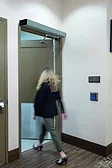
Montana State University-Northern is upgrading its security on its 100+ acre campus which houses more than 1,000 students. Part of the security project will include access control and upgraded locks.
If an armed assailant started shooting in your facility, could you, your employees and your organization survive? If your answer is "I have no idea," now's the time to take a proactive approach to preventing violence.
Enterprises can increase the value of their access control by using these electronic security systems for more than just managing access at the front door.
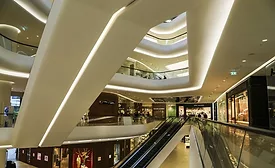
For venues, software applications for digital signage and wayfinding technology is one example of technology that can help mitigate the risks of in-person operations at the front door and past the entrance to keep organizations running smoothly in the face of an uncertain future.
Built in 2002, Continuum in South Beach is a two-tower, 38-story resort-style oceanfront condominium located on the southern-most tip of Miami Beach in South Florida. Continuum’s on-site Command Center currently manages 264 channels and growing. The emphasis is on tactical real-time operations and live visualization.
For most of their existence, the focus of elevator improvements has been on cost and efficiency. While those are still important, new technologies are closing the gap in current building security processes by putting the focus on vertical transportation.
The Principle of Least Privilege is one of the longest standing principles of security. People (as well as applications) should only have access to the things they need to do their job, and nothing else. While being overly permissive may make life a bit easier in the short-term, it can easily come back to haunt you long-term, whether due to a malicious attack, misplaced credentials, or even an honest mistake.
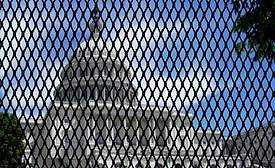
Despite the ongoing threat of coronavirus, 2020 has been a year of protest. From Minnesota to Belarus, growing social, economic and political change has driven protesters to the streets. However, according to research from the Center of Strategic and International Studies (CSIS), this is no new phenomenom but part of a growing trend. Since 2009, CSIS data shows the number of global mass protests has increased annually by an average of 11.5%.
The survey was conducted online with more than 1,500 consumers who attended ticketed events in 2019, parents of school-aged children, and workers at large factories, warehouses and distribution centers. Nearly 7 in 10 (69%) respondents value the general sense of safety that physical security measures provide, and over half (54%) believe there is deterrent value in those measures.