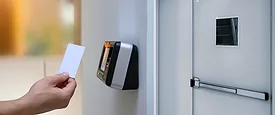
Today, the world’s leading enterprises are going even further to unlock greater efficiencies and new and innovative capabilities well beyond the original security functions. The most sophisticated implementations of visitor management and access control are affecting many more stakeholders of the business – and it looks like it’s only the beginning.
The university is using a video management system fully integrated with its video surveillance and access control systems to reduce unnecessary on-site attendance as part of the University of Vermont's response to the COVID-19 pandemic.
Consider the breadth and depth of experience that an integrator brings to the table: years in business, across a range of market segments and applications, involving dozens if not hundreds of installed and serviced products. Before making the decision to take the entire security procurement, installation, service and monitoring process in house, consider the full value of using professional services for your security needs.
Harris County, Texas, the third most populous county in the U.S., is deploying a new, next-generation security system in its buildings that will help make them more efficient and easier to operate. The new system replaces multiple, disparate systems by integrating access control, security cameras, alarms and monitoring across the county’s nearly 150 buildings situated over 1,777 square miles in Houston and the surrounding areas.
The Council Bluffs Community School District in Iowa has approved an investment in security upgrades across its school system, including video surveillance, access control and intrusion detection.
While authentication and authorization might sound similar, they are two distinct security processes in the identity and access management (IAM) space. Authentication is the security practice of confirming that someone is who they claim to be, while authorization is the process of establishing the rights and privileges of a user. Here, we talk to Tehila Shneider about authorization, authentication, and why authorizations remains a problem that is mostly unsolved.
According to a recent report by Garner Insights, the smart building market is expected to grow from $7.4 billion in 2017 to nearly $32 billion in 2022 — that’s more than a quadruple increase in just five years.
The W.E.O’Neil Construction Company installed a Security Management System for its high-end mixed-use West Edge development project in West Los Angeles.
Integrated solutions using advanced analytics and artificial intelligence (AI) bring expanded functionality and enhanced security to swinging doors and turnstiles
While artificial intelligence (AI) is becoming an integral part of business operations in myriad market segments around the globe, security applications have been slower to adopt it into the mix. However, the added health risks organizations now face from COVID-19 have forced both security solutions providers and users to rethink how AI can help mitigate those risks.
Enterprise security teams need the ability to see, and they need good sound—sound that is clear, intelligible, and understood, every time. Only then can security teams acquire actionable business intelligence, increase operational efficiency, and mitigate safety and security risks. What are some examples within enterprise security where “good sound” and high-definition audio can help security teams to reduce security risks?