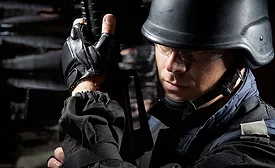
Employees from the Aviation Center of Excellence at Fort Rucker, Alabama, have developed a phone app that will help soldiers and civilians survive an active-shooter response situation.
In the webinar, “Recognizing Security Blowback: Active Shooter Prevention and Response and Best Practices,” Jim Sawyer, Security Director for Seattle Children’s Hospital, discussed why security blowback is essential to understand to mitigate active shooters and workplace violence.
Pennsylvania's Senate is advancing legislation that would set ground rules for school districts that allow employees to possess a gun on school grounds.
First responders can now train together for active shooter and other critical incidents from a new virtual training platform made available by the Department of Homeland Security Science and Technology Directorate (DHS S&T) and the U.S. Army Research Laboratory (ARL).
As the national conversation regarding violence in the workplace suggests a heightened awareness stemming from increased media coverage, recent studies suggest there may be statistical evidence supporting this perceived frequency.
Airport security personnel spend most of their time preparing for active shooter incidents, insider threats and, in concert with the federal Transportation Security Administration (TSA), potential terrorist attacks. But on January 28, many of our nation’s largest airports had to handle an entirely different, unaccustomed scenario: mass protests over immigration policy.
Since the onset of the 24-hour news cycle and the constant barrage of social media blogs, the way things are characterized seems to have evolved into creating the most sensationalized sound bite.