As Data Privacy Day approaches this week, new research conducted by ISACA reveals critical skills gaps and insufficient training. The survey report, Privacy in Practice 2021: Data Privacy Trends, Forecasts and Challenges, also explores past and future trends in privacy, offering insights into privacy workforce and skills, the use of privacy by design, and the organizational structure and composition of privacy teams.
We talk to Alan Duric, co-founder and CTO/COO of Wire, a secure collaboration platform, about the various threats facing enterprises today, as well as how organizations can protect their employees and assets, and why organizations (and vendors) need to make a fundamental change to how they operate by implementing better security, technology, and approaches to build a security-first infrastructure.
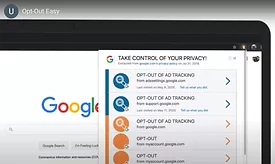
Consumers can easily identify opportunities to opt out of sharing personal data through the first-of-its-kind “Opt-Out Easy” browser plug-in developed by researchers from Carnegie Mellon’s CyLab Security and Privacy Institute. The plug-in makes opt-out choices more accessible to users, automatically extracting privacy information from websites’ policies and presenting it in a user-friendly way.
A recent survey conducted among consumers and IT professionals by SecureAge Technology suggests that a majority of these groups believe COVID-19 contact-tracing technologies put individuals' personally identifiable information (PII) at risk. Generally, however, both these groups believed that these types of tools could help mitigate the spread of the disease, and would support a nationwide rollout of the technology in spite of privacy concerns. So, are contact tracing apps a 'necessary evil'? If so, what can be done to make these apps safer to protect PII and the privacy of the public? Here, we talk to Paul Kohler, Chief Technology Officer (CTO) at S3 Consulting.
Over the last six months, COVID-19 has fueled online shopping. In fact, according to the U.S. Department of Commerce, online (e-commerce) sales grew more than 31% from Q1 to Q2 2020.
Small-to-medium-sized businesses (SMBs) have a number of unique considerations when it comes to video surveillance. For starters, with SMBs, managing security and risk often falls to a manager, store owner, or hourly security professional. Therefore, the convenience of being able to view multiple sites at once whether remotely or onsite is paramount.
With the fall season underway and winter looming, states across the U.S. are opening up their grants for applications. There are a number of different programs and types of security grants that organizations can qualify for.