Security Magazine logo
search
cart
facebook twitter linkedin youtube
  • Sign In
  • Create Account
  • Sign Out
  • My Account
Security Magazine logo
  • NEWS
    • Security Newswire
    • Technologies & Solutions
  • MANAGEMENT
    • Leadership Management
    • Enterprise Services
    • Security Education & Training
    • Logical Security
    • Security & Business Resilience
    • Profiles in Excellence
  • PHYSICAL
    • Access Management
    • Fire & Life Safety
    • Identity Management
    • Physical Security
    • Video Surveillance
    • Case Studies (Physical)
  • CYBER
    • Cybersecurity News
    • More
  • BLOG
  • COLUMNS
    • Career Intelligence
    • Cyber Tactics
    • Cybersecurity Education & Training
    • Leadership & Management
    • Security Talk
  • EXCLUSIVES
    • Annual Guarding Report
    • Most Influential People in Security
    • The Security Benchmark Report
    • Top Guard and Security Officer Companies
    • Top Cybersecurity Leaders
    • Women in Security
  • SECTORS
    • Arenas / Stadiums / Leagues / Entertainment
    • Banking/Finance/Insurance
    • Construction, Real Estate, Property Management
    • Education: K-12
    • Education: University
    • Government: Federal, State and Local
    • Hospitality & Casinos
    • Hospitals & Medical Centers
    • Infrastructure:Electric,Gas & Water
    • Ports: Sea, Land, & Air
    • Retail/Restaurants/Convenience
    • Transportation/Logistics/Supply Chain/Distribution/ Warehousing
  • EVENTS
    • Industry Events
    • Webinars
    • Solutions by Sector
    • Security 500 Conference
  • MEDIA
    • Interactive Spotlight
    • Photo Galleries
    • Podcasts
    • Polls
    • Videos
      • Cybersecurity & Geopolitical Discussion
      • Ask Me Anything (AMA) Series
  • MORE
    • Call for Entries
    • Classifieds & Job Listings
    • Continuing Education
    • Newsletter
    • Sponsor Insights
    • Store
    • White Papers
  • EMAG
    • eMagazine
    • This Month's Content
    • Advertise
  • SIGN UP!
ManagementPhysicalSecurity Leadership and ManagementSecurity Education & TrainingAccess ManagementFire & Life SafetyIdentity ManagementPhysical Security

Executive protection: Training staff with a security mindset

By Greg Threatt
bodyguard
June 2, 2022

Executive protection professionals face a unique set of threats as they work to protect the high-risk individuals they serve. Coordinating with all staff involved in the security and life of a protected individual can help security leaders detect threats sooner rather than later.

In general, executive protection details consist of one security practitioner and one or two chauffeurs. An overwhelming majority of chauffeurs do not have security experience or protective driving training. When a security professional is working a detail and finds themselves faced with such a situation, there is rarely time to prepare drivers in traditional protective driving techniques, which means the security leader has to analyze the drivers and determine how much ad hoc training can be accomplished in the field.

Chauffeur or security driver?

To get the greatest return on investment (ROI), the leader of the security detail needs to share their security and risk expectations with the drivers in the shortest amount of time. It can be an uphill battle at times. The security professional will be fighting years of chauffeur experience, which is very customer service-centric and lacks the security mindset. Standard practices like exiting the vehicle to open doors for the passengers, unlocking vehicle doors prior to arrival, or even having a cigarette and a quick chat with the doorman is not just standard practice, but good for business for chauffeurs. Still, these practices are unacceptable in a security operation and will likely put everyone at a higher risk.

It’s important to define several subtle, significant differences that distinguish a chauffeur from a security driver. To be a chauffeur, one must have a state-issued driver’s license, meet age requirements, have several years of experience behind the wheel and have a vehicle. They must successfully complete specialized training, which may include an intensive seminars or classroom instruction in proper etiquette, communication skills, passenger safety and customer service, in order to attain a chauffeur’s license.

A security driver, on the other hand, must have all of the attributes mentioned above, as well as:

  • Advanced driver training to mitigate behind-the-wheel emergencies
  • Escaping deliberate attacks
  • Experience with and knowledge of vehicle dynamics
  • A security mindset
  • Knowledge and practice with detecting hostile surveillance
  • Evasive/protective driving skills

Security drivers must possess these skills and more, all while conducting themselves like a chauffeur.

Increasing driver security awareness

With that in mind, let’s say an executive protection detail involves a great chauffeur, but not a security driver. A chauffeur may be used to dealing with VIPs and high-profile individuals, but being part of a security detail isn’t an everyday occurrence for them. They may not even understand the reason for security’s presence at all.

To educate drivers on the importance of security, executive protection professionals should initiate extended conversations to ensure everyone is on the same page and aware of their roles and functions in the operation.

These conversations serve several purposes, of which only a few are: teaching drivers/chauffeurs the security mindset, allowing practitioners to assess any previous security knowledge and capabilities of the chauffeurs, building team cohesion, and offering the security professional an opportunity to outline roles and responsibilities for everyone involved. This increases the chance that future trips will use the chauffeur’s services and increases trust in the chauffeur’s abilities and willingness to take ownership of their new roles.

As for the chauffeur, all that is required to show ownership is that they demonstrate this newly acquired knowledge by adhering to some rudimentary security driver protocols such as lane capture, maintaining motorcade intervals, and not exiting the driver’s seat to open doors for the passengers. That last one usually requires a friendly reminder just before arriving at a destination.

In appreciation and recognition, a kind word, a grateful handshake or even a fist bump is usually all that’s needed from the security professional to acknowledge the chauffeur’s performance and solidify their ownership of the security mindset. Any subsequent reminders or additional security insights that may be offered, when done constructively and with a smile, will add to their acceptance into the operation and build on their newfound security mindset. By creating ownership in the process and networking with chauffeurs, this will make the current trip smoother, and they may even go the extra mile (pun intended) to help ensure the entire group’s safety. By all accounts, it’s a capability multiplier.

Executive protection benefits of staff with security mindsets

Utilizing local resources like chauffeurs can be the best option in terms of security. As mentioned before, they may require some training, but the benefits can surpass the cost — and the ROI could be higher than expected, especially if no one in the group speaks the local language.

Local resources can be a potent tool. In some cases, a local chauffeur may be able to obtain items that are difficult to procure in specific regions. In other cases, they may understand the ins and outs of a potentially dangerous traffic stop and mitigate further delays simply by being “a local,” which increases a chauffeur’s value.

Networking with other staff members can also have its advantages. Sharing information and increasing security awareness can reap unseen rewards. Intelligence gained from collaborations with personal assistants, house staff, and other employees in the protected individual’s circle can prove to be invaluable.

Strategic information shared with the right person at the right time can build a foundation of trust while positively affecting the protected individual. For example, staff members can glean information regarding how the protected individual is feeling, itineraries that are likely to change, and even if they are happy with their security. By building relationships with staff and emphasizing a security mindset in those conversations, security professionals can help all staff recognize actionable intelligence and potentially dangerous situations.

When it’s all added together, trust in the protected individual and the team, ownership in the roles, and using the security mindset, the capability of the entire team gets multiplied. The whole team — security practitioners, security drivers and all other staff — increases their effectiveness and potentially decreases their workload due to sharing information through a security mindset.

KEYWORDS: CEO security driving executive protection protective intelligence security awareness training security guard

Share This Story

Looking for a reprint of this article?
From high-res PDFs to custom plaques, order your copy today!

Greg Threatt is a security professional with over 27 years of executive protection and international security experience. He has protected royalty, CEOs and ultra-high net worth individuals.

Recommended Content

JOIN TODAY
To unlock your recommendations.

Already have an account? Sign In

  • Iintegration and use of emerging tools

    Future Proof Your Security Career with AI Skills

    AI’s evolution demands security leaders master...
    Security Education & Training
    By: Jerry J. Brennan and Joanne R. Pollock
  • The 2025 Security Benchmark Report

    The 2025 Security Benchmark Report

    The 2025 Security Benchmark Report surveys enterprise...
    The Security Benchmark Report
    By: Rachelle Blair-Frasier
  • The Most Influential People in Security 2025

    Security’s Most Influential People in Security 2025

    Security Magazine’s 2025 Most Influential People in...
    Most Influential People in Security
    By: Security Staff
Manage My Account
  • Security Newsletter
  • eMagazine Subscriptions
  • Manage My Preferences
  • Online Registration
  • Mobile App
  • Subscription Customer Service

More Videos

Sponsored Content

Sponsored Content is a special paid section where industry companies provide high quality, objective, non-commercial content around topics of interest to the Security audience. All Sponsored Content is supplied by the advertising company and any opinions expressed in this article are those of the author and not necessarily reflect the views of Security or its parent company, BNP Media. Interested in participating in our Sponsored Content section? Contact your local rep!

close
  • critical event management
    Sponsored byEverbridge

    Why a Unified View Across IT, Continuity, and Security Makes or Breaks Crisis Response

  • Charlotte Star Room
    Sponsored byAMAROK

    In an Uncertain Economy, Security Is a Necessity - Not an Afterthought

  • Sureview screen
    Sponsored bySureView Systems

    The Evolution of Automation in the Command Center

Popular Stories

Red laptop

Security Leaders Discuss SitusAMC Cyberattack

Cybersecurity trends of 2025

3 Top Cybersecurity Trends from 2025

Green code

Logitech Confirms Data Breach, Security Leaders Respond

Neon human and android hands

65% of the Forbes AI 50 List Leaked Sensitive Information

The Louvre

After the Theft: Why Camera Upgrades Should Begin With a Risk Assessment

Top Cybersecurity Leaders

Events

September 18, 2025

Security Under Fire: Insights on Active Shooter Preparedness and Recovery

ON DEMAND: In today’s complex threat environment, active shooter incidents demand swift, coordinated and well-informed responses.

December 11, 2025

Responding to Evolving Threats in Retail Environments

Retail security professionals are facing an increasingly complex array of security challenges — everything from organized retail crime to evolving cyber-physical threats and public safety concerns.

View All Submit An Event

Products

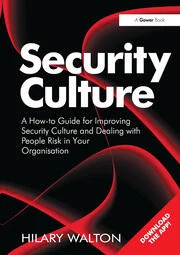
Security Culture: A How-to Guide for Improving Security Culture and Dealing with People Risk in Your Organisation

Security Culture: A How-to Guide for Improving Security Culture and Dealing with People Risk in Your Organisation

See More Products

Related Articles

  • Medical Training for Security

    The case for robust medical training for security staff

    See More
  • Skills for a Successful Executive in the Business of Security

    See More
  • U.S. Hotels to Arm Staff with Panic Buttons and Safety Training

    See More

Related Products

See More Products
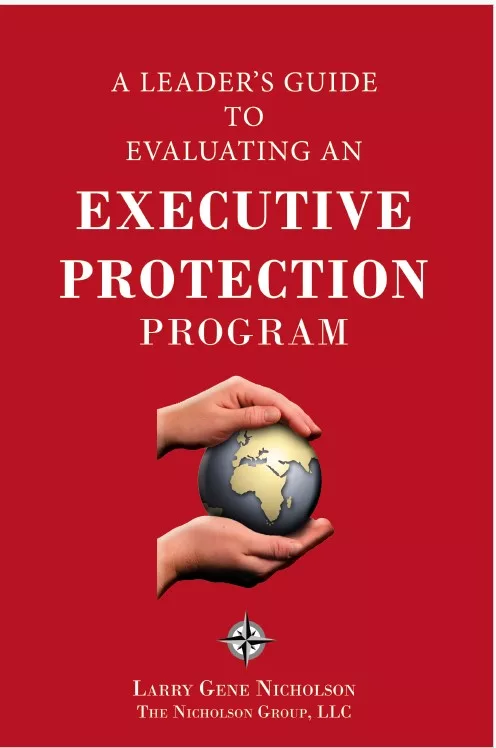
  • A Leaders Guide Book Cover_Nicholson_29Sept2023.jpg

    A Leader’s Guide to Evaluating an Executive Protection Program

  • security culture.webp

    Security Culture: A How-to Guide for Improving Security Culture and Dealing with People Risk in Your Organisation

  • Physical Security and Environmental Protection

See More Products
×

Sign-up to receive top management & result-driven techniques in the industry.

Join over 20,000+ industry leaders who receive our premium content.

SIGN UP TODAY!
  • RESOURCES
    • Advertise
    • Contact Us
    • Store
    • Want More
  • SIGN UP TODAY
    • Create Account
    • eMagazine
    • Newsletter
    • Customer Service
    • Manage Preferences
  • SERVICES
    • Marketing Services
    • Reprints
    • Market Research
    • List Rental
    • Survey/Respondent Access
  • STAY CONNECTED
    • LinkedIn
    • Facebook
    • YouTube
    • X (Twitter)
  • PRIVACY
    • PRIVACY POLICY
    • TERMS & CONDITIONS
    • DO NOT SELL MY PERSONAL INFORMATION
    • PRIVACY REQUEST
    • ACCESSIBILITY

Copyright ©2025. All Rights Reserved BNP Media.

Design, CMS, Hosting & Web Development :: ePublishing