Security Magazine logo
search
cart
facebook twitter linkedin youtube
  • Sign In
  • Create Account
  • Sign Out
  • My Account
Security Magazine logo
  • NEWS
    • Security Newswire
    • Technologies & Solutions
  • MANAGEMENT
    • Leadership Management
    • Enterprise Services
    • Security Education & Training
    • Logical Security
    • Security & Business Resilience
    • Profiles in Excellence
  • PHYSICAL
    • Access Management
    • Fire & Life Safety
    • Identity Management
    • Physical Security
    • Video Surveillance
    • Case Studies (Physical)
  • CYBER
    • Cybersecurity News
    • More
  • BLOG
  • COLUMNS
    • Career Intelligence
    • Cyber Tactics
    • Cybersecurity Education & Training
    • Leadership & Management
    • Security Talk
  • EXCLUSIVES
    • Annual Guarding Report
    • Most Influential People in Security
    • The Security Benchmark Report
    • Top Guard and Security Officer Companies
    • Top Cybersecurity Leaders
    • Women in Security
  • SECTORS
    • Arenas / Stadiums / Leagues / Entertainment
    • Banking/Finance/Insurance
    • Construction, Real Estate, Property Management
    • Education: K-12
    • Education: University
    • Government: Federal, State and Local
    • Hospitality & Casinos
    • Hospitals & Medical Centers
    • Infrastructure:Electric,Gas & Water
    • Ports: Sea, Land, & Air
    • Retail/Restaurants/Convenience
    • Transportation/Logistics/Supply Chain/Distribution/ Warehousing
  • EVENTS
    • Industry Events
    • Webinars
    • Solutions by Sector
    • Security 500 Conference
  • MEDIA
    • Interactive Spotlight
    • Photo Galleries
    • Podcasts
    • Polls
    • Videos
      • Cybersecurity & Geopolitical Discussion
      • Ask Me Anything (AMA) Series
  • MORE
    • Call for Entries
    • Classifieds & Job Listings
    • Continuing Education
    • Newsletter
    • Sponsor Insights
    • Store
    • White Papers
  • EMAG
    • eMagazine
    • This Month's Content
    • Advertise
  • SIGN UP!
CybersecurityManagementPhysicalSecurity Enterprise ServicesSecurity Leadership and ManagementLogical SecuritySecurity & Business ResilienceSecurity Education & Training

Key considerations for contact tracing applications
By Janet Jones
Coronavirus
March 12, 2021

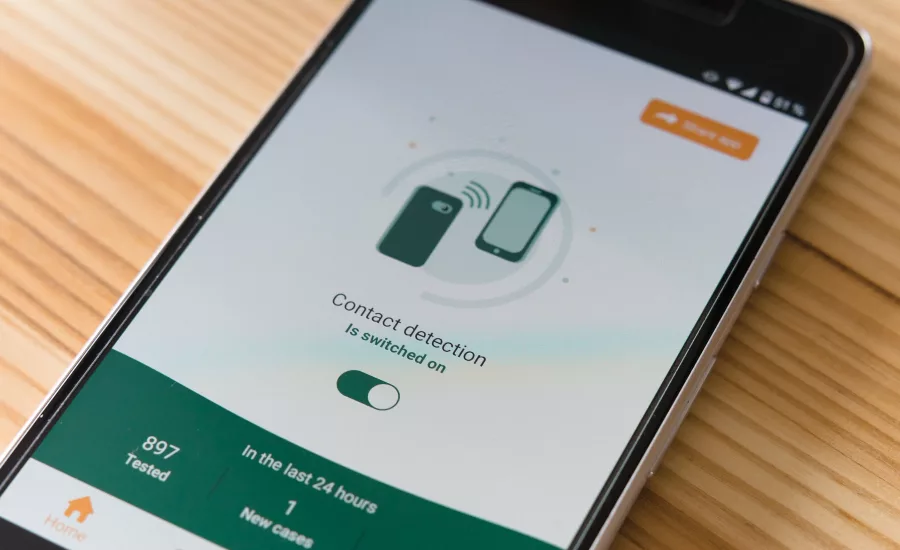
In the era of COVID-19, governments, a number of major tech companies, and small developers are creating contact tracing applications and tools in an attempt to continue containing the outbreak and re-open safely. Aiming to assist manual trackers, the majority of applications feature Bluetooth tracking, including Apple and Google’s joint effort, which identifies when two users are in close contact, but doesn’t record locations and is decentralized to control the data users upload. Apple and Google’s API has been deployed by a variety of governments, including in the UK, multiple states across the U.S., and Italy. 

To many citizens, this all may feel intrusive, but contact tracing isn’t new -- it’s an age-old tool, usually done entirely manually, for public health officials controlling emerging diseases. Today’s advancements in technology could help augment manual contract tracing efforts. Yet, in its early stages, it's difficult to measure effectiveness of these applications, and major roadblocks have arisen that may deter users or make the technology more of a headache than its worth. Further, as applications are implemented across the world, a familiar debate arises over privacy and potential avenues for abuse. 

With any developing technology expanding its prevalence in our day to day lives, many of these issues will always be an ongoing concern for governments and users. But it's crucial to analyze these technologies and efforts to constantly see if applications are having the intended impact and supporting manual tracking efforts, or if it's simply creating more issues. 

While the jury’s out on whether these applications will be an effective tool for contact tracers, or if the majority of citizens will fully embrace these applications, it’s clear that contact tracing will likely become a part of our daily lives. To keep these technologies on the right track, developers, policymakers and stakeholders must ask questions to measure effectiveness, while addressing key issues to prevent abuse and secure consumer data. 


Abuse and Misinformation

From major breaches to individuals manipulating the system, having apps that keep track of our most personal data piques the interests of bad actors. This could look like trolling, where an individual reports fake symptoms or contact, sparking panic that a mass amount of people could have been infected. Or it could take the form of replay attacks, where bad actors connect to and intercept data on a secure network, like the number of positive cases, then either resend or misdirect the data, creating false positives. Trackers assigned to manage and utilize the data obtained from these apps may not understand how to identify an attack -- whether sophisticated or not -- so it is imperative that all channels flowing into a contact tracing application database are secure, and relevant parties are trained to spot potential threats. 


Access to Private Information

Depending on which data is required, most contact tracing apps, and the individuals assigned to monitor cases, have access to private location information -- more of our data than most people have ever willingly provided to health authorities before. Further, some apps include symptom tracking features, meaning that if a breach happens, health data is also potentially vulnerable. And, China was even using their own applications to see individuals that break quarantine rules, unlocking concerns of misuse outside of COVID in the future. 

Another layer of data frequently needed in applications is location tracking to determine recent points of contact. In lieu of direct location tracking, many applications are opting for Bluetooth pings, but there are concerns that it may not be foolproof, since signals may be unreliable, like in underground public transport, or inaccurately measure distance between users. Additionally, many applications aren’t currently utilizing certificate pinning, which is an additional layer of secure communication between the user and the application itself, or the public health authority, encrypting their data. Without certificate pinning, applications run the risk of mobile device developers or other corporations being able to access intimate health data and see statuses. Although this isn’t necessarily an issue for most, it may deter many users who are uncomfortable with this level of potential access, impacting adoption. 


Performance

Every device we own depends on the company behind it. To keep these devices working and constantly improving, developers frequently provide system updates, which impact calibration. For applications using Bluetooth tracking, most set thresholds for distance between pings to determine whether or not contact was actually made. When calibrations are shifted on the backend on the device itself, Bluetooth ranges are then changed and throws off these set thresholds. Unless the technology developer provides those calibration details to the application developer ahead of the update, it will greatly impact the performance of the contact tracing application, without any control from the health authority itself, causing errors and diminishing performance until the radius and thresholds are updated. Overall, public health authorities and application developers need to have constant communication in order to prevent these lapses, and a broader conversation over this control is needed. 

As with most technologies, nothing is foolproof -- bad actors will typically find weaknesses and exploit them. While citizens adjust to providing their data, the larger industry should ensure they are taking time to identify privacy concerns, tackle potential abuse vectors, and measure effectiveness within these contact tracing tools, and ultimately determine if these tools are viable for general consumption.


KEYWORDS: contact tracing COVID-19 privacy concerns remote work

Share This Story

Looking for a reprint of this article?
From high-res PDFs to custom plaques, order your copy today!


Janet jones headshot

Janet Jones is Vice-Chair of the Messaging, Malware and Mobile Anti-Abuse Working Group, a non-profit cybersecurity consortium focused on combating online abuse, including malware, spam, viruses, among other forms of exploitation. Within M3AAWG, Jones also serves as Co-Chair of the M3AAWG Data and Identity Protection Committee, where she actively contributes to industry best practices and protocols for implementing measures that protect operational security and customer privacy. Jones also leads the organization’s Diversity & Inclusion initiatives. Outside of M3AAWG, Jones is Senior Security Program Manager, Customer Security & Trust Engineering, at Microsoft.

Recommended Content

JOIN TODAY
To unlock your recommendations.

Already have an account? Sign In

  • Iintegration and use of emerging tools

    Future Proof Your Security Career with AI Skills

    AI’s evolution demands security leaders master...
    Columns
    By: Jerry J. Brennan and Joanne R. Pollock
  • The 2025 Security Benchmark Report

    The 2025 Security Benchmark Report

    The 2025 Security Benchmark Report surveys enterprise...
    The Security Benchmark Report
    By: Rachelle Blair-Frasier
  • The Most Influential People in Security 2025

    Security’s Most Influential People in Security 2025

    Security Magazine’s 2025 Most Influential People in...
    Most Influential People in Security
    By: Security Staff
Manage My Account
  • Security Newsletter
  • eMagazine Subscriptions
  • Manage My Preferences
  • Online Registration
  • Mobile App
  • Subscription Customer Service

More Videos

Sponsored Content

Sponsored Content is a special paid section where industry companies provide high quality, objective, non-commercial content around topics of interest to the Security audience. All Sponsored Content is supplied by the advertising company and any opinions expressed in this article are those of the author and not necessarily reflect the views of Security or its parent company, BNP Media. Interested in participating in our Sponsored Content section? Contact your local rep!

close
  • critical event management
    Sponsored byEverbridge

    Why a Unified View Across IT, Continuity, and Security Makes or Breaks Crisis Response

  • Charlotte Star Room
    Sponsored byAMAROK

    In an Uncertain Economy, Security Is a Necessity - Not an Afterthought

  • Sureview screen
    Sponsored bySureView Systems

    The Evolution of Automation in the Command Center

Popular Stories

The Lourve

The Lourve Heist: What Was the State of the Museum’s Security?

The 2025 Security Benchmark Report

The 2025 Security Benchmark Report

Office supplies

Security Leaders Share Why 77% Organizations Lose Data Due to Insider Risks

American Airlines

Security Leaders Discuss Cyberattack on American Airlines Subsidiary

Going Down with the Ship

Going Down with the Ship

Top Cybersecurity Leaders

Events

September 18, 2025

Security Under Fire: Insights on Active Shooter Preparedness and Recovery

ON DEMAND: In today’s complex threat environment, active shooter incidents demand swift, coordinated and well-informed responses.

November 13, 2025

Inside the 2025 Security Benchmark Report

The 2025 Security Benchmark Report unveils the top trends CSOs and enterprise security executives are facing in today’s current climate and how each of these trends could potentially impact the enterprise’s global reputation with the public, governments, and business partners. 

View All Submit An Event

Products

Security Culture: A How-to Guide for Improving Security Culture and Dealing with People Risk in Your Organisation

Security Culture: A How-to Guide for Improving Security Culture and Dealing with People Risk in Your Organisation

See More Products

Related Articles

  • contact tracing solutions for your enterprise security coronavirus response

    Contact tracing 101: Tips for enterprises

    See More
  • Coronavirus

    Bipartisan Group of Senators Proposes Privacy Bill for COVID-19 Contact-Tracing Apps

    See More
  • coronavirus

    Bahrain, Kuwait and Norway Contact Tracing Apps Among Most Dangerous for Privacy

    See More

Related Products

See More Products
  • Photonic Sensing: Principles and Applications for Safety and Security Monitoring

  • 9780367221942.jpg

    From Visual Surveillance to Internet of Things: Technology and Applications

  • Physical Security and Safety: A Field Guide for the Practitioner

See More Products
×

Sign-up to receive top management & result-driven techniques in the industry.

Join over 20,000+ industry leaders who receive our premium content.

SIGN UP TODAY!
  • RESOURCES
    • Advertise
    • Contact Us
    • Store
    • Want More
  • SIGN UP TODAY
    • Create Account
    • eMagazine
    • Newsletter
    • Customer Service
    • Manage Preferences
  • SERVICES
    • Marketing Services
    • Reprints
    • Market Research
    • List Rental
    • Survey/Respondent Access
  • STAY CONNECTED
    • LinkedIn
    • Facebook
    • YouTube
    • X (Twitter)
  • PRIVACY
    • PRIVACY POLICY
    • TERMS & CONDITIONS
    • DO NOT SELL MY PERSONAL INFORMATION
    • PRIVACY REQUEST
    • ACCESSIBILITY

Copyright ©2025. All Rights Reserved BNP Media.

Design, CMS, Hosting & Web Development :: ePublishing