We Need to Focus More on Right of Boom
In government parlance, Boom is the detonation of an explosive device, initially used in speaking of a nuclear bomb. Those steeped in disaster preparedness and response now speak in terms of “left of boom” and “right of boom.” Left of boom is the planning and preparation that goes into ensuring that a device never detonates and right of boom deals with responding to a disaster, generally the man-made type. Much of what organizations do is to address left of boom. They harden their facilities, create redundancies and generally spend large amounts of time and dollars to stop a tragedy before it occurs. They focus heavily on left of boom because boom is anathema to their existence.
Left of boom planning and preparation is important. However, sooner or later, disaster can strike the most hardened of targets. Whether it is a terrorist, a disgruntled employee, a spurned spouse or simply a lunatic, they can wreak havoc. If it is an enterprising computer hacker or an unbalanced individual who has conjured up in a deranged mind how he or she has been wronged by a company, or a person like Stephen Paddock, whose motive in killing 58 concertgoers on the Las Vegas Strip and injuring more than 800 will never be known, disaster, or Boom, can strike anywhere. I often marvel at how offices, schools and other institutions spend millions of dollars in an attempt to keep would-be killers out of their premises, when a single pull of the fire alarm will send all of their people streaming unprotected into the streets and in harm’s way.
Yes, left of boom spending is important, but I fear that in all of the expenditures of time and money in defending against attack, what to do in the aftermath of one – the right of boom scenario – is being shortchanged. It is there, after the worst has occurred, that planning, practicing and action can save lives.
If the worst happens, the response of police and emergency services, in the best of circumstances, will be three to five minutes. In, say, an active shooter situation, police and emergency services personnel will not initially be looking to administer to the wounded. They will be looking to neutralize the shooter thereby extending the time within which the living victims are cared for. Thus, the term first responders for police and emergency services is a misnomer. They are actually the second responders. The first responders are the people on the scene. The people who will react to the tragedy in real time and begin the process of response and recovery. What occurs in the moments after a disaster can save or lose lives. A person can “bleed out” in five minutes. If there is someone to administer to him, he can survive. If not, he will die.
Thus, how we prepare for, practice for and put our plans in action, right of boom can affect in a real way the death toll from a tragic event. Something as simple as carrying a cell phone on the Sabbath, which Rabbi Jeffrey Myers of the Tree of Life Synagogue in Pittsburgh was convinced to do by the security advisor for the Jewish Federation, can make an enormous difference. Rabbi Myers was able to summon police and emergency services, something that would have been seriously delayed had he not been so convinced. He also gave commands to the congregation to drop to the floor, not to move and to remain silent. All of those actions worked to save lives on that tragic day.
Given that we can never make ourselves totally resistant to boom, what we do right of boom is important and, in my experience, an area that has received insufficient focus. Whether it is because of the mind-set that it can’t happen here or because training for the worst is wrongly perceived as not conducive to raising employee morale or because the costs of right of boom preparation are not as readily quantifiable as target hardening, organizations tend to focus more on left, than right, of boom. That reasoning is short-sighted and risky.
First, perhaps the most dangerous mind-set is that of it can’t happen here. That is what the people at the Pulse nightclub, the Las Vegas Strip, Columbine and nearly every other organization that has found itself a victim thinks. That is not to criticize them or claim they did not prepare. It is to say that we are human and the vast majority of us, myself included, do not get up every morning believing we will be victimized. We must all get by that, however, and plan, prepare and be ready to execute if and when the time comes.
Next, while talking to your employees or others at your organization about how to deal with a worst-case scenario can be uncomfortable and when properly presentenced it can be comforting. I would rather work for an organization that placed my well-being first than one that buried its head in the sand and left me vulnerable. Having candid talks with employees and planning for a tragic event, in a sensitive manner, should leave employees feeling good about their employer and, when they talk amongst their friends, may leave those friends wondering why their organizations are not taking their safety as seriously. Planning for a catastrophe can actually let your employees know that you truly care for their safety and thus be a morale boost. However, for that to happen management must be behind the push and safety must be practiced top-down.
And while security improvements to your facility are important and very easy to physically see, preparation for right of boom is just as important and will save lives. Companies buy insurance and make plenty of expenditures on things not tangible because they benefit from those expenditures. The same is true of right of boom preparation. Like insurance, we hope never to have to utilize it, but it is comforting to know that if things go wrong it is in place. Right of boom preparation can put your best foot forward when the worst possible thing has occurred.
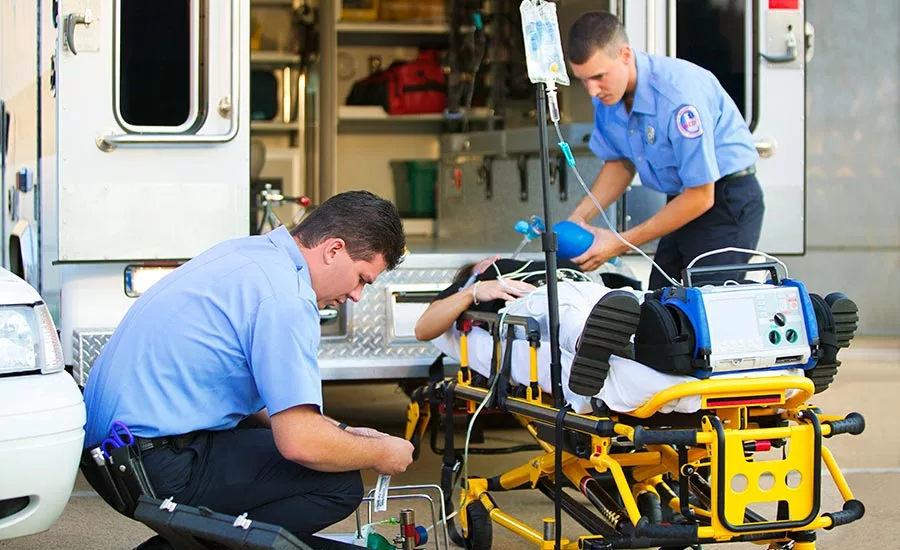
Thus, employees should be trained in what to do in various scenarios. They should be encouraged to take first-aid training and organizations should be willing to provide the time and funds for them to attend the classes necessary to become certified. The Department of Homeland Security is behind an awareness campaign known as Stop the Bleed, which is seeking to encourage people to become “trained, equipped, and empowered” to assist in a bleeding emergency until professional help can arrive.
BleedingControl.org is an initiative of the American College of Surgeons and the Hartford Consensus to educate people on how to be prepared in the event of a tragedy. Their website contains great information and videos about how to stop the bleed. Organizations should ensure that they have people prepared to be true first responders and that they are properly equipped with bleeding control kits, tourniquets and other first-aid equipment to save lives.
Employees should be trained on how to respond to certain events, whom to report that a dangerous event has happened and how to alert others. These trainings must deal with facing a tragedy, but people who deal with such matters before and rehearse and know what to do in the event of the real thing, are better equipped to save themselves and others. We can leave them to shift for themselves or we can truly prepare them to survive and help others to survive. It is worth the time spent speaking about the unspeakable in order to properly prepare everyone for the worst.
Many organizations believe they have acquitted their responsibility by informing employees in the event of an active shooter to “Run-Hide-Fight.” While this is somewhat easy to remember and on the surface sounds like a plan, it is overly basic and unless clarified and properly expanded upon, will be insufficient to save people. In drills, people who have been instructed to run, hide, fight, often panic and hide under their desk when locking their office door may have been a better option had they been taught to be situationally aware and make an assessment of their situation before acting. Hide and hope is not a good tactic for survival.
Incident command is something virtually every first responder is trained to implement. How quickly a command structure takes hold to manage events right of boom can go a long way to determining the success of the response. Chaos is to be avoided. In the minutes immediately after a tragedy, how quickly someone can take charge and issue directives can save lives if done knowledgeably and with authority. Conflicting messages coming for separate voices will only add to a chaotic situation. The sooner one voice speaks appropriately the better. In the Tree of Life Synagogue shooting, the quick, authoritative voice of Rabbi Myers instructing his congregants what to do undoubtedly saved some of their lives. Thus, organizations need to construct a framework for deciding who will be in charge in the event of a disastrous occurrence and how the immediate response will be handled. Incident command is not only for law enforcement although when they arrive, control of the smatter will become theirs.
Who will speak for the organization? Do the people in the organization know to defer to that person and refer all inquiries to him or her? It will be important to speak with a single voice and not have conflicting messages and incomplete or incorrect information emanating from the organization. How will information be disseminated? How long will you be able to wait before making a comment? In the event of a tragedy, where will the decision-makers convene? How will the organization best serve the needs of the victims and their families as well as assisting law enforcement in its efforts? All of these questions need to be thought about left of boom so they can be quickly implemented right of boom.
Ensuring as best one can that a tragic event of man’s making will never occur at your organization is an important undertaking. However, to carefully harden your assets without planning for what you will do in the event your hardening is not successful, leaves you vulnerable and your employees unsafe. Every organization should have a plan for what to do if the unthinkable happens and how they will react if it does. Planning for left of boom without planning for right is like going to work in nothing but your overcoat. Everything will be fine until circumstances change.
Looking for a reprint of this article?
From high-res PDFs to custom plaques, order your copy today!