Security Magazine logo
search
cart
facebook twitter linkedin youtube
  • Sign In
  • Create Account
  • Sign Out
  • My Account
Security Magazine logo
  • NEWS
    • Security Newswire
    • Technologies & Solutions
  • MANAGEMENT
    • Leadership Management
    • Enterprise Services
    • Security Education & Training
    • Logical Security
    • Security & Business Resilience
    • Profiles in Excellence
  • PHYSICAL
    • Access Management
    • Fire & Life Safety
    • Identity Management
    • Physical Security
    • Video Surveillance
    • Case Studies (Physical)
  • CYBER
    • Cybersecurity News
    • More
  • BLOG
  • COLUMNS
    • Career Intelligence
    • Cyber Tactics
    • Cybersecurity Education & Training
    • Leadership & Management
    • Security Talk
  • EXCLUSIVES
    • Annual Guarding Report
    • Most Influential People in Security
    • The Security Benchmark Report
    • Top Guard and Security Officer Companies
    • Top Cybersecurity Leaders
    • Women in Security
  • SECTORS
    • Arenas / Stadiums / Leagues / Entertainment
    • Banking/Finance/Insurance
    • Construction, Real Estate, Property Management
    • Education: K-12
    • Education: University
    • Government: Federal, State and Local
    • Hospitality & Casinos
    • Hospitals & Medical Centers
    • Infrastructure:Electric,Gas & Water
    • Ports: Sea, Land, & Air
    • Retail/Restaurants/Convenience
    • Transportation/Logistics/Supply Chain/Distribution/ Warehousing
  • EVENTS
    • Industry Events
    • Webinars
    • Solutions by Sector
    • Security 500 Conference
  • MEDIA
    • Interactive Spotlight
    • Photo Galleries
    • Podcasts
    • Polls
    • Videos
      • Cybersecurity & Geopolitical Discussion
      • Ask Me Anything (AMA) Series
  • MORE
    • Call for Entries
    • Classifieds & Job Listings
    • Continuing Education
    • Newsletter
    • Sponsor Insights
    • Store
    • White Papers
  • EMAG
    • eMagazine
    • This Month's Content
    • Advertise
  • SIGN UP!
Security Enterprise ServicesSecurity & Business Resilience

Send the Right Message: How to Streamline Emergency Communications in the Social Media Era

By Dillon Twombly
social-enews
February 27, 2018

A disgruntled airline passenger posts a video rant. A parent inadvertently reveals where a bank CEO’s kids go to school. An employee accuses an oil and gas executive of sexual harassment.

Each of these can be a PR nightmare, but they are also clear security risks. In an era defined by instantaneous social sharing, unprecedented transparency and 24/7 news coverage, Chief Security Officers (CSOs) find themselves with a new job: communications.

Today’s security teams have much less time to control the narrative. CSOs are expected to know key details immediately and prepare responses more rapidly. And responses often include talking points, which means coordinating with corporate communications, PR, marketing and others.

In short, CSOs need to develop a security-focused communications strategy. Here are three goals to consider as you create your own framework.


Frame the Story

When breaking stories have a security angle, it is vital for CSOs to help frame the discussion. The challenge is providing enough context to help external audiences understand what is happening, without offering details that compromise the security response or add complexity.

For example, in the most serious cases – email hack, data center outage, terrorism – messages should alleviate panic that could expose other people or locations, or incite copycat behavior. By the same token, CSOs need to manage expectations among investors and analysts to prevent a security risk from threatening the company’s finances or brand reputation.

The best way to do this is to pre-emptively align with corporate communications and marketing. Establishing a process up front gives you the chance to determine which group will lead the effort, what technology platforms will be used to receive updates and deliver responses, what your goals are for turnaround time, and how various groups will coordinate on deadline.

Keep in mind, there are positive use cases too. When companies help with relief efforts after natural disasters, it is just as important to tell the right story and tell it quickly.

Ultimately, these efforts will help CSOs integrate more closely with communications professionals across the business and avoid sending mixed messages that make a bad situation worse.


Create a Culture of Security

The second goal of your communication strategy is internal. Delivering the right messages to internal stakeholders has a dual benefit. It strengthens enterprise security and raises the profile of your team and the value you provide.

For employees, this may involve communicating more regularly about security responsibilities, such as badging and access control. For leadership, it will likely mean responding to incidents much faster. The C-suite and the board are social media consumers too. If they aren’t already, they will soon be asking more detailed questions earlier in the process.

Start with an assessment of how information flows between your GSOC or security team and other departments. CSOs need to know how details and updates about security risks are sourced and vetted. What is the threshold for involving corporate communications or the marketing team? Is there a process for alerting different parts of the company, and if so, how many steps are involved?

To gain even more efficiency, consider adding a corporate communications liaison. Many security leaders have found it helpful to have someone who “lives in both worlds,” and can quickly identify ways to fill information gaps in both the response to breaking incidents as well as to ensure internal awareness about security policies and procedures.


Manage Transparency

A third goal is mitigating the transparency of the social media era. When everyone in your company is using social media, security issues are much more widely known – including threats that never materialize. This shortens the time CSOs have to act before rumors create noise and additional workload for already overtaxed security teams.

The good news is, social media can help. CSOs can use real-time social media alerts to learn about incidents sooner and gain extra time to develop a response. Social media can help CSOs understand what stakeholders are saying. It can be used to deliver messages quickly and globally. And it can provide a record of how information travels during incidents, which can inform training and create a productive feedback loop.


A Final Thought

Whether your focus is external, internal, or all of the above, a security-driven communication strategy should ensure process standardization, assist with cross-functional coordination, establish a clear division of labor, and set your internal clock for when to reach out to various audiences.

But hope is not a strategy, and without one, CSOs run the risk of not having a good answer when the CEO asks if your talking points are ready for the press conference.

KEYWORDS: C-suite security disaster recovery emergency communications social media monitoring

Share This Story

Looking for a reprint of this article?
From high-res PDFs to custom plaques, order your copy today!


Dillontwombly  q1iw3xe34u

Dillon Twombly manages corporate security engagements for Dataminr, a leader in real-time information discovery that transforms the public Twitter stream into actionable alerts about breaking news, real-world events, off-the-radar content and emerging trends, ahead of traditional sources.

Dillon Twombly is Senior Vice President of Corporate Sales at Dataminr, a real-time event notification and social media analytics platform. Dillon was previously Assistant Vice President for Strategy and Planning at MetLife where he helped to build a new Global Corporate Security group across 46 countries. Prior to joining MetLife he worked at a political risk boutique where he helped global multinational corporations and major financial services firms understand and mitigate political and security risks around major transactions. Prior to joining the private sector Dillon served as an Operations Officer with the Central Intelligence Agency where he completed three field tours, including Afghanistan, and focused on counterterrorism. Dillon also has worked as an Analyst at the Office of Naval Intelligence and as an Investment Banking Summer Associate at Houlihan Lokey's Aerospace and Defense Group. Dillon is a Term Member at the Council on Foreign Relations and a founding member of the Ambassador Council at the International Crisis Group. He holds a BA in History from Trinity College in Connecticut, and an MBA in Finance from the University of North Carolina and speaks Turkish.

Recommended Content

JOIN TODAY
To unlock your recommendations.

Already have an account? Sign In

  • Iintegration and use of emerging tools

    Future Proof Your Security Career with AI Skills

    AI’s evolution demands security leaders master...
    Security Education & Training
    By: Jerry J. Brennan and Joanne R. Pollock
  • The 2025 Security Benchmark Report

    The 2025 Security Benchmark Report

    The 2025 Security Benchmark Report surveys enterprise...
    The Security Benchmark Report
    By: Rachelle Blair-Frasier
  • The Most Influential People in Security 2025

    Security’s Most Influential People in Security 2025

    Security Magazine’s 2025 Most Influential People in...
    Most Influential People in Security
    By: Security Staff
Manage My Account
  • Security Newsletter
  • eMagazine Subscriptions
  • Manage My Preferences
  • Online Registration
  • Mobile App
  • Subscription Customer Service

More Videos

Sponsored Content

Sponsored Content is a special paid section where industry companies provide high quality, objective, non-commercial content around topics of interest to the Security audience. All Sponsored Content is supplied by the advertising company and any opinions expressed in this article are those of the author and not necessarily reflect the views of Security or its parent company, BNP Media. Interested in participating in our Sponsored Content section? Contact your local rep!

close
  • critical event management
    Sponsored byEverbridge

    Why a Unified View Across IT, Continuity, and Security Makes or Breaks Crisis Response

  • Charlotte Star Room
    Sponsored byAMAROK

    In an Uncertain Economy, Security Is a Necessity - Not an Afterthought

  • Sureview screen
    Sponsored bySureView Systems

    The Evolution of Automation in the Command Center

Popular Stories

Cybersecurity trends of 2025

3 Top Cybersecurity Trends from 2025

Red laptop

Security Leaders Discuss SitusAMC Cyberattack

Green code

Logitech Confirms Data Breach, Security Leaders Respond

Neon human and android hands

65% of the Forbes AI 50 List Leaked Sensitive Information

The Louvre

After the Theft: Why Camera Upgrades Should Begin With a Risk Assessment

Top Cybersecurity Leaders

Events

September 18, 2025

Security Under Fire: Insights on Active Shooter Preparedness and Recovery

ON DEMAND: In today’s complex threat environment, active shooter incidents demand swift, coordinated and well-informed responses.

December 11, 2025

Responding to Evolving Threats in Retail Environments

Retail security professionals are facing an increasingly complex array of security challenges — everything from organized retail crime to evolving cyber-physical threats and public safety concerns.

View All Submit An Event

Products

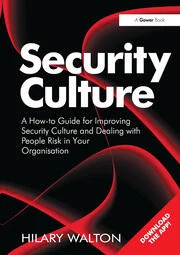
Security Culture: A How-to Guide for Improving Security Culture and Dealing with People Risk in Your Organisation

Security Culture: A How-to Guide for Improving Security Culture and Dealing with People Risk in Your Organisation

See More Products

Related Articles

  • west-enews

    Brand Security: Maneuvering in the Wild, Wild West (AKA Social Media)

    See More
  • Social Media for Business

    5 Ways Social Media is Changing Corporate Security

    See More
  • Police tape at an emergency location

    The ROI on Physical Safety and Security

    See More

Related Products

See More Products
  • Optimizing Social Media from a B2B Perspective

  • security culture.webp

    Security Culture: A How-to Guide for Improving Security Culture and Dealing with People Risk in Your Organisation

  • Physical Layer Security in Wireless Communications

See More Products
×

Sign-up to receive top management & result-driven techniques in the industry.

Join over 20,000+ industry leaders who receive our premium content.

SIGN UP TODAY!
  • RESOURCES
    • Advertise
    • Contact Us
    • Store
    • Want More
  • SIGN UP TODAY
    • Create Account
    • eMagazine
    • Newsletter
    • Customer Service
    • Manage Preferences
  • SERVICES
    • Marketing Services
    • Reprints
    • Market Research
    • List Rental
    • Survey/Respondent Access
  • STAY CONNECTED
    • LinkedIn
    • Facebook
    • YouTube
    • X (Twitter)
  • PRIVACY
    • PRIVACY POLICY
    • TERMS & CONDITIONS
    • DO NOT SELL MY PERSONAL INFORMATION
    • PRIVACY REQUEST
    • ACCESSIBILITY

Copyright ©2025. All Rights Reserved BNP Media.

Design, CMS, Hosting & Web Development :: ePublishing