Security Magazine logo
search
cart
facebook twitter linkedin youtube
  • Sign In
  • Create Account
  • Sign Out
  • My Account
Security Magazine logo
  • NEWS
    • Security Newswire
    • Technologies & Solutions
  • MANAGEMENT
    • Leadership Management
    • Enterprise Services
    • Security Education & Training
    • Logical Security
    • Security & Business Resilience
    • Profiles in Excellence
  • PHYSICAL
    • Access Management
    • Fire & Life Safety
    • Identity Management
    • Physical Security
    • Video Surveillance
    • Case Studies (Physical)
  • CYBER
    • Cybersecurity News
    • More
  • BLOG
  • COLUMNS
    • Career Intelligence
    • Cyber Tactics
    • Cybersecurity Education & Training
    • Leadership & Management
    • Security Talk
  • EXCLUSIVES
    • Annual Guarding Report
    • Most Influential People in Security
    • The Security Benchmark Report
    • Top Guard and Security Officer Companies
    • Top Cybersecurity Leaders
    • Women in Security
  • SECTORS
    • Arenas / Stadiums / Leagues / Entertainment
    • Banking/Finance/Insurance
    • Construction, Real Estate, Property Management
    • Education: K-12
    • Education: University
    • Government: Federal, State and Local
    • Hospitality & Casinos
    • Hospitals & Medical Centers
    • Infrastructure:Electric,Gas & Water
    • Ports: Sea, Land, & Air
    • Retail/Restaurants/Convenience
    • Transportation/Logistics/Supply Chain/Distribution/ Warehousing
  • EVENTS
    • Industry Events
    • Webinars
    • Solutions by Sector
    • Security 500 Conference
  • MEDIA
    • Interactive Spotlight
    • Photo Galleries
    • Podcasts
    • Polls
    • Videos
      • Cybersecurity & Geopolitical Discussion
      • Ask Me Anything (AMA) Series
  • MORE
    • Call for Entries
    • Classifieds & Job Listings
    • Newsletter
    • Sponsor Insights
    • Store
    • White Papers
  • EMAG
    • eMagazine
    • This Month's Content
    • Advertise
  • SIGN UP!
Cyber Tactics ColumnCybersecurity News

Adjust Your Priorities for Risk-Centric Asset Management

By Steven Chabinsky
August 1, 2015

This is the first in a recurring series that explores the functions, categories and subcategories of the National Institute of Standards & Technology (NIST) cybersecurity framework. 


How the Framework Works

NIST divides cybersecurity risk management into the following five functions: identify, protect, detect, respond and recover. In NIST-speak, a function is a high level activity that expresses your company’s ability to organize relevant information to enable risk management decisions; to discover and address threats, vulnerabilities and their consequences; or to improve risk mitigation processes over time. Each of NIST’s five functions is broken down into categories, which express intended outcomes, and subcategories, which express the most common actions organizations can take to help achieve each outcome.


Cover Your Assets

NIST defines the category of asset management broadly to refer to an organization’s ability to identify and manage its “data, personnel, devices, systems, and facilities” and to do so “consistent with their relative importance to business objectives and the organization’s risk strategy.” 

It is the last part of NIST’s definition that demonstrates the fundamental principle of all security risk management, to include asset management. In order to be both effective at reducing the most significant business risks and efficient in using corporate resources, a practical cybersecurity strategy requires two things: first, that business leaders actively become informed about the potential impact on their corporate goals of failures relating to confidentiality, integrity and availability of data and systems; and, second, that the same fully informed business leaders then exercise sound discretion to implement security controls consistent with their company’s specific risk profile.


Taking Stock

To begin companies should evaluate whether they have in place, or should put in place, the following capabilities:

  • identify and track the technology assets the business relies upon;
  • determine who owns each technology asset and who is responsible for physically and digitally securing it (including installing critical security updates and upgrades);
  • adopt and enforce an acceptable use policy for technology assets; and,
  • adopt and enforce a life-cycle plan that includes support for, and retirement of, IT assets.


SAM, I Am

NIST points out that companies would do well to consider taking inventory of the physical devices and systems within the organization. These processes commonly are referred to as Hardware Asset Management, or HAM, and Network Asset Management, or NAM. Companies also should take inventory of the software platforms and applications within the organization. This process commonly is referred to as Software Asset Management, or SAM. Adding even more rhyming acronyms to the mix, these methods collectively fall under the broad category of Information Technology Asset Management (ITAM), or simply Technology Asset Management (TAM). Yes, TAM is SAM with HAM and NAM, but at least none of this involves green eggs.


Get Your Priorities Straight

Armed with the knowledge of what hardware, software and systems your company has, NIST recommends a prioritization of resources and data “based on their classification, criticality, and business value.” The most significant data and assets might then be categorized for greater security scrutiny that accounts for the potential harm that a loss of confidentiality, integrity or availability likely would cause to the business itself or to hapless third parties. Companies also should consider cataloguing and prioritizing the information systems that are external to the organization but significantly relied upon by it, for example cloud-based services.


Data with Destiny

Companies also should consider mapping the flow of corporate information and aligning that flow with an adequate information security architecture. Dozens of questions may present themselves during this stage, to include whether your organization has assigned security attributes to its sensitive data (such as corporate confidential, client confidential, export controlled, etc.) and, if so, whether those policies are backed up by technical controls to restrict the movement of controlled data across internal and external assets; whether sensitive data is encrypted while in transit and at rest; whether all data and the metadata associated with it are subject to filtering and inspection; whether sensitive information is being transferred between networks with different security attributes; and whether controls exist to authorize or prohibit laptop, desktop, or server connections with peripheral devices (printers), removable media (thumb drives), and mobile devices (employee-owned smartphones).


Role with IT

Finally, the NIST framework includes setting cybersecurity roles and responsibilities that extend well beyond the IT security staff to encompass the entire workforce and all third party suppliers, customers and business partners. Examples include establishing personnel security requirements for employees and those vendors with access to corporate assets; providing role-based IT security training; and establishing contingency plans should high-impact assets be rendered insecure, untrustworthy or otherwise unavailable.


Conclusion

NIST lists asset management as the very first outcome anticipated by its cybersecurity framework. Whether that ranking was by choice or by chance, it certainly is hard to argue against the logic that it’s hard to secure something you don’t manage, it’s hard to manage something that you don’t know exists, and it’s hardly worth your while to do either if you don’t know it’s important. 

KEYWORDS: NIST cyber security framework security risk management

Share This Story

Looking for a reprint of this article?
From high-res PDFs to custom plaques, order your copy today!


Chabinsky 2016 200px

Steven Chabinsky is global chair of the Data, Privacy, and Cyber Security practice at White & Case LLP, an international law firm. He previously served as a member of the President’s Commission on Enhancing National Cybersecurity, the General Counsel and Chief Risk Officer of CrowdStrike, and Deputy Assistant Director of the FBI Cyber Division. He can be reached at chabinsky@whitecase.com.

Recommended Content

JOIN TODAY
To unlock your recommendations.

Already have an account? Sign In

  • Cyber tech background

    Security’s Top Cybersecurity Leaders 2026

    Security magazine’s Top Cybersecurity Leaders 2026 award...
    Cybersecurity
  • Iintegration and use of emerging tools

    Future Proof Your Security Career with AI Skills

    AI’s evolution demands security leaders master...
    Career Intelligence
    By: Jerry J. Brennan and Joanne R. Pollock
  • The 2025 Security Benchmark Report

    The 2025 Security Benchmark Report

    The 2025 Security Benchmark Report surveys enterprise...
    The Security Benchmark Report
    By: Rachelle Blair-Frasier
Manage My Account
  • Security Newsletter
  • eMagazine Subscriptions
  • Manage My Preferences
  • Online Registration
  • Mobile App
  • Subscription Customer Service

More Videos

Sponsored Content

Sponsored Content is a special paid section where industry companies provide high quality, objective, non-commercial content around topics of interest to the Security audience. All Sponsored Content is supplied by the advertising company and any opinions expressed in this article are those of the author and not necessarily reflect the views of Security or its parent company, BNP Media. Interested in participating in our Sponsored Content section? Contact your local rep!

close
  • Northland Controls sponsored content
    Sponsored byNorthland Controls

    The Execution Gap: Why Great Security Design Doesn't Always Deliver Great Security

Popular Stories

Healthcare supplies

3 Healthcare Breaches in Quick Succession Raises Concerns

Security's Most Influential people 2026

Security’s Most Influential People in Security 2026

Man driving

150M Driver’s Licenses Exposed, Security Experts Discuss

Police lights

Family of Fatally Shot Security Guard Seeking Answers

Stressed woman

Ransomware Doesn’t Just Break Systems. It Breaks People.


AlertMedia sponsored webinar

Events

September 30, 2026

When ICE Visits Your Hospital

LIVE: September 30, 2026 at 2 PM EDT This webinar will discuss practical frameworks for developing policies, training staff, and coordinating with legal, compliance, and executive leadership before an enforcement action occurs.

October 7, 2026

Modernizing Travel Risk Management: How Security Teams are Strengthening Duty of Care

LIVE: October 7, 2026 at 2 PM EDT Learn how security teams have strengthened travel risk management for a global workforce. Move beyond manual monitoring to earlier, verified awareness and a more defensible approach to security operations.

View All Submit An Event

Products

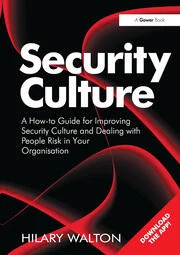
Security Culture: A How-to Guide for Improving Security Culture and Dealing with People Risk in Your Organisation

Security Culture: A How-to Guide for Improving Security Culture and Dealing with People Risk in Your Organisation

See More Products

Related Articles

  • Adjust Your Cyber Insurance Expectations

    See More
  • ransom-enews

    6 Ways Software Asset Management Can Help Minimize Security Risk

    See More
  • Driving with One Hand: Using a Single Solution for IT Asset Management

    See More

Related Products

See More Products
  • security culture.webp

    Security Culture: A How-to Guide for Improving Security Culture and Dealing with People Risk in Your Organisation

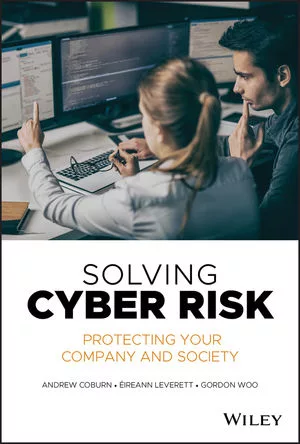
  • 1119490936.jpg

    Solving Cyber Risk: Protecting Your Company and Society

  • Risk Analysis and the Security Survey, 4th Edition

See More Products
×

Sign-up to receive top management & result-driven techniques in the industry.

Join over 20,000+ industry leaders who receive our premium content.

SIGN UP TODAY!
  • RESOURCES
    • Advertise
    • Contact Us
    • Store
    • Want More
  • SIGN UP TODAY
    • Create Account
    • eMagazine
    • Newsletter
    • Customer Service
    • Manage Preferences
  • SERVICES
    • Marketing Services
    • Reprints
    • Market Research
    • List Rental
    • Survey/Respondent Access
  • STAY CONNECTED
    • LinkedIn
    • Facebook
    • YouTube
    • X (Twitter)
  • PRIVACY
    • PRIVACY POLICY
    • TERMS & CONDITIONS
    • DO NOT SELL MY PERSONAL INFORMATION
    • PRIVACY REQUEST
    • ACCESSIBILITY

Copyright ©2026. All Rights Reserved BNP Media, Inc. and BNP Media II, LLC.

Design, CMS, Hosting & Web Development :: ePublishing