5 Minutes With
How School Security Looks During Summer Months
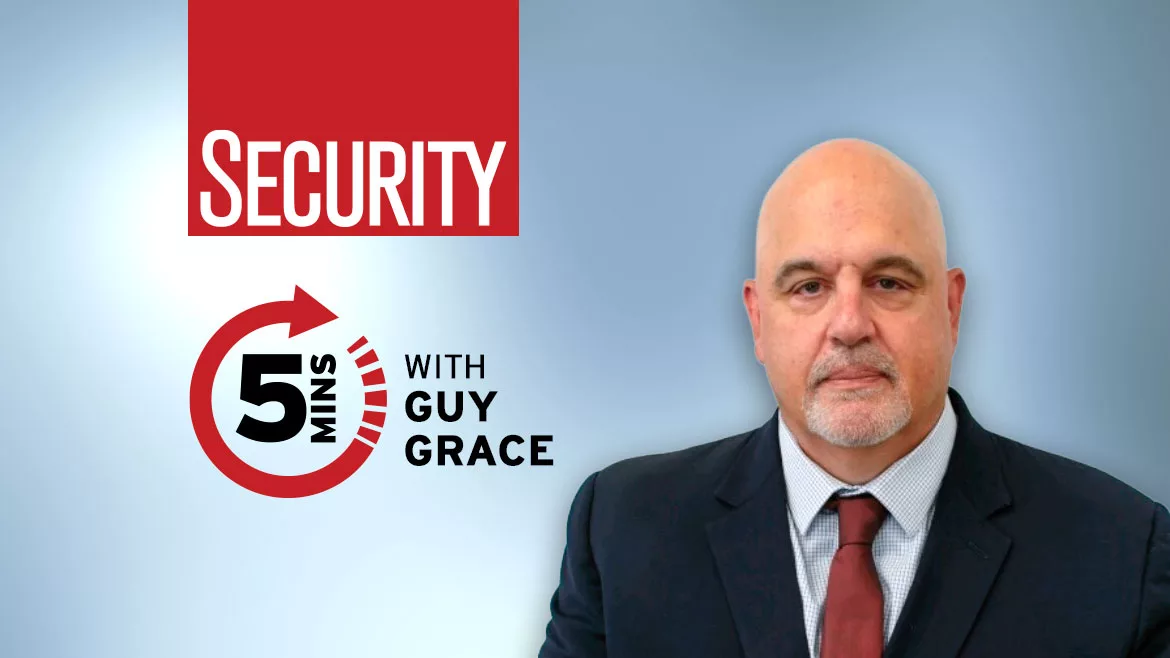
Education security changes once school is out. Here, Security magazine discusses these changes with Guy Grace, ASSA ABLOY’s K-12 National Security Program Manager.
Security magazine: Tell me about your background and career in the security industry.
Grace: My career in K–12 school security began after my U.S. Army Military Police service concluded in 1988. My first security assignment at a high school reinforced the importance of judgment, de-escalation, and protecting students, which essentially shaped my entire career.
I joined Littleton Public Schools in 1989, progressing from alarm systems monitoring to Security Director in 1999. For decades, I worked directly with schools, responding to incidents, strengthening security operations, and building partnerships with educators, facilities teams, and law enforcement.
Over time, I began sharing lessons learned nationally because there was very little practitioner-driven guidance available early on. That collaboration led to involvement with organizations such as the Partner Alliance for Safer Schools (PASS) and the National Council of School Security Directors (NCSSD), both focused on governance-based, code-aligned, and practitioner-informed school safety.
I later joined ASSA ABLOY Door Security Solutions to apply my experience at a national level, working with districts across the country to help align infrastructure such as doors, hardware, access control, and security infrastructure with policies, governance, and real-world operational needs.
Security magazine: How do risks differ between school months and summer months? How do security processes differ between school months and summer months?
Grace: Risks during the school year and summer are different, but neither period is lower risk. It’s just that the profile shifts. During the school year, risk is driven by people, activity, and daily complexity, including student behavior, visitors, threats, and emergencies. In summer, lower occupancy can create new vulnerabilities through construction, contractors, open access points, and reduced supervision.
Summer is also a critical time for preparation: reviewing emergency plans, strengthening communication protocols, evaluating door hardware and access control, and coordinating with first responders. A 24/7/365 security mindset is essential because risks, including behavioral and mental health concerns, don’t follow a school calendar.
Security processes during the school year are built around daily operations, including managing arrival and dismissal, visitor access, supervision, communication, and real-time incident response. The focus is on maintaining consistency, coordination, and readiness through practices such as controlled entry, hallway supervision, door checks, emergency drills, and collaboration with administrators and first responders.
Summer shifts the focus from active response to proactive preparation. With fewer people in buildings, districts can evaluate access points, contractor procedures, unused spaces, keys, badges, alarms, communication systems, and door hardware. It’s also an opportunity to update Emergency Operations Plans, review roles, and assess security improvements using frameworks such as the Partner Alliance for Safer Schools (PASS) layered security guidelines.
The strongest districts recognize summer isn’t a pause in security operations, but a time to strengthen the foundation before students return.
Security magazine: How should schools be secured during the summer months?
Grace: Summer security should be intentional, structured, and disciplined, even when buildings are quieter. The first priority is controlled access; limiting entry points, securing unused areas, and establishing formal procedures for contractors, programs, and visitors.
Summer is also the time to validate infrastructure by inspecting doors, hardware, cameras, access control, alarms, radios, and emergency systems to ensure they function as intended. It provides an opportunity to update Emergency Operations Plans, refine communication procedures, coordinate with first responders, and apply lessons learned from the previous school year.
Special events, athletics, and community use still require the same standards for supervision, access control, and emergency readiness. A continuous duty-of-care mindset is essential because safety concerns, threat reports, and behavioral issues can emerge at any time.
Operationally, summer security comes down to four priorities: limit access, validate infrastructure, refine plans, and maintain readiness.
Security magazine: Summer can be a good time to upgrade security and refine processes. How can security leaders assess what is needed before the new school year comes around?
Grace: Summer is the most strategic time to evaluate a school’s Unified Life Safety System (ULSS) as an integrated framework of infrastructure, communication, policy, and people working together.
Before investing in new technology, districts should assess lessons from the previous school year, including door failures, communication gaps, lockdown challenges, threat reporting, and response delays. Every campus should be physically evaluated to confirm that doors, hardware, access control, alarms, cameras, lighting, and credentials are functioning properly.
Equally important is testing communications equipment and integrations, including radios, PA systems, emergency routing, and interoperability with first responders. Summer provides an opportunity to update Emergency Operations Plans, refine procedures, strengthen reunification protocols, and conduct training exercises, maintaining a 24/7 readiness mindset.
Improvements should be prioritized based on life-safety impact and system integration value, recognizing that consistent performance matters more than new devices. Together, all these efforts help prepare schools for the coming year.
Security magazine: In the event that schools are operating on a limited budget, where can trade-offs be made without compromising security?
Grace: Limited budgets are a reality in K–12 education, but the objective is not choosing between “security” and “no security.” It’s making disciplined decisions that preserve the integrity of the Unified Life Safety System (ULSS) as a whole.
When funding is constrained, leaders should prioritize system performance over individual products. Security is an interconnected system of infrastructure, communication, policy, training, and governance, and weakening any layer reduces effectiveness under stress.
Foundational elements must remain intact: doors must latch and meet code, communication systems must function reliably, emergency plans must be current and practiced, and threat reporting and response processes must remain active.
Before investing in new technology, districts should first maintain and strengthen existing systems. Repair hardware, validate cameras and radio coverage, clean credential databases, and test notification pathways. Reliability improvements often deliver greater safety value than new purchases.
Enhancements should be phased, prioritizing infrastructure, communication, policy clarity, and training before advanced tools. Process improvements such as visitor management, contractor controls, tabletop exercises, and updated procedures can significantly improve readiness with minimal cost.
Ultimately, systems should be simplified and standardized. Security effectiveness is best measured by performance under stress, not visibility or appearance.
Security magazine: Is there anything we haven’t discussed that you’d like to add?
Grace: School security is often viewed through the lens of rare catastrophic events, but its real value lies in building everyday operational resilience. Most daily responsibilities involve managing behavioral issues, mental health concerns, supervision gaps, communication breakdowns, and coordination challenges, not just emergency scenarios.
A strong safety posture requires more than infrastructure and planning; it depends heavily on culture. Door discipline, timely reporting, adherence to visitor procedures, and consistent threat awareness determine whether systems function as intended. Security is sustained by expectations, accountability, and shared responsibility, not technology alone.
Equally important is integration. Isolated tools such as cameras, access control upgrades, or panic systems are not sufficient on their own. A Unified Life Safety System (ULSS) depends on components working together, with aligned protocols and trained personnel who understand how the system operates as a whole.
Finally, security is continuous. It does not follow a calendar. Student risk, behavioral concerns, and safety coordination can arise at any time. Effective school security requires steady leadership, disciplined systems, and ongoing improvement to ensure safety and operational strength every day.
Looking for a reprint of this article?
From high-res PDFs to custom plaques, order your copy today!