Security Magazine logo
search
cart
facebook twitter linkedin youtube
  • Sign In
  • Create Account
  • Sign Out
  • My Account
Security Magazine logo
  • NEWS
    • Security Newswire
    • Technologies & Solutions
  • MANAGEMENT
    • Leadership Management
    • Enterprise Services
    • Security Education & Training
    • Logical Security
    • Security & Business Resilience
    • Profiles in Excellence
  • PHYSICAL
    • Access Management
    • Fire & Life Safety
    • Identity Management
    • Physical Security
    • Video Surveillance
    • Case Studies (Physical)
  • CYBER
    • Cybersecurity News
    • More
  • BLOG
  • COLUMNS
    • Career Intelligence
    • Cyber Tactics
    • Cybersecurity Education & Training
    • Leadership & Management
    • Security Talk
  • EXCLUSIVES
    • Annual Guarding Report
    • Most Influential People in Security
    • The Security Benchmark Report
    • Top Guard and Security Officer Companies
    • Top Cybersecurity Leaders
    • Women in Security
  • SECTORS
    • Arenas / Stadiums / Leagues / Entertainment
    • Banking/Finance/Insurance
    • Construction, Real Estate, Property Management
    • Education: K-12
    • Education: University
    • Government: Federal, State and Local
    • Hospitality & Casinos
    • Hospitals & Medical Centers
    • Infrastructure:Electric,Gas & Water
    • Ports: Sea, Land, & Air
    • Retail/Restaurants/Convenience
    • Transportation/Logistics/Supply Chain/Distribution/ Warehousing
  • EVENTS
    • Industry Events
    • Webinars
    • Solutions by Sector
    • Security 500 Conference
  • MEDIA
    • Interactive Spotlight
    • Photo Galleries
    • Podcasts
    • Polls
    • Videos
      • Cybersecurity & Geopolitical Discussion
      • Ask Me Anything (AMA) Series
  • MORE
    • Call for Entries
    • Classifieds & Job Listings
    • Continuing Education
    • Newsletter
    • Sponsor Insights
    • Store
    • White Papers
  • EMAG
    • eMagazine
    • This Month's Content
    • Advertise
  • SIGN UP!
CybersecurityManagementSecurity Leadership and ManagementLogical SecuritySecurity & Business Resilience

The recession-proof security leader: How CISOs can do more with less

By Emanuel Salmona
Lowering stocks on monitor

m. via Unsplash

April 23, 2025

Security teams don’t need a reminder that the economy is shaky. They’re living it. Budgets are under pressure. Headcount is frozen. And yet, the threats keep coming. Goldman Sachs revised its recession forecast three times in a single week, underscoring just how uncertain the economic outlook remains. And it’s that volatility — not just the possibility of a recession — that’s intensifying the demands on security leaders.

The challenge in 2025 isn’t knowing what threats and solutions are out there. It’s knowing what’s worth acting on, and how to do more with the tools and people already in place. Not just to survive, but to lead with clarity — even when the market is anything but clear.

Because here’s the truth: the companies that emerge stronger won’t be the ones with the biggest budgets. They’ll be the ones that know what’s working, what’s not and where their real risk lives. Here’s how winning cyber leaders can get ahead amid the volatility.

Cut noise before cutting budget

Most security teams are already overwhelmed. It’s the meetings, the dashboards, the shifting priorities, the 40+ tools that promise protection but deliver questions. When budgets tighten, it’s tempting to start slashing spend. But the smarter move is to start by eliminating confusion.

Before making any cuts, ask:

  • What is this control protecting the organization from?
  • Is it tuned to current threats, or to a threat from three years ago?
  • Is there evidence it’s working?

These aren’t philosophical questions; they’re operational ones. Tools that aren’t mapped to real, current risks waste money and create blind spots. Confident leaders reduce exposure by reducing uncertainty, which starts by validating what’s in place before deciding what to keep. That’s where a centralized threat exposure management solution can make an immediate difference: by showing what’s working, what’s redundant, and where real risk still lives.

The best cuts aren’t about reducing headcount or shelfware. They’re about reducing waste: waste in workflows, in duplicated functionality, in chasing false signals. Leaders don’t need to trim their team’s talent. They need to trim the noise that’s keeping their teams from leveraging it.

Stop letting the stack lead the strategy

Too many security programs are built around the tools, not the threats. Controls get layered without clear objectives, dashboards multiply, and teams end up managing software instead of reducing exposure.

That’s backwards.

Start with the threat profile. What techniques are attackers actually using in your organization’s industry, against similarly-sized companies, right now? Then trace backward. Which controls are mapped to those threats? Which ones are redundant, outdated, or — worse — not aligned to anything that matters?

Here’s the shift: Instead of asking “what tools does the organization have?” ask “what outcomes are needed?”  Instead of reviewing dashboards, review defenses by asking:

  • Where does coverage begin and end?
  • Who owns this control’s effectiveness?
  • What evidence is there to show it’s working?

The goal isn’t to micromanage the stack — it’s to operationalize it. A threat exposure management platform helps teams break out of the “tool-first” mindset by tying controls directly to real threats and measurable performance. With PwC reporting that only 2% of companies have implemented cyber resilience measures across all key areas, it’s not a tooling issue. It’s a leadership opportunity, and the right solution provides the clarity needed to lead with purpose.

Don’t let reporting become a fire drill

Security teams spend too much time reporting and still don’t get the credit they deserve. 

When something goes wrong, the board wants answers. When nothing goes wrong, they want proof it’s because of the team, not just luck. Neither is easy to provide if the only thing being measured is tool activity or alert volume.

The fix here is to flip the script. Don’t report on what happened, report on what was prevented:

  • What threats were blocked before becoming incidents?
  • What exposures were closed this quarter?
  • What controls are protecting the business, and how is this known?

Threat exposure management can make these insights accessible in real time. Instead of pulling scattered data from disconnected tools, teams get a unified view of risk reduction that makes it easy to show progress, prove value, and make strategic decisions with confidence.

The more security reporting reflects real impact, the easier it becomes to make smart decisions. Teams can see which controls are pulling their weight. Executives can tie investments to reduced risk. And leaders can finally move away from reactive, fear-based conversations to ones grounded in proof. 

That shift is critical, especially considering only 29% report their board has a member with cybersecurity expertise, and misalignment at that level erodes trust and weakens the case for future investment.

Effective reporting doesn’t mean oversimplifying. It means showing exactly what the team prevented, and how. That’s the story the board wants to hear.

Lead with confidence, not assumptions

Leadership doesn’t come from having more tools; it comes from knowing how those tools are performing and whether they’re mapped to what matters right now for optimal outcomes. Most security programs have no shortage of data, but very little alignment. Different teams see different dashboards, chase different priorities and report different results.

In a volatile market, that fragmentation becomes a liability. Leaders can’t afford to spend time debating whether a control is working — they need to know. And they need everyone in the room to be working from the same source of truth.

That’s the value of threat exposure management solutions. It doesn’t replace the existing stack: it reveals how it’s performing. It provides a live, connected view of an organization’s controls and threats in one place so leaders can see what’s covered, what’s missing, and where the risk actually lives. When security leaders operate from that kind of clarity, they prioritize better, cut smarter, and lead with purpose instead of pressure.

In an economic environment where executives are scrutinizing every investment, the leaders who stand out aren’t the ones promising the most protection. They’re the ones who can show exactly where their defenses stand and exactly why their decisions make sense.

KEYWORDS: budget budget cuts CISO leadership economic damages

Share This Story

Looking for a reprint of this article?
From high-res PDFs to custom plaques, order your copy today!


Emanuel salmona headshot

Emanuel Salmona is the CEO of Nagomi. Image courtesy of Salmona

Recommended Content

JOIN TODAY
To unlock your recommendations.

Already have an account? Sign In

  • Iintegration and use of emerging tools

    Future Proof Your Security Career with AI Skills

    AI’s evolution demands security leaders master...
    Security Education & Training
    By: Jerry J. Brennan and Joanne R. Pollock
  • The 2025 Security Benchmark Report

    The 2025 Security Benchmark Report

    The 2025 Security Benchmark Report surveys enterprise...
    The Security Benchmark Report
    By: Rachelle Blair-Frasier
  • The Most Influential People in Security 2025

    Security’s Most Influential People in Security 2025

    Security Magazine’s 2025 Most Influential People in...
    Most Influential People in Security
    By: Security Staff
Manage My Account
  • Security Newsletter
  • eMagazine Subscriptions
  • Manage My Preferences
  • Online Registration
  • Mobile App
  • Subscription Customer Service

More Videos

Sponsored Content

Sponsored Content is a special paid section where industry companies provide high quality, objective, non-commercial content around topics of interest to the Security audience. All Sponsored Content is supplied by the advertising company and any opinions expressed in this article are those of the author and not necessarily reflect the views of Security or its parent company, BNP Media. Interested in participating in our Sponsored Content section? Contact your local rep!

close
  • critical event management
    Sponsored byEverbridge

    Why a Unified View Across IT, Continuity, and Security Makes or Breaks Crisis Response

  • Charlotte Star Room
    Sponsored byAMAROK

    In an Uncertain Economy, Security Is a Necessity - Not an Afterthought

  • Sureview screen
    Sponsored bySureView Systems

    The Evolution of Automation in the Command Center

Popular Stories

Cybersecurity trends of 2025

3 Top Cybersecurity Trends from 2025

Red laptop

Security Leaders Discuss SitusAMC Cyberattack

Green code

Logitech Confirms Data Breach, Security Leaders Respond

Neon human and android hands

65% of the Forbes AI 50 List Leaked Sensitive Information

The Louvre

After the Theft: Why Camera Upgrades Should Begin With a Risk Assessment

Top Cybersecurity Leaders

Events

September 18, 2025

Security Under Fire: Insights on Active Shooter Preparedness and Recovery

ON DEMAND: In today’s complex threat environment, active shooter incidents demand swift, coordinated and well-informed responses.

December 11, 2025

Responding to Evolving Threats in Retail Environments

Retail security professionals are facing an increasingly complex array of security challenges — everything from organized retail crime to evolving cyber-physical threats and public safety concerns.

View All Submit An Event

Products

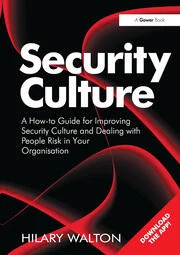
Security Culture: A How-to Guide for Improving Security Culture and Dealing with People Risk in Your Organisation

Security Culture: A How-to Guide for Improving Security Culture and Dealing with People Risk in Your Organisation

See More Products

Related Articles

  • risk-management-freepik1170x658v568.jpg

    How to make third-party risk management recession-proof in 2023

    See More
  • Most Countries without Cybersecurity Strategy

    SMBs increasingly have to ‘do more with less’ when it comes to cybersecurity

    See More
  • Conference room

    CISOs Under Pressure: How Security Leaders Can Reclaim Their Seat at the Board Table

    See More

Related Products

See More Products
  • security culture.webp

    Security Culture: A How-to Guide for Improving Security Culture and Dealing with People Risk in Your Organisation

  • A Leaders Guide Book Cover_Nicholson_29Sept2023.jpg

    A Leader’s Guide to Evaluating an Executive Protection Program

  • Risk Analysis and the Security Survey, 4th Edition

See More Products
×

Sign-up to receive top management & result-driven techniques in the industry.

Join over 20,000+ industry leaders who receive our premium content.

SIGN UP TODAY!
  • RESOURCES
    • Advertise
    • Contact Us
    • Store
    • Want More
  • SIGN UP TODAY
    • Create Account
    • eMagazine
    • Newsletter
    • Customer Service
    • Manage Preferences
  • SERVICES
    • Marketing Services
    • Reprints
    • Market Research
    • List Rental
    • Survey/Respondent Access
  • STAY CONNECTED
    • LinkedIn
    • Facebook
    • YouTube
    • X (Twitter)
  • PRIVACY
    • PRIVACY POLICY
    • TERMS & CONDITIONS
    • DO NOT SELL MY PERSONAL INFORMATION
    • PRIVACY REQUEST
    • ACCESSIBILITY

Copyright ©2025. All Rights Reserved BNP Media.

Design, CMS, Hosting & Web Development :: ePublishing