The debate around branding two-factor authentication (2FA) messages has heated arguments on both sides. Branding could provide both companies and end users with a more cohesive experience while using 2FA.
The Cybersecurity and Infrastructure Security Agency (CISA) has identified several potential risks of autonomous vehicles in transit systems and supply chains. Along with these risks, CISA has introduced a set of guidelines for organizations who use autonomous vehicles in their operations.
Cyentia Institute and RiskRecon released research that quantifies how a multi-party data breach impacts many other organizations in today’s interconnected digital world.
While researching a misconfiguration in the popular workflow platform Apache Airflow, Intezer discovered several unprotected instances. These unsecured instances expose companies’ sensitive information across various industries.
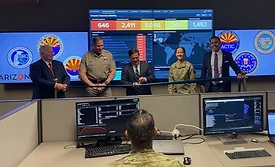
The new Cyber Command Center will facilitate information sharing and analysis between state organizations and protect Arizona residents from cyberattacks. Governor Doug Ducey opened the center alongside the Arizona Department of Homeland Security.
Cybersecurity researchers from the University of Missouri seek to develop a security tool that allows smart devices to learn from past cyberattacks with minimal user interaction. The cybersecurity feature would be functional across different types of smart devices and aim to prevent both small- and large-scale cyberattacks in the future.
The 2021 Data Governance Trends report from Egnyte ranked security leaders' concerns around unchecked data growth, citing the danger of dark data repositories like company email accounts, messaging sites and cloud-based storage.
It’s difficult for security teams to get executive buy-in to address the problem because measuring and improving AD security is challenging. There are several reasons why.
 RSS
RSS