The municipality of The Hague in The Netherlands allows itself to be hacked every year during Hâck The Hague. A hacking competition organized by the municipality, together with cybersecurity company Cybersprint. On Monday, September 27, 2021, 200 ethical hackers from the Netherlands and abroad will once again try to detect vulnerabilities in the digital infrastructure of the municipality and its suppliers. With this competition, The Hague wants to increase its resilience and stimulate its suppliers to continuously be in top digital condition, so that peace and security can be guaranteed.
Now, let’s consider how the pandemic has impacted the world of cybercrime. In the beginning, the move to work from home was swift, with organizations being closed and the workforce being sent home to work with little or no warning. People began stockpiling items and even staples such as toilet paper became a scarce commodity. As schools closed, the students were forced to start doing classes online, something a lot of families were not prepared for. Many found themselves in financial difficulties. For those still working, with daycares closing, childcare became an issue, and many people did not have laptops or computers set up at home to support these changes. Even webcams became nearly impossible to get unless you were willing to pay the scalpers’ prices.
Congress sent some rather clear messages with passage of the American Rescue Plan (ARP), and the importance of education is undoubtedly top of mind. Based on the sheer volume of school safety allocations, protecting our nation’s students is a high priority with the Biden administration and a majority in Congress.
The Cybersecurity and Geopolitical podcast covers the enmeshing of cybersecurity and geopolitics and the new challenges and intriguing flashpoints these bring to enterprise security and risk professionals. This month, we delve into the threatening and alarming world of misinformation, disinformation, and conspiracy theories.
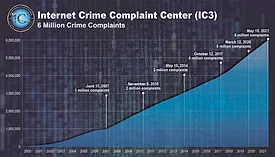
The FBI says that complaints concerning online scams and investment fraud have now reached a record-breaking level. The Internet Crime Complaint Center (IC3) received its six millionth complaint on May 15. It took nearly seven years for the FBI’s Internet Crime Complaint Center (IC3) to log its first million complaints. It took only 14 months to add the most recent million.
Ben Johnson, former NSA and Chief Technology Officer (CTO) of SaaS application security firm, Obsidian, has found that businesses around the world are adopting Software as a service (SaaS) apps in droves for collaboration, ease of access to data and business continuity. With this increased adoption, comes the inevitable trend of state-sponsored actors merely logging in to steal data rather than having to break in. Here, Johnson talks to Security magazine about security issues associated with SaaS applications.
We have all been served by a surly retailer whose made us feel that their job and life would be easier, if it weren’t for the customers. Alas, sometimes it feels the same applies in cybersecurity. Life would be so much better, if not for those pesky employees.
The recent ransomware attack of the Colonial Pipeline has reinvigorated calls from legislators to strengthen the defenses of U.S. pipelines and the electric power grid. Over the last several years, a repeatable pattern is becoming apparent with each major cyber-attack. A critical cyberattack occurs that is followed by outrage that result in statements from government leaders with calls for action - all followed by proposed ideas on how to better mitigate the risk of cyberattacks in the future. Yet, it seems that time goes by and with the next major attack the cycle starts all over again. This time, government is taking a more rigorous approach to proposing solutions to end the vicious cycle.
Conti ransomware gang appears to be behind Ireland's Health Service Executive (HSE) ransomware attack, according to reports. HSE, a $25 billion public health system, shut down its IT systems to protect the service from further damage, switching to a paper-based system. Though life-saving equipment and COVID-19 vaccine programs were still operating, several healthcare practices across Ireland were forced to cancel low priority appointments.
The Standoff 2021 is taking place this week May 18-21, in conjunction with PHDays (Positive Hack Days) – one of the top cybersecurity conferences in Europe that features the world's cutting edge in digital security every year. The Standoff is an online offensive/defensive competition in which defenders (blue teams) compete against attackers (red teams) to control the infrastructure of a simulated digital city.
 RSS
RSS