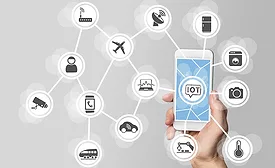
The Internet of Things (IoT) is transforming our homes, businesses and public spaces – mostly for the better – but without proper precautions IoT devices can be an attractive target for malicious actors and cyberattacks. Security threats involving IoT devices often stem from the fact that many IoT devices usually have single-purpose designs and may lack broader capabilities to defend themselves in a hostile environment. For example, a door bell, a toaster or a washing machine frequently do not contain as much storage, memory and processing capability as a typical laptop computer.
The unfolding COVID-19 crisis has been the most significant test of the world’s internet infrastructure to date. With employers and schools moving to remote environments, the expectation was that the expanded use of Software-as-a-Service (SaaS) tools like video conferencing would lead to crippling levels of web traffic. On top of that, experts anticipated the increase in internet use would prompt a corresponding rise in network attacks from cybercriminals. Many in the industry were concerned that the internet would not be able to sustain these unseen levels of duress.
While cyber threats continue to be a massive drain on business productivity, there is another, less obvious vulnerability: unintentional employee error. Indeed, a majority of businesses say that simple human error is their leading cause of data loss.
Here, we talk to Mohit Tiwari, CEO and co-founder of Symmetry Systems, about the current threat landscape, the role of CISOs and the unique challenges COVID-19 and work-from-home (WFH) pose to CISOs and security teams.
Regardless of industry, no company can escape the widespread reach and impact of data. Whether a company is collecting account information from customers or aggregating platform usage data, handling large amounts of data has become the norm. While this creates boundless new opportunities for businesses in analytics and real-time decisioning, it also introduces new risks that organizations need to consider and prevent where possible.
How can security executives prepare for natural disasters such as hurricanes during these times of the coronavirus pandemic? When coupled with the ongoing and unprecedented business disruptions we’re already experiencing, an intense hurricane season is already proving to be a very challenging crisis to plan for.
Let’s face it, passwords are a pain. As we’ve been pushed towards using longer and ever more complex passwords, and told to update them with increasing frequency, password management has become something of a headache. We’ve gone from simple, easy to remember passwords to 12- or 16-character passwords that must contain a mixture of upper and lowercase letters, numbers and symbols.
According to IDC, by 2025 there will be 41.6 billion Internet of Things (IoT) devices, generating a massive 79 zettabytes (ZB) of data. To put that into perspective, in 2006, IDC estimated that the total amount of electronic data created and stored was a mere 0.18 ZB. This growing amount of data represents a vast and exponentially increasing attack surface, which poses a huge opportunity for cybercriminals and a seemingly insurmountable task for those responsible for protecting and securing it. This task is only made more difficult by the lack of regulation and security measures being built into IoT devices at present. As IoT looks to become a foundational aspect of our everyday lives, it’s vital we, as consumers, understand the threats posed to our devices and the data they store.
After months of social distancing, the coronavirus remains a serious public health challenge. As states across the country devise plans to reopen their local economies, government agencies and private healthcare providers are hungry for reliable data.
 RSS
RSS