Hospital employees victimized by violence on the job are forced to take time away from work at a rate that's five times higher than workers in other occupations, according to a report.
The Occupational Safety and Health Administration (OSHA) has published a Request for Information (RFI) as to whether a standard should be developed to address workplace violence in the healthcare and social assistance sectors.
Healthcare security professionals are finding their ability to assess IT security risks is lower now than ever before. This is one of the reasons the healthcare industry received an overall “D” grade on its 2017 Global Cybersecurity Assurance Report Card, conducted by network security firm Tenable.
A new rule in California will require hospitals and other health facilities to protect employees from abuse with violence prevention protocols--and the regulation is a model that could spread to other states.
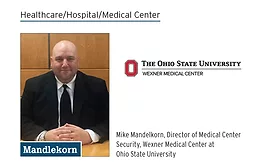
Providing security services to the 92 facilities that comprise The Ohio State University’s Wexner Medical Center has Director of Medical Center Security Michael Mandelkorn juggling many balls at one time.
 RSS
RSS