After a lifetime in the protection business, the one constant in Washington that I’ve learned is that it takes tragedy to force change. The January 6 Capitol riot is not an enigma. This was a clear protective intelligence failure. The key finding of Retired Army LTG. Russel Honore’s report reviewing how the pillar of U.S. democracy could have been so easily infiltrated is that the U.S. Capitol Police (USCP) must better integrate intelligence into its operations through improved awareness, assessment, sharing, and response capabilities. We can look at effective protective intelligence as a three-part story: Act I is identifying threats; Act II is building those threats into a cohesive profile; Act III is sharing and acting on that information in order to make nothing happen. Applying this framework to January 6 helps us understand how we can and must do better and provides important takeaways for corporations.
As we continue into 2021, it's no secret we are still reeling from the aftermath and impacts that 2020 unleashed across the globe. That's why—now more than ever—it is critical that companies prioritize their duty of care plans, or risk falling behind for good. Below, we speak to Hugh Dunleavy, Senior Vice President, U.S. Operations and Chief Security Officer of Crisis24, a GardaWorld company, about crafting a robust duty of care program.
The last year has certainly shown businesses all around the world that they must be prepared for the unexpected. How they manage the unexpected is what separates those that sail through their challenges and those that let them significantly harm the institution. Being prepared starts with establishing an effective incident response program.
As we embark on the long-haul journey to distribute the COVID-19 vaccine to all Americans, addressing the communication challenges of this distribution has never been more vital for safety and coordination, says David Wiseman, Vice President of Secure Communications at BlackBerry. Here, we talk to Wiseman about the need for unified communications as states implement vaccine rollout strategies.
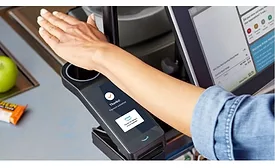
From the initial secured entrance to the overarching access control system, the emphasis is currently on contactless access control and door entry solutions. A myriad of technologies from NFC and smart mobile devices to facial biometrics will help play a vital role in what are now COVID-driven essentials. An integrated strategy for access control, along with tailgating mitigation options including turnstiles, revolving doors and mantrap portals enables building security to implement even more comprehensive control and prioritized security while making use of touchless credentials.
Keeping unauthorized intruders from entering a business location is a critical part of protecting corporate assets. Perimeters are the first line of defense but do not conform to a ‘one-size-fits-all’ safeguarding solution. Selection criteria for the most suitable Perimeter Intrusion Detection System (PIDS) must take into consideration perimeter length, topography, environmental conditions, and future site expansion plans.
The reality is that most institutions of higher learning have decided to open their campuses this fall regardless of the political rancor, adding the specter of a deadly pandemic to an already challenging campus security environment where campus shootings, physical violence to women and theft usually occupy the top threat metrics for college security administrators. Because college and university campuses have thousands of students and faculty traversing a wide swath of buildings all day, every day, having an access control solution that not only addresses the security aspect of this population, but now one that must also handle myriad safety and health concerns due to COVID-19 to lessen the likelihood of the virus spreading, is a top priority.
When it comes to intelligent video surveillance in particular, AI-driven products are beginning to unlock new functionality, and even change the role video surveillance plays for companies. From better sensors to higher resolution cameras to more efficient processing units, we're seeing an unparalleled convergence of hardware and software. And that's creating new opportunities for everything from intelligent threat detection to personalized customer experiences. We're just at the beginning of this journey, but it's clear that best practices are changing. Seemingly in real-time, security professionals are reimagining how they'll build their teams, structure engagements and define their value. We're all still building the playbook as we use it, but here are four new, unspoken "rules" for the new world of security - and how they'll continue to evolve thanks to AI.
 RSS
RSS